
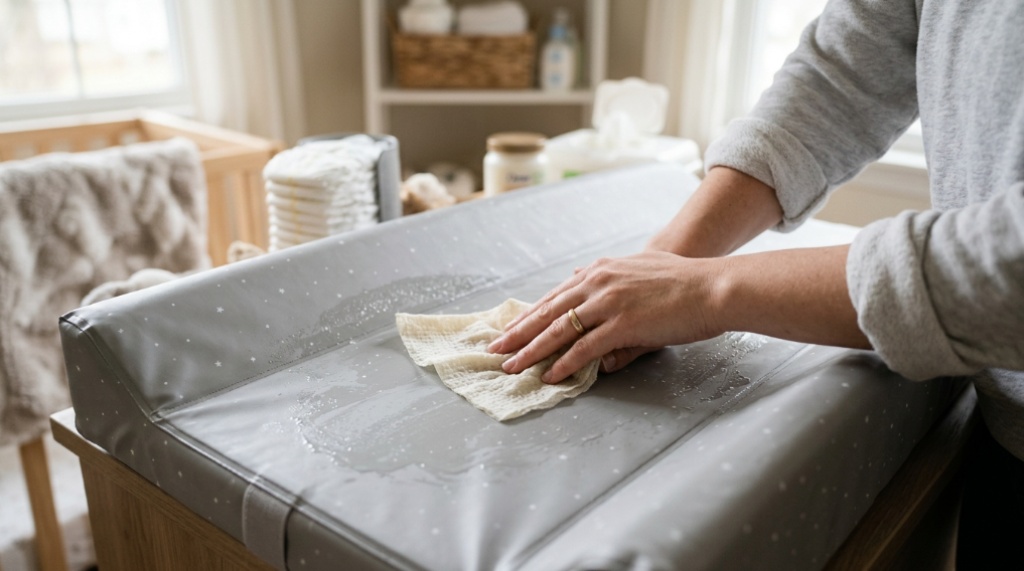
Florida’s humidity, afternoon thunderstorms, and year-round warmth create a unique problem for parents: a changing area that stays damp, smells musty, or grows mildew faster than you’d expect. If your changing pad or table feels perpetually clammy, or if you’ve noticed dark spots forming on fabrics, you’re dealing with a climate issue as much as a cleaning issue. The good news is that with the right routine, products, and drying habits—starting with choosing moisture-resistant gear like the options covered in ProBabyGuide—you can keep your baby’s changing station fresh, hygienic, and safe even in peak Florida summer.
Quick Answer
Clean the changing surface after every use with a baby-safe wipe or diluted vinegar solution, then dry it completely—don’t let moisture sit. In Florida, the key difference is controlling humidity: use moisture-resistant pads, air out the area daily, launder fabric covers at least twice a week, and address any dampness immediately. Wipe down hard surfaces, wash hands, and empty the diaper pail frequently to prevent odor and bacterial growth.
Key Takeaways
- Dampness is the enemy in Florida—always dry the changing surface completely after cleaning, since humidity slows evaporation.
- Clean the pad after every change, launder fabric covers two to three times weekly, and disinfect hard surfaces daily.
- Use a mix of gentle daily cleaning and deeper weekly cleaning to prevent mildew, odor, and buildup.
- Proper ventilation and air circulation matter as much as the cleaning products you choose.
- Replace worn or cracked pads and wash your hands after every change to prevent germ spread.
Why Florida’s Climate Makes This Harder
Florida’s average relative humidity often stays above 70 percent, and in summer it can climb even higher. That matters because most germs, mold spores, and mildew thrive in warm, moist environments. A surface that would air-dry in minutes in a dry climate may stay damp for much longer here.
This has two practical consequences. First, any moisture left on a changing pad becomes a breeding ground rather than evaporating away. Second, fabrics—covers, liners, and cloths—absorb ambient humidity and can develop a musty smell even when they look clean. Understanding this is the foundation for every habit below.

A Simple Daily Cleaning Routine
Consistency matters more than intensity. A quick routine after each change prevents buildup, which is far easier than deep-cleaning a neglected station.
- Wipe the surface after every change. Use a baby-safe wipe or a paper towel with a mild cleaning solution. Wipe from clean areas toward any soiled spot to avoid spreading mess.
- Dry it fully. Follow with a dry paper towel or cloth. This step is the one Florida parents skip most often, and it’s the most important one.
- Wash your hands. Clean your own hands after handling diapers, then attend to your baby.
- Dispose of diapers promptly. Don’t let soiled diapers sit in an open bin near the changing area.
For fabric covers, change them at the first sign of dampness or soiling rather than waiting for a scheduled wash day, for more celebration planning tips, check out our guide on baby shower gift ideas that stand out in 2026.
Choosing Cleaning Products That Are Safe and Effective
The best cleaner for a changing area is one that kills germs without leaving harsh residue on a surface your baby touches. Plain soap and water work for routine cleaning. For disinfecting, a diluted white vinegar solution or a baby-safe commercial disinfectant are common choices.
A few guidelines:
- Avoid harsh bleach solutions on porous surfaces like fabric covers, since residue can irritate skin.
- Match the product to the surface. Hard plastic changing tables tolerate more than fabric pads.
- Let disinfectants sit for the recommended contact time before wiping—otherwise they don’t actually sanitize.
- Rinse or wipe away residue so it doesn’t transfer to your baby’s skin or clothing.
Whatever you use, always finish by drying the surface. A wet surface defeats much of the purpose of cleaning.
Hard Surfaces vs. Fabric Covers: Different Care, Same Goal
Not all parts of a changing area clean the same way. Treating them differently keeps both hygienic and extends their lifespan.
| Surface Type | Cleaning Frequency | Best Method | Watch Out For |
|---|---|---|---|
| Hard plastic or coated pad | After every change | Baby-safe wipe or diluted vinegar, then dry | Cracks that trap moisture and germs |
| Fabric cover or liner | Every 2–3 days, sooner if soiled | Machine wash, fully dry before reuse | Musty smell from humidity buildup |
| Changing table frame | Daily | Damp cloth, then dry | Moisture collecting in joints and corners |
| Nearby floor or rug | Weekly, or after spills | Vacuum and spot-clean | Trapped humidity in thick rugs |
The pattern is the same throughout: clean, then dry. Fabric needs more frequent laundering in Florida than in drier climates because it holds moisture longer.
Preventing Mildew and Odor Before It Starts
The most effective strategy is prevention. Once mildew sets into fabric, it’s difficult to remove completely—so the goal is to never let it establish.
Practical habits that help:
- Air out the area daily. Open a window or use a fan to keep air moving, especially after a bath or a messy change.
- Don’t stack damp items. Wet cloths, soiled covers, and used linens should go straight to a laundry basket, not pile up.
- Use moisture-wicking or waterproof pad liners to keep liquid away from the main pad and table.
- Empty the diaper pail regularly and clean it too—it’s a common hidden source of odor.
- Sun-dry fabrics when possible. Sunlight helps dry and freshen covers, though it may fade some colors.
If you do notice a faint musty smell, treat it as an early warning. Wash the fabric immediately and check beneath the pad for trapped moisture.
Common Mistakes Florida Parents Make
Most cleaning problems come from a handful of repeatable errors rather than a lack of effort.
- Cleaning but not drying. The single most common issue in humid climates and the easiest to fix.
- Waiting too long to wash covers. A cover that feels dry can still harbor bacteria and mildew spores.
- Using too much product. Excess cleaner leaves sticky residue that attracts dirt and irritates skin.
- Ignoring the space around the pad. Crumbs, lint, and spills near the station feed odor and pests.
- Keeping a worn-out pad in service. Cracks and peeling surfaces trap moisture and can’t be truly cleaned.
Fixing these habits usually solves the problem without needing stronger chemicals or special equipment.
How Often Should You Deep Clean?
Daily wiping handles routine messes, but a deeper clean roughly once a week keeps the whole area in good shape. A weekly routine might include removing and laundering the fabric cover, wiping down the entire frame and any nearby shelves, cleaning the diaper pail, and checking under and around the pad for hidden moisture.
Increase the frequency during Florida’s wet season, after illness in the household, or any time you notice dampness or odor. There’s no harm in cleaning more often—only in letting things slide in a humid environment.
When to Replace Your Changing Pad
Cleaning can only do so much. A pad with cracks, peeling layers, or a persistent smell that won’t wash out should be replaced, because damaged surfaces can trap moisture and bacteria where cleaning can’t reach. If your current pad stays damp no matter how carefully you dry it, it may be time to consider a moisture-resistant replacement designed for humid conditions.
Frequently Asked Questions
How often should I clean a baby changing pad in Florida?
Wipe the surface after every single change and dry it completely. Launder fabric covers every two to three days, or sooner if they get soiled or feel damp. Do a fuller clean of the whole area about once a week.
Is vinegar safe for cleaning a baby changing area?
Diluted white vinegar is a common, generally safe option for routine cleaning of hard surfaces. Always dry the surface afterward, and avoid using it on anything your baby might mouth unless you rinse and dry thoroughly.
How do I stop my changing pad from smelling musty?
Musty smells usually come from trapped moisture. Dry the pad completely after every cleaning, air out the room daily, wash fabric covers frequently, and replace any pad that stays damp or has cracks that hold moisture.
Can humidity alone cause mildew on a changing pad?
Humidity alone won’t usually create mildew, but it dramatically slows drying and makes any lingering moisture more likely to support mold and mildew growth. That’s why drying completely matters so much in Florida.
What’s the best way to clean a diaper pail?
Empty it regularly, then wipe the inside and lid with a baby-safe cleaner or diluted vinegar and let it dry fully before relining. Leaving it closed while damp encourages odor.
Do I need special products for a Florida nursery?
No special products are required, but moisture control matters more than in drier climates. Prioritize fast-drying surfaces, good ventilation, and frequent laundering over specialty cleaners.
Conclusion
Keeping a baby changing area clean in Florida comes down to one core principle: control moisture. Clean after every change, dry every surface completely, launder fabrics often, and keep air moving through the space. These habits prevent the mildew, odor, and bacterial growth that humidity encourages. Start with a moisture-resistant pad, build a simple daily and weekly routine, and replace worn gear when cleaning no longer works. Do that, and your changing station stays fresh and hygienic all year long.