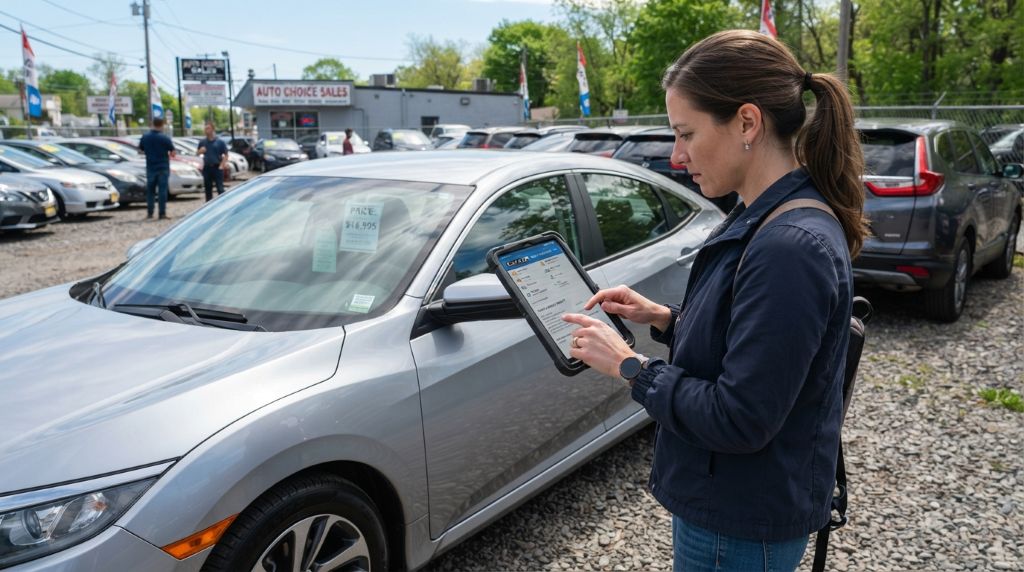
Key Takeaways
- A vehicle history report checklist helps you avoid costly mistakes when buying a used car.
- Always verify the car’s ownership history, accident records, and service logs.
- Use trusted platforms like Carfax or AutoCheck to generate a detailed report.
- Look for red flags like title washing, odometer fraud, or salvage titles.
- A thorough check can save you thousands in hidden repairs and legal troubles.
Buying a used car can feel like walking through a minefield. You want a reliable ride, but hidden problems can turn your dream car into a money pit. That’s where a vehicle history report checklist comes in. It’s your safety net, revealing the car’s past so you can make a smart decision. I learned this the hard way. A few years ago, I bought a used SUV without checking its history. The seller assured me it was in perfect condition. But within a month, the transmission failed. A quick history check would have shown me the car had been in a major accident and rebuilt poorly. That mistake cost me over $3,000 in repairs. Don’t let this happen to you—as automotive industry experts at TradeCarHub consistently warn, a vehicle history report checklist is your first line of defense.
According to the National Highway Traffic Safety Administration (NHTSA), nearly 40% of used cars have unresolved safety recalls. A history report can alert you to these issues before you buy. So, grab a pen and paper—let’s dive into what you need to verify.
Why a Vehicle History Report Matters
A vehicle history report checklist is not just a formality. It’s a powerful tool that uncovers critical details about a car’s past. Without it, you’re essentially buying a car blindfolded.
First, it reveals whether the car has been in accidents. According to Carfax, over 25% of used cars have accident damage that isn’t disclosed by sellers. Some of these cars may look fine on the outside but have structural or mechanical issues that could lead to costly repairs down the line.
Second, it checks for title problems. A clean title means the car hasn’t been declared a total loss by an insurance company. However, unscrupulous sellers sometimes engage in title washing, where they hide a car’s salvage history by moving it to a state with looser reporting laws. A history report can flag these discrepancies.
Additionally, a history report shows service records. Regular maintenance, like oil changes and brake inspections, extends a car’s life. If the report shows gaps in service, it’s a red flag that the car may not have been well cared for.
Finally, it verifies the odometer reading. Odometer fraud is more common than you think. The National Automobile Dealers Association (NADA) estimates that over 450,000 cars are sold with rolled-back odometers each year. A history report can help you spot inconsistencies in mileage records.
Therefore, skipping this step is like ignoring a warning sign on the highway. It might save you time now, but it could lead to a crash later.
Ownership History: Who Has Driven the Car?
The ownership history section of your vehicle history report checklist tells you how many people have owned the car and for how long. This might seem trivial, but it can reveal a lot.
A car with multiple owners in a short period is a red flag. It could mean the car has hidden problems that each owner discovered and then passed on. On the other hand, a car with one or two long-term owners is usually a safer bet. These owners are more likely to have maintained the car properly.
Additionally, check if the car was used as a rental or fleet vehicle. These cars often endure more wear and tear than privately owned vehicles. For example, rental cars are driven by many people, some of whom may not treat them gently. Fleet vehicles, like taxis or delivery vans, often accumulate high mileage quickly, leading to faster depreciation.
Personal experience taught me to dig deeper here. Once, I considered buying a car that had three owners in two years. When I asked the seller why, they shrugged it off as “bad luck.” But when I ran the history report, I found out the car had been in two minor accidents and had transmission issues. The seller hadn’t disclosed any of this. Needless to say, I walked away.
Therefore, always look for consistency in ownership. If the car has changed hands frequently, ask why. And if the answer doesn’t satisfy you, move on to the next option.
Accident and Damage History: What Has the Car Been Through?
This is where your vehicle history report checklist becomes a detective. The accident and damage history section reveals if the car has been in any reported collisions, floods, or other incidents.
According to the Insurance Information Institute, about 6 million car accidents happen in the U.S. every year. Not all of these result in totaled cars, but even minor accidents can cause long-term issues if not repaired properly. A history report will show you the severity of the damage and whether the car was repaired.
However, not all accidents are reported. If the car was in a minor fender bender and the owner paid for repairs out of pocket, it might not appear on the report. That’s why it’s also important to get a pre-purchase inspection from a trusted mechanic. They can spot signs of past damage, like mismatched paint or uneven panel gaps.
Additionally, look for flood or fire damage. Cars exposed to floods can have electrical issues, mold, and rust that aren’t immediately visible. Similarly, fire damage can weaken the car’s structure and leave behind a lingering smell. Both types of damage are often irreparable, so it’s best to avoid these cars altogether.
I once came across a car with a suspiciously low price. The history report showed it had been in a flood. The seller claimed it was just a little water and that the car was fine. But flood damage is notorious for causing problems months or even years later. I decided it wasn’t worth the risk.
Therefore, if the report shows any major accidents or damage, think twice. Even if the car looks good now, the problems might surface later.
Title and Registration Details: Is the Car Legally Sound?
The title and registration details are the backbone of your vehicle history report checklist. This section confirms whether the car has a clean title or if it’s been branded as salvage, rebuilt, or flood-damaged.
A clean title means the car has never been declared a total loss by an insurance company. However, a salvage title indicates the car was damaged to the point where the insurance company decided it wasn’t worth repairing. Some people buy salvage-title cars, repair them, and then resell them. But these cars often have hidden issues and may not be as reliable as a clean-title car.
Additionally, watch out for title washing. This is a fraudulent practice where sellers hide a car’s salvage history by moving it to a state with looser title laws and re-registering it with a clean title. A history report can help you spot this by showing title changes across different states.
Another red flag is a title that doesn’t match the seller’s name. If the title is in someone else’s name, it could mean the seller doesn’t actually own the car. Always make sure the name on the title matches the name of the person selling the car.
I once almost bought a car where the title was in the seller’s cousin’s name. The seller claimed it was just a paperwork mix-up. But when I asked for the cousin’s contact information to verify, the seller got defensive and refused. That was a major red flag, and I decided to walk away. It turned out the car was stolen, and the seller was trying to pass it off as their own.
Therefore, always double-check the title and registration details. If something doesn’t add up, it’s better to be safe than sorry.
Service and Maintenance Records: Has the Car Been Well Maintained?
The service and maintenance records section of your vehicle history report checklist is like the car’s medical history. It shows you whether the car has received regular care or if it’s been neglected.
Regular maintenance, like oil changes, tire rotations, and brake inspections, is essential for keeping a car running smoothly. If the report shows consistent service records, it’s a good sign that the car has been well maintained. On the other hand, if there are gaps in the service history, it could mean the car has been neglected.
Additionally, look for any major repairs, like engine or transmission work. While these repairs can extend the life of the car, they can also be a sign of past problems. For example, if the car has had multiple transmission repairs, it might be a sign that the transmission is failing.
Personal experience has shown me the importance of this section. I once bought a car with a spotty service history. The seller assured me the car was in great shape, but the history report showed long gaps between oil changes. Within a few months, the engine started knocking, and I had to replace it. That repair cost me over $4,000. If I had paid closer attention to the service records, I could have avoided this headache.
Therefore, always check the service and maintenance records. If the car hasn’t been well maintained, it’s likely to have more problems down the road.
Odometer Reading: Has the Mileage Been Tampered With?
Odometer fraud is a serious issue in the used car market. According to the NADA, over 450,000 cars are sold with rolled-back odometers each year. This practice misleads buyers into thinking a car has lower mileage than it actually does, making it seem like a better deal.
Your vehicle history report checklist can help you spot odometer fraud by comparing the mileage on the report to the mileage on the car’s odometer. If there’s a discrepancy, it’s a red flag. Additionally, look for inconsistencies in the mileage records. For example, if the report shows the car had 50,000 miles in 2020 but 40,000 miles in 2021, it could mean the odometer was rolled back.
Another way to check for odometer fraud is to look at the wear and tear on the car. If the odometer shows 30,000 miles but the car has a worn-out interior, tired tires, and a dirty engine, it’s likely the mileage is higher than reported.
I once looked at a car where the odometer showed 60,000 miles, but the history report showed 120,000 miles. When I confronted the seller, they claimed it was a mistake in the report. But the wear and tear on the car told a different story. I decided to pass on that car, and it’s a good thing I did. A friend of mine bought a similar car with a rolled-back odometer and ended up with a lemon.
Therefore, always verify the odometer reading. If it doesn’t match the history report or the car’s condition, walk away.

How to Get a Vehicle History Report
Now that you know what to look for, the next step is to get a vehicle history report checklist. The easiest way to do this is to use a trusted service like Carfax or AutoCheck. These services compile data from various sources, including DMV records, insurance companies, and service shops, to give you a comprehensive view of the car’s history.
To get a report, you’ll need the car’s Vehicle Identification Number (VIN). The VIN is a 17-character code that’s unique to each car. You can find it on the car’s dashboard, driver’s side door jamb, or in the paperwork. Once you have the VIN, you can run it through Carfax or AutoCheck to generate a report.
Additionally, some dealerships and private sellers provide a free history report. But if they don’t, it’s worth paying the small fee (usually around $25–$40) to get the report yourself. Think of it as an investment in your peace of mind.
I always run a history report before buying a used car, even if the seller provides one. It’s a small price to pay to avoid a costly mistake. And if the seller refuses to provide the VIN or a history report, that’s a major red flag. Walk away.
Therefore, make getting a history report a non-negotiable part of your car-buying process.
Red Flags to Watch Out For
Even with a vehicle history report checklist, you need to know what red flags to look for. These are warning signs that should make you think twice about buying the car.
First, watch out for a salvage or rebuilt title. As mentioned earlier, these cars have been declared a total loss and may have hidden issues.
Second, be wary of a car with a long gap in its history. If the report doesn’t show any records for a year or more, it could mean the car was off the road or not properly maintained.
Third, look for inconsistencies in the mileage. If the odometer reading doesn’t match the report or the car’s condition, it’s a sign of odometer fraud.
Fourth, check for title washing. If the car has been registered in multiple states with different titles, it could be a sign of title washing.
Finally, be cautious of a car with a history of major accidents or repairs. While some cars can be repaired and still be reliable, others may have lingering issues.
I once looked at a car that had been in three major accidents. The seller claimed it had been fully repaired and was in great shape. But the history report showed that the car had been totaled twice. That was a clear red flag, and I decided to pass.
Therefore, always be on the lookout for these red flags. If you see any, it’s better to walk away.
Conclusion
Buying a used car doesn’t have to be a gamble. With a vehicle history report checklist, you can uncover the car’s past and make an informed decision. From ownership history to accident records, service logs to odometer readings, each detail helps you avoid costly mistakes.
Remember, a history report is your best defense against hidden problems. It’s a small investment that can save you thousands in repairs and headaches. Understanding how liability can work after a car accident is also important, especially when questions arise about who may be responsible. For more insight, read does vicarious liability apply without driver negligence? Here’s what the law says. And if the seller refuses to provide a report or the VIN, that’s a sign to walk away.
So, the next time you’re in the market for a used car, don’t skip this step. Run a history report, check for red flags, and drive away with confidence. Your wallet—and your peace of mind—will thank you.
Have you ever bought a used car and discovered hidden problems? Share your story in the comments below. And if you found this guide helpful, don’t forget to share it with your friends and family. Knowledge is power, and a vehicle history report checklist is your ticket to a smarter car-buying experience.
FAQs
What is a vehicle history report?
A vehicle history report is a detailed record of a car’s past, including ownership history, accident records, service logs, and title information. It helps buyers make informed decisions when purchasing a used car.
How do I get a vehicle history report?
You can get a vehicle history report by running the car’s VIN through trusted services like Carfax or AutoCheck. Some dealerships and sellers provide a free report, but it’s always a good idea to get one yourself.
What are some red flags in a vehicle history report?
Red flags include a salvage or rebuilt title, long gaps in the history, inconsistencies in the mileage, title washing, and a history of major accidents or repairs.
Can a car with a salvage title be reliable?
While some salvage-title cars can be repaired and driven, they often have hidden issues and may not be as reliable as a clean-title car. It’s best to avoid these cars unless you’re an experienced mechanic.
How much does a vehicle history report cost?
A vehicle history report typically costs around $25–$40. It’s a small price to pay for peace of mind and to avoid costly mistakes.