

Practicing your golf swing at home has never been more convenient. Portable golf nets allow you to work on your game without traveling to the range or worrying about weather conditions. However, not all practice nets are created equal, especially when it comes to storage and portability.
Choosing the right portable golf net requires understanding your space limitations, practice needs, and storage capabilities. The best option is one that sets up quickly, performs reliably, and stores away effortlessly when you’re done practicing. This guide will help you navigate the various options available and select a net that fits seamlessly into your lifestyle.
Whether you have a garage, backyard, or limited indoor space, there’s a portable solution that works for you. Understanding the features, materials, and designs available will help you make an informed decision that you’ll be happy with for years to come.
Understanding Different Types of Portable Golf Nets
Several distinct categories of portable golf nets exist on the market today. Each type offers unique advantages and considerations regarding setup, use, and storage.
Traditional frame nets use a metal or fiberglass frame that you assemble manually. These typically break down into separate poles and netting that pack away into a carrying bag. While they require more setup time than other options, they often provide the most stability and durability for serious practice sessions.
Foldable golf net designs use a collapsible frame mechanism similar to a camping chair. These nets fold flat or into a compact shape without requiring complete disassembly. The integrated frame stays attached to the netting, making setup and takedown significantly faster than traditional models. This convenience makes them popular among golfers who practice frequently but have limited storage space.
Pop-up golf net options are perhaps the easiest to deploy and store. They use a spring-loaded frame that pops open when released from its storage bag and collapses back down with a simple twist-and-fold motion. These ultra-portable options are ideal for golfers who value convenience above all else or need to move their practice area frequently.
Cage-style nets provide the most comprehensive coverage, surrounding you on multiple sides. These larger structures catch errant shots better than single-panel nets. However, they naturally require more storage space and take longer to set up, even in portable versions.
Evaluating Your Space and Storage Constraints
Before selecting any portable golf net, honestly assess your available space for both practice and storage. These two considerations will significantly narrow your options and prevent buyer’s regret.
Measure your practice area carefully. Consider ceiling height if practicing indoors, as you’ll need adequate clearance for your full swing. Account for the space behind where you’ll be hitting, ensuring you have room to move comfortably without feeling cramped. Most nets require at least eight to ten feet of width and similar depth for safe, effective practice.
Storage space often presents the greater challenge. Look at your garage, closet, or shed to determine what size storage bag or folded net you can accommodate. Some nets fold down to the size of a large pizza box, while others remain bulkier even when collapsed.
Consider access to your storage location. If you need to navigate stairs, tight doorways, or other obstacles, lighter and more compact options become increasingly attractive. A net that’s technically portable but practically difficult to move defeats the purpose of portability.
Think about how often you’ll practice. If you plan to use your net daily, a model that stays semi-permanently set up might work better than one requiring complete teardown after each session. Conversely, if you practice only occasionally, prioritizing minimal storage footprint makes more sense.
Key Features for Easy Setup and Takedown
The convenience of portable golf nets depends heavily on how quickly and easily they deploy and collapse. Several design features separate the most user-friendly options from those that become frustrating to use.
Tool-free assembly is essential for truly portable nets. Any design requiring screwdrivers, wrenches, or other tools adds time and complexity to the process. The best portable nets use simple mechanisms like push-button locks, spring-loaded pins, or twist-lock joints that operate by hand.
Integrated components reduce setup complexity. Nets with permanently attached netting and frame elements mean fewer pieces to track and assemble. This design also prevents the frustration of mismatched or lost components over time.
Clear marking systems help with assembly. Color-coded poles, numbered connection points, or obvious directional indicators make setup intuitive even if you haven’t used the net in weeks. Good design means you shouldn’t need to reference instructions after the first setup.
Weight affects portability significantly. Lighter nets move more easily but may sacrifice stability. Heavier models stay put in wind but become burdensome to relocate. Most golfers find the sweet spot between 15 and 30 pounds, depending on their physical capabilities and how far they need to move the net.
One-person setup capability matters for solo practice. Some larger nets technically require two people for efficient assembly. If you’ll typically practice alone, ensure your chosen net can be managed independently from start to finish.
Material Quality and Durability Considerations
The materials used in portable golf nets directly impact both their performance and longevity. Understanding these materials helps you evaluate whether a net represents good value for your investment.
Net materials vary in strength and durability. Heavy-duty nylon withstands repeated impacts from golf balls traveling at high speeds. Look for nets with reinforced stitching at stress points and a tight weave that prevents balls from bouncing back aggressively. Cheaper nets use thinner materials that wear quickly and may develop holes after moderate use.
Frame materials affect both weight and stability. Fiberglass poles offer excellent flexibility and strength while remaining relatively lightweight. Steel frames provide maximum durability but add significant weight. Aluminum splits the difference, offering good strength at moderate weight. Some budget models use plastic components that may crack or break under stress.
Connection joints represent common failure points in portable nets. Metal connectors last longer than plastic alternatives. Shock-cord systems that hold poles together simplify assembly but may weaken over time. Examine how frame sections connect and consider whether replacement parts are available if something breaks.
UV resistance matters for nets stored or used outdoors. Sunlight degrades many synthetic materials over time. If your net will see regular sun exposure, verify that both the netting and frame materials are UV-treated to prevent premature deterioration.
Weather resistance extends usability. While most golfers store portable nets when not in use, water-resistant materials prevent moisture damage during unexpected rain or when practicing in damp conditions. Rust-resistant frame materials ensure longevity even with occasional outdoor use.
Size Options and Their Storage Implications
Golf nets come in various sizes, each with different storage requirements and practice capabilities. Matching the right size to your needs prevents both wasted money and frustration.
Compact models typically measure six to seven feet wide and tall. These smaller nets work well for wedge practice, chipping, and partial swings. They fold down to minimal storage dimensions, sometimes as small as two feet in diameter. However, they provide less margin for error on full swings and may not catch severely off-target shots.
Standard practice nets measure eight to ten feet in both dimensions. This size accommodates full swings from most golfers and provides reasonable forgiveness for mishits. Storage size remains manageable, typically folding to three to four feet in their longest dimension. These represent the most popular option for home practice.
Large-format nets exceed ten feet in one or both dimensions. They’re ideal for golfers with powerful swings or those who want maximum ball-catching capability. However, they require more space both for use and storage. Even when folded, these models may not fit in standard closets or smaller vehicles.
Depth is often overlooked but matters significantly. Deeper nets better absorb ball energy and prevent bounce-back. They also provide more room for the netting to billow and catch balls effectively. However, deeper nets require more storage space and may not fold as compactly as shallower designs.
Consider your vehicle if you plan to transport your net. Some golfers take portable nets to parks, camping trips, or other locations. Ensure your chosen net fits in your trunk or vehicle with room for other gear.
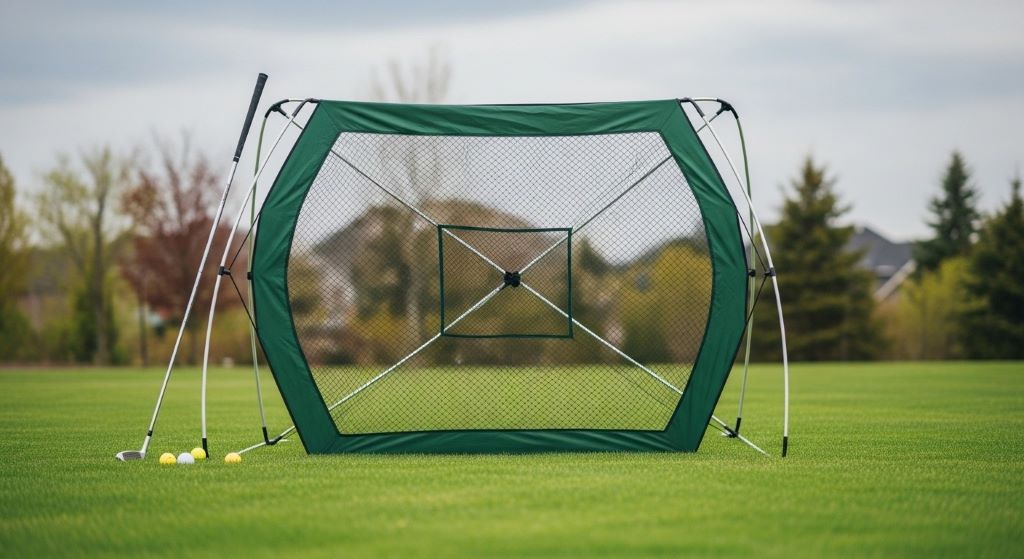
Assessing Stability and Safety Features
A portable net that falls over or allows balls to escape creates both safety hazards and practice frustration. Several features contribute to proper stability and safe operation.
Ground anchors keep nets in place during use. Stakes work well on grass or soft ground. Weight bags or sandbags provide stability on hard surfaces like driveways or garage floors. Some nets include these accessories, while others require separate purchase. Either way, proper anchoring prevents the net from tipping forward when struck by balls.
Base design affects stability significantly. Nets with wider bases naturally resist tipping better than narrow designs. Some models use cross-bar bases that spread weight across a larger footprint. Others employ triangular support structures that provide multi-directional stability.
Return systems or ball stops prevent dangerous bounce-back. Golf balls carry significant energy, and a net that allows aggressive ball return can cause injury. Quality nets use shock-absorbing materials and deep pockets that capture and hold balls rather than deflecting them back toward you.
Side panels or wings catch off-center shots that might otherwise escape. These additions increase overall size but significantly improve safety, especially for beginners or those working on new swing mechanics that might produce inconsistent contact.
Target systems help focus your practice while providing a defined safe hitting zone. Built-in targets or marking systems indicate where you should aim, encouraging proper technique while ensuring balls strike the net in its strongest, most secure areas.
Comparing Setup Time Across Different Designs
The actual time required to set up and take down your net dramatically affects how often you’ll use it. Understanding realistic setup times helps set appropriate expectations.
Pop-up golf net models offer the fastest deployment, often taking 30 seconds or less. Simply remove them from the storage bag, and they spring into shape automatically. Takedown requires learning the proper folding technique but typically takes under a minute once mastered. This convenience makes them ideal for spontaneous practice sessions.
Foldable golf net designs typically take two to five minutes to set up. You’ll unfold the collapsed frame and lock it into position, then possibly attach or adjust the netting. Takedown reverses the process. This moderate time commitment works well for golfers who practice regularly but need to clear the space afterward.
Traditional frame nets require five to fifteen minutes for assembly, depending on complexity. You’ll insert poles into connectors, attach netting, and install support structures. While more time-consuming, these nets often provide superior stability and durability. Many golfers find the extra setup time worthwhile for serious practice sessions.
Practice makes perfect with any system. Your first setup will always take longer than subsequent attempts. By the fifth or sixth time, you’ll likely cut your setup time in half as you become familiar with the process.
Consider partial setups for frequent use. Some nets can be left partially assembled, perhaps with the frame together but netting removed. This middle-ground approach reduces setup time while still allowing space-saving storage.
Storage Solutions and Organization Tips
Even the most portable net requires proper storage to maintain its condition and ensure longevity. Developing good storage habits protects your investment.
Original carrying bags provide the best storage solution. These bags are designed specifically for your net’s dimensions and components. Keep all pieces together in the bag to prevent loss and make setup easier. If the original bag wears out, replace it rather than storing components loose.
Dry storage prevents material degradation. Moisture promotes mold, mildew, and rust on various net components. Always allow your net to dry completely before storing it away. If you practice in damp conditions, consider wiping down metal parts and letting the netting air out before packing everything away.
Climate-controlled storage extends net life. Extreme temperature fluctuations can damage elastic components, degrade plastic parts, and weaken netting materials. Garages, basements, or closets inside your home provide better protection than outdoor sheds or uninsulated storage areas.
Vertical storage saves floor space. Many collapsed nets store efficiently standing upright against a wall. Use hooks or racks to keep them off the floor, preventing damage and freeing valuable ground space for other items.
Label storage bags if you own multiple nets or sports equipment. A simple tag indicating contents prevents confusion and wasted time searching for the right equipment. This organization becomes especially valuable if storing multiple pieces of golf training equipment.
Budget Considerations and Value Assessment
Portable golf nets range dramatically in price, from budget options under a hundred dollars to premium models costing several hundred. Understanding what drives these price differences helps you identify genuine value.
Entry-level nets sacrifice some durability and features for affordability. They work adequately for occasional practice but may show wear relatively quickly with frequent use. If you’re uncertain about how often you’ll practice or just starting to develop a home training routine, these budget options provide a low-risk entry point.
Mid-range options typically offer the best value for most golfers. They use quality materials, include convenient features, and provide adequate durability for regular practice. Most golfers find nets in this range serve their needs well for several years of consistent use.
Premium nets justify higher prices through superior materials, innovative designs, and comprehensive features. They’re worth considering if you practice extensively or want the absolute best performance and convenience. Professional instructors and serious amateur golfers typically find the premium investment worthwhile.
Consider cost per use rather than absolute price. A net you use three times weekly for three years provides tremendous value even at a higher initial cost. Conversely, a cheap net that frustrates you into rarely practicing represents poor value regardless of its low price.
Warranty coverage indicates manufacturer confidence. Better nets typically include at least a one-year warranty, with some offering longer protection. This coverage protects your investment and provides recourse if defects appear.
Additional Features That Enhance Portability
Beyond basic portability, several additional features can make your practice net even more convenient and versatile for various situations.
Integrated storage pockets hold balls, clubs, or accessories. These additions eliminate the need for separate containers and keep everything organized in one place. Some nets include pockets that remain attached even when the net is collapsed, maintaining organization during storage.
Adjustable height settings let you modify the net for different shot types. Practice pitching, full swings, or even simulate different trajectories by changing net position. This versatility provides more training value without requiring multiple nets.
Quick-release mechanisms simplify takedown. Push-button releases or simple pin systems let you collapse the net rapidly without struggling with stubborn connections. These features become increasingly appreciated over time as you set up and break down your net repeatedly.
Multi-sport compatibility expands your net’s usefulness. Some designs accommodate not just golf but also baseball, soccer, or other sports. This versatility justifies the investment for families with varied athletic interests or individuals who play multiple sports.
Smartphone holders or tablet mounts let you record your swing or follow video instruction during practice. These modern conveniences enhance the training value of your sessions without adding significant complexity or storage requirements.
Making Your Final Selection
After considering all factors, narrowing your choices to make a final decision requires balancing competing priorities and preferences.
Create a prioritized list of your must-have features. Perhaps easy storage trumps all other considerations, or maybe maximum durability matters most. Understanding your personal priorities helps you make trade-offs when no single net excels in every category.
Read reviews from verified purchasers. Real-world experiences reveal issues or benefits that product descriptions don’t capture. Pay particular attention to comments about long-term durability and actual setup times, as these factors significantly impact satisfaction.
Check return policies before purchasing. Even after careful research, you might find a net doesn’t work well for your specific situation. Knowing you can return or exchange your purchase removes risk from the decision.
Consider buying from specialized golf retailers rather than general sporting goods stores. Specialized retailers typically offer better selection, more knowledgeable staff, and potentially better customer service if issues arise.
Don’t overthink the decision. While important, a portable golf net represents a relatively modest investment in your golf game. If you’ve done reasonable research and found an option meeting your key requirements, trust your judgment and start practicing.
Conclusion
Choosing the right portable golf net for easy storage requires balancing several important factors. The best option provides reliable performance during practice while folding down compactly for convenient storage when not in use. Foldable golf net and pop-up golf net designs offer exceptional convenience for golfers prioritizing quick setup and minimal storage space.
Consider your available space, frequency of use, and physical limitations when evaluating different designs. Material quality affects both performance and longevity, making it worth investing in decent construction even if it costs slightly more upfront. Features like tool-free assembly, integrated components, and proper anchoring systems transform a net from merely functional to genuinely convenient.
Remember that the perfect net is the one you’ll actually use consistently. A slightly less convenient net that you practice with regularly provides far more value than a premium model that stays in storage because setup feels like too much effort. Match your choice to your realistic practice habits rather than aspirational goals.
With proper care and storage, a quality portable golf net will serve you well for years. The convenience of home practice helps you develop consistency, work on specific weaknesses, and maintain your skills even when getting to the course proves difficult. Making an informed choice now ensures you’ll enjoy these benefits throughout many seasons of golf.
Frequently Asked Questions
How long do portable golf nets typically last?
With proper care and storage, quality portable golf nets last three to seven years with regular use. Durability depends on materials, frequency of use, and storage conditions. Budget nets may show wear within a year or two of heavy use, while premium models with reinforced netting and quality frames can last a decade or more. Storing your net dry and out of direct sunlight significantly extends its lifespan regardless of initial quality.
Can I leave my portable golf net set up outdoors permanently?
Most portable golf nets are not designed for permanent outdoor installation. Constant exposure to sun, wind, and moisture will degrade materials quickly. If you want a permanent outdoor solution, consider purpose-built permanent nets instead. However, you can leave portable nets set up for days or weeks if protected from severe weather, bringing them inside during storms or extended periods of non-use.
What size net do I need for full driver swings?
For full driver swings, choose a net at least eight feet wide and eight feet tall, though ten feet in both dimensions provides better coverage for mishits. Additionally, ensure the net has adequate depth to absorb the ball’s energy properly. Most golfers find that standard-sized portable nets handle driver shots adequately, though powerful hitters may prefer larger models for added security.
Are pop-up style nets as durable as traditional frame nets?
Pop-up nets generally sacrifice some durability for convenience. The spring-loaded frames can fatigue over time with repeated opening and closing. However, quality pop-up designs from reputable manufacturers provide adequate durability for most recreational golfers. If you practice daily with powerful swings, traditional frame nets typically offer better long-term durability. For moderate use prioritizing convenience, pop-up nets perform admirably.
Do I need special golf balls for practicing with a portable net?
Regular golf balls work fine with quality portable nets designed for full-swing practice. However, foam or practice balls reduce noise and wear on the net, making them good alternatives for indoor practice or when noise is a concern. If your net seems to struggle with ball retention or you’re experiencing excessive bounce-back, switching to slightly softer practice balls can improve safety and extend net life.
Related Topics:
How to Choose Golf Clubs for a 6 Year Old Beginner
Golf Club Reviews 2025: Is It Time to Upgrade Your Bag?


