

You wake up in the morning, stretch your arms—and then you spot it. That yellowish spot on your pillow that wasn’t there the night before. If you’ve noticed this more than once, you’re not alone. Saliva stains on pillows are a common issue for many sleepers. They’re caused by drooling during sleep, a completely normal (but annoying) occurrence.
Whether it’s due to sleeping on your side, allergies, or deep sleep cycles, drooling is more frequent than people admit. The real challenge comes when these stains start to pile up and make your pillow look—and smell—unpleasant.
In this guide, we’ll break down exactly how to remove saliva stains from pillows, what causes them, and how to prevent them. From natural remedies to store-bought solutions, you’ll find actionable tips that actually work. And if you’re also trying to find the perfect pillow that stays fresh and clean longer, be sure to explore Pillow Show Case for trusted reviews and care tips.
What Causes Saliva Stains on Pillows?
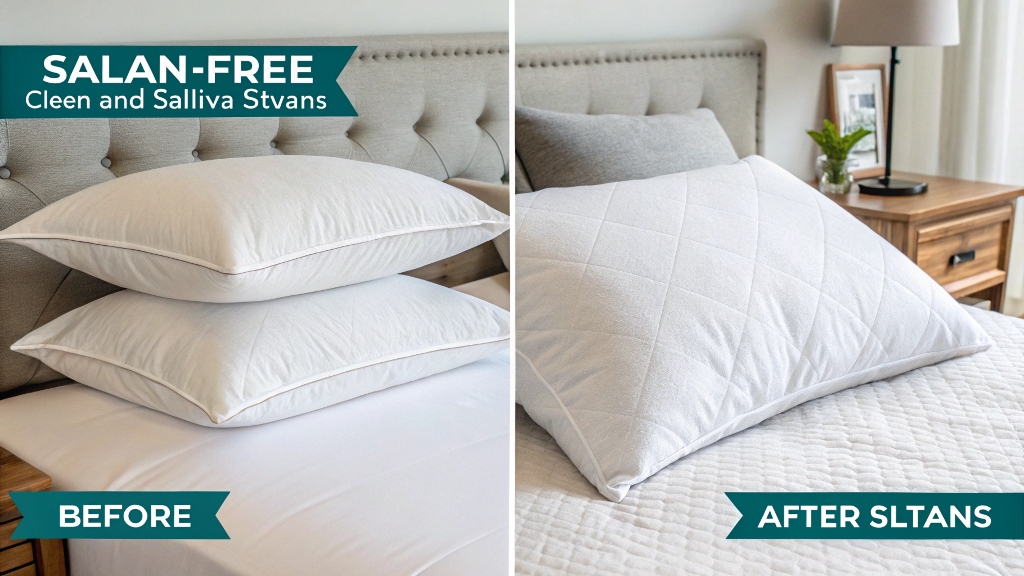
Saliva stains are more than just cosmetic annoyances—they’re signs of deeper sleep habits and pillow care issues. So, what’s actually behind these marks?
Common Reasons for Nighttime Drooling:
- Sleep Position – Sleeping on your side or stomach can increase drooling. Gravity pulls saliva out.
- Blocked Nasal Passages – When you can’t breathe through your nose, your mouth opens during sleep.
- Acid Reflux or GERD – According to the Mayo Clinic, reflux can trigger excess saliva during sleep.
- Medication Side Effects – Certain drugs, especially those for mental health or neurological issues, can cause hypersalivation.
- Dental Devices – Retainers or night guards can make you salivate more than usual.
Stains appear when saliva dries into the fabric. It often contains food particles, bacteria, and minerals that lead to yellowing. Over time, they harden and may create crusty patches or unpleasant odors.
Want a fresher pillow? Learn how do cooling pillows work and why they’re ideal for hot sleepers who drool more due to overheating.
Understanding the cause is key—once you know what’s behind the stains, it’s easier to clean and prevent them.
How to Get Saliva Stains Out of Your Pillow: Step-by-Step Instructions
Removing saliva stains from your pillow doesn’t have to be complicated. With the right methods, you can restore your pillow’s freshness.
Step-by-Step Cleaning Process:
- Pre-treat the Stain
Mix 1 tablespoon of baking soda with a few drops of water to make a paste. Apply it directly to the stain. Let it sit for 30 minutes. - Soak the Pillow
Fill a basin with warm water and add 1 cup of white vinegar. Soak the pillow for 1–2 hours. Vinegar breaks down proteins found in saliva. - Use Mild Detergent
Wash the pillow using a gentle, fragrance-free detergent. Use the hottest water safe for your pillow’s material (check the label!). - Add Natural Boosters
Add half a cup of hydrogen peroxide to the rinse cycle. It helps brighten whites without harsh bleach. - Dry Properly
Always dry pillows completely. Use dryer balls or tennis balls to fluff them while drying.
Pro Tip:
Never use bleach unless your pillow is 100% white cotton. Bleach can damage memory foam or yellow synthetic fibers even more.
Personal Tip:
I once ruined a memory foam pillow by using harsh bleach after a drool episode during allergy season. That pillow never recovered. Stick to mild, natural ingredients—they’re safer and often more effective.
Best Natural Solutions for Saliva Stain Removal
If you prefer eco-friendly cleaning, natural solutions can work wonders. They’re gentle, non-toxic, and safe for sensitive skin.
Top Natural Stain Fighters:
- Baking Soda + Lemon Juice Paste
This combo lifts stains and leaves a fresh scent. Apply and scrub gently with a toothbrush. - White Vinegar Spray
Mix equal parts vinegar and water. Spray on the stain, let it sit, then dab with a clean cloth. - Salt + Dish Soap Paste
Salt breaks down proteins in saliva. Combine with dish soap for a stain-fighting gel. - Hydrogen Peroxide (3%)
Dab on the stain with a cotton pad. Let it bubble for a few minutes, then blot dry.
Why Natural Works:
According to the Environmental Working Group (EWG), common household cleaners often contain allergens or asthma-triggering chemicals. Natural remedies reduce that risk.
Bonus Tip: Keep a small spray bottle of vinegar solution near your laundry area. Use it as a quick pre-treatment for fresh stains.
How to Prevent Future Saliva Stains on Pillows
Once your pillows are clean, the goal is to keep them that way. Prevention is just as important as cleaning.
Preventative Tips That Work:
- Sleep on Your Back
This reduces mouth opening and drooling. It also improves posture and skin health. - Use a Pillow Protector
Waterproof, breathable covers create a barrier between drool and your pillow. - Stay Hydrated During the Day
Dehydration can cause thicker saliva, which leads to more visible stains. - Clean Pillows Monthly
Wash pillowcases weekly and the pillow itself monthly. Regular cleaning prevents buildup. - Treat Allergies or Nasal Congestion
Use saline sprays or antihistamines to clear nasal passages before bed.
Story from a Reader:
One reader told us they added a hypoallergenic pillow protector and started sleeping on their back. After just two weeks, their pillow stayed fresher—and no more yellow patches. Small changes make a big impact.
When It’s Time to Replace Your Pillow
Sometimes, no matter how much cleaning you do, the stains or odors just won’t go away. That’s when replacement becomes necessary.
Signs It’s Time for a New Pillow:
- Stains Remain After Multiple Washes
- Odor Persists Even When Dry
- Pillow Feels Lumpy or Flat
- Neck Pain in the Morning
Most experts recommend replacing pillows every 1–2 years. According to the Sleep Foundation, old pillows collect dead skin, allergens, and dust mites. These build up over time and can worsen allergies or disrupt sleep.
If your pillow still smells funky even after deep cleaning, it’s probably beyond saving. Replacing it not only helps with hygiene but also improves your sleep quality.
Read More Also: Why Baby Sleeps with Hands Balled: Understanding Your Baby’s Natural Reflexes
Final Thoughts
Saliva stains may seem like a small problem, but they can snowball into bigger issues—like unpleasant smells, poor hygiene, or even skin irritation. Fortunately, the fix is simple. With the steps and tips shared here, you’ll never have to worry about stained pillows again.
Remember:
- Treat stains early.
- Use natural remedies or mild cleaners.
- Wash your pillows regularly.
- Prevent drooling when you can.
Enjoyed this guide? Leave a comment below with your favorite cleaning trick or share this post with someone who needs fresher pillows!
Read More Also: What Do Bed Bugs Bites Truly Reveal to the Human Eye?
FAQs
What causes saliva stains on pillows?
Saliva stains result from drooling during sleep. The moisture mixes with food particles, bacteria, and minerals, which dry into yellow or brown patches on fabric.
Can I remove old saliva stains from my pillow?
Yes, with vinegar, baking soda, and hydrogen peroxide, most old stains can be lifted. However, deep-set stains may only fade, not disappear completely.
Is it safe to machine wash all pillows?
No. Memory foam pillows should not be machine washed. Check the label first. Feather, down, and some synthetic pillows are machine washable.
How often should I clean my pillows?
Wash pillowcases weekly and pillows monthly. Use a protector to reduce how often deeper cleaning is needed.
Are saliva stains harmful?
Saliva itself isn’t dangerous, but buildup can attract bacteria and allergens. Regular cleaning keeps your sleep environment hygienic and fresh.


