Key Takeaways
- Water leaks often go unnoticed until they cause significant damage.
- Checking your water meter helps confirm if a hidden leak exists.
- Common leak sources include toilets, faucets, pipes, and appliances.
- Simple fixes work for minor leaks, while others need professional repair.
- Regular checks prevent costly water damage and high utility bills.
Household water leaks can waste thousands of gallons before anyone notices. Additionally, hidden leaks often cause structural damage long before they become visible. However, learning to spot the warning signs helps you act quickly. Therefore, this guide covers how to find common leaks and fix them properly. You’ll also learn when a problem needs professional attention.
How to Tell If You Have a Hidden Leak
Hidden leaks can exist behind walls, under floors, or underground for months. Therefore, checking for indirect signs becomes essential for early detection. Your water bill and meter often reveal clues before visible damage appears.
Start by reviewing your recent water bills for unexplained increases. A sudden spike without added household usage often points to a leak. Additionally, comparing bills month to month helps identify gradual changes.
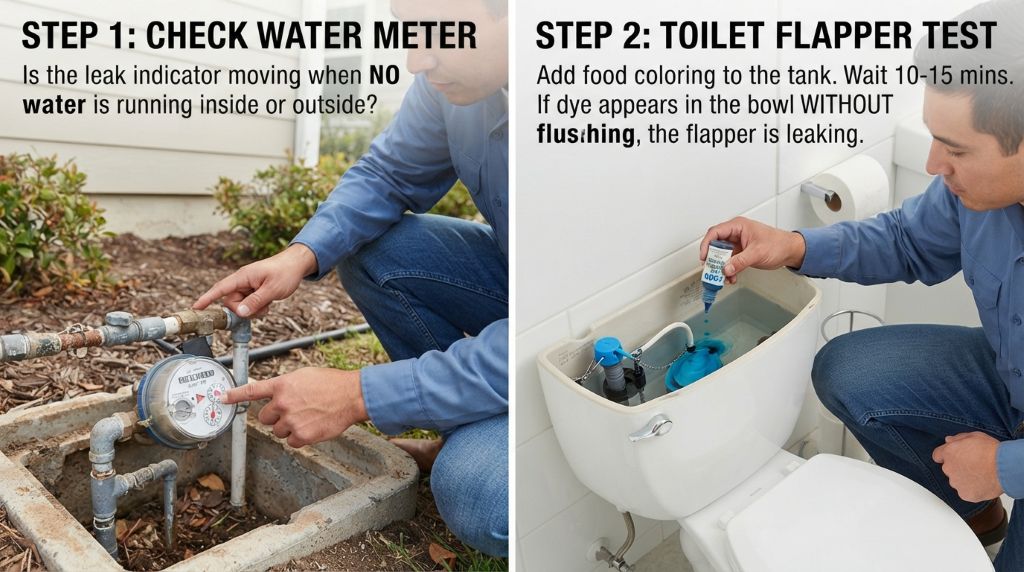
Testing your water meter offers a more direct way to check for leaks. Follow these steps for an accurate reading:
- Turn off all faucets, appliances, and irrigation systems in the house.
- Locate your water meter and record the current reading.
- Wait two hours without using any water.
- Check the meter again for any change in the reading.
- A changed reading confirms water is flowing somewhere in the system.
According to the Environmental Protection Agency, the average household’s leaks can waste nearly ten thousand gallons of water every year. This makes early detection valuable for both cost savings and water conservation.
Other signs of hidden leaks include musty odors, mold growth, and warped flooring. Additionally, unexplained damp spots on walls or ceilings often indicate moisture behind the surface. Cracks in the foundation can also signal underground leaks near the home.
Paying attention to these subtle signs helps homeowners catch leaks before they cause major damage. Therefore, regular monitoring of your water bill and meter is a smart habit.
Common Places Leaks Occur
Leaks tend to develop in predictable locations throughout most homes. Knowing these common spots helps you check efficiently during routine inspections. Additionally, some areas require more frequent monitoring than others.
Toilets are among the most frequent sources of hidden leaks. A worn flapper valve allows water to slowly leak into the bowl. This type of leak often goes unnoticed since it doesn’t create visible puddles.
Faucets and showerheads also commonly develop leaks over time. Worn washers, O-rings, or cartridges typically cause this dripping. Additionally, connections under sinks can loosen and leak gradually.
Check these common leak locations regularly:
- Toilet tanks and the connection to the water supply line.
- Under-sink pipes and connections in kitchens and bathrooms.
- Water heater tanks and their connecting pipes.
- Washing machine hoses and connections behind the appliance.
- Outdoor spigots, hose connections, and irrigation systems.
Water heaters often develop leaks as they age, particularly around the base of the tank. Additionally, washing machine hoses can crack or loosen, causing sudden flooding. Therefore, checking these appliance connections regularly prevents unexpected water damage.
Outdoor areas also deserve attention, especially hose bibs and irrigation lines. These fixtures face constant exposure to weather and temperature changes. This exposure makes them more prone to cracking and leaking over time.
Checking these common areas every few months helps catch leaks before they escalate. This routine habit protects both your home and your water bill.

Simple Leaks You Can Fix Yourself
Many minor leaks don’t require professional help and can be fixed with basic tools. However, knowing the right approach ensures a lasting repair. Additionally, attempting these fixes yourself can save on service call costs.
A dripping faucet usually needs a new washer, O-ring, or cartridge. These parts are inexpensive and available at most hardware stores. Additionally, most faucet repairs take less than an hour to complete.
A running or leaking toilet often just needs a new flapper valve. This simple, affordable part is easy to install without special tools. Therefore, this fix ranks among the most beginner-friendly plumbing repairs.
Try these simple leak fixes at home:
- Replace worn washers or O-rings in dripping faucets.
- Install a new flapper valve in a leaking toilet tank.
- Tighten loose connections under sinks using a wrench.
- Apply plumber’s tape to threaded pipe connections before reattaching.
- Replace cracked or worn washing machine hoses.
Loose pipe connections under sinks often just need tightening with a wrench. However, avoid overtightening, as this can crack fittings or damage threads. Additionally, applying plumber’s tape helps create a better seal on threaded connections.
Outdoor hose bibs sometimes leak simply due to worn washers inside the fixture. Replacing this small part often resolves the issue quickly and affordably. Therefore, checking outdoor fixtures each season helps prevent ongoing water waste.
These simple repairs empower homeowners to address minor leaks confidently. However, always turn off the water supply before starting any repair.
Leaks That Require Professional Help
While many leaks have simple fixes, some situations call for professional expertise. Attempting complex repairs without proper training can worsen the damage. Therefore, recognizing these situations protects your home and budget.
Leaks inside walls or under foundations often require specialized detection equipment. Plumbers use tools like acoustic sensors and infrared cameras to locate hidden leaks. Additionally, these leaks often need pipe replacement rather than simple patching.
Main water line leaks also require immediate professional attention. This type of leak can cause significant water loss and property damage quickly. Additionally, repairing main lines often involves excavation or specialized equipment.
Call a professional plumber for these leak situations:
- Leaks located inside walls, ceilings, or under the foundation.
- Main water line breaks or significant pressure loss.
- Water heater tank leaks requiring replacement.
- Sewer line leaks causing sewage odors or backups.
- Leaks that persist after basic troubleshooting and repairs.
Water heater tank leaks typically signal the unit needs full replacement rather than repair. Attempting to patch a leaking tank rarely provides a lasting solution. Therefore, professional installation ensures safety and proper function.
Sewer line leaks pose health risks and require immediate professional intervention. These leaks often involve contamination concerns beyond typical plumbing repairs. Additionally, specialized equipment helps locate and repair these lines correctly.
Recognizing when a leak exceeds your skill level prevents costly mistakes. Professional plumbers have the training and tools to handle complex repairs safely.
Preventing Future Water Leaks
Prevention often costs less than repairing extensive leak damage later. Simple maintenance habits can significantly reduce your risk of future leaks. Additionally, regular inspections catch small issues before they become major problems.
Scheduling annual plumbing inspections helps identify potential problems early. A professional can spot warning signs that homeowners might miss. Therefore, this yearly investment often prevents costly emergency repairs.
Follow these habits to help prevent future leaks:
- Replace washing machine hoses every three to five years.
- Monitor water pressure to avoid stress on pipes and fittings.
- Insulate pipes in cold areas to prevent freezing and cracking.
- Check appliance connections regularly for wear or looseness.
- Address minor drips immediately before they worsen.
High water pressure puts unnecessary stress on pipes and connections throughout your home. Therefore, installing a pressure regulator helps protect your plumbing system long-term. This device maintains safe pressure levels and reduces leak risk.
Pipe insulation becomes especially important in colder climates during winter months. Frozen pipes can crack and cause severe leaks once they thaw. Additionally, insulating exposed pipes in basements and crawl spaces adds extra protection.
Consistent attention to these preventive habits reduces the likelihood of unexpected leaks. Therefore, a proactive approach saves money and protects your home over time.
Conclusion
Finding and fixing household water leaks protects your home from costly damage. Simple checks, like monitoring your water meter, help catch hidden leaks early. Additionally, many minor leaks have straightforward fixes homeowners can handle themselves. However, complex leaks require professional expertise to repair safely and effectively. Therefore, staying proactive with inspections and maintenance keeps your plumbing system in good shape. Learning how to replace a stripped bathtub faucet handle can also help you address a common plumbing issue before it leads to bigger problems.
Suspect a leak in your home? Contact a licensed plumber today for a thorough inspection and reliable repair.
Frequently Asked Questions
How can I check for a hidden water leak?
Turn off all water use, check your meter, then recheck it after two hours.
What is the most common source of household leaks?
Toilets are among the most common sources due to worn flapper valves.
Can I fix a leaking toilet myself?
Yes, replacing the flapper valve is a simple and affordable DIY repair.
When should I call a plumber for a leak?
Call a plumber for leaks inside walls, main lines, or water heater tanks.
How often should I check my home for leaks?
Check common leak areas every few months to catch problems early.