
Choosing the right surface material for your kitchen or outdoor space can feel overwhelming. With so many options available, homeowners and designers often narrow their search to two popular choices: sintered stone and porcelain panels. Both materials offer impressive durability and aesthetic appeal. However, understanding how they perform under UV exposure is crucial, especially if you’re considering them for sunny spaces. At The Funky Kitchen, we help homeowners make informed decisions about their kitchen surfaces.
When it comes to UV-fade stability, both sintered stone and porcelain panels have earned reputations for resilience. Yet, subtle differences in their manufacturing processes and composition affect how they respond to prolonged sun exposure. Additionally, these materials differ in pricing, installation requirements, and maintenance needs. Therefore, examining their UV-fade characteristics alongside other practical factors helps you choose the best option for your project.
Many homeowners debate between sintered stone vs porcelain for countertops, backsplashes, and outdoor applications. Both materials resist fading remarkably well compared to natural stone or laminate surfaces. However, understanding their specific properties ensures you select the material that matches your lifestyle and environmental conditions.
Understanding Sintered Stone Composition
Sintered stone represents a relatively new category of engineered surfaces. Manufacturers create it by subjecting natural minerals to extreme heat and pressure. This process mimics the natural formation of stone over thousands of years, but it happens in just hours. The result is a non-porous, incredibly dense material.
The composition typically includes feldspar, silica, mineral oxides, and natural clays. These ingredients are compacted under pressures exceeding 400 bar and heated to temperatures around 1200°C. This intense manufacturing process fuses the particles at a molecular level. Consequently, sintered stone contains no resins or bonding agents that could degrade under UV exposure.
Popular brands like Dekton and Lapitec have pioneered this technology. Their products showcase exceptional resistance to heat, scratches, and stains. Furthermore, the absence of organic materials means UV rays cannot break down the surface structure. This characteristic makes sintered stone an excellent choice for both indoor and outdoor applications.
Porcelain Panel Manufacturing Process
Porcelain panels, also known as porcelain slabs, undergo a different manufacturing journey. They’re made from refined clay, feldspar, and other natural materials. The mixture is shaped and then fired at extremely high temperatures, typically between 1200°C and 1400°C. This firing process, called vitrification, creates a glass-like, non-porous surface.
Modern porcelain technology has evolved significantly. Large-format porcelain panels now come in sizes up to 10 feet long. These oversized slabs offer seamless installations with minimal grout lines. Additionally, digital printing technology allows manufacturers to replicate natural stone, wood, and concrete patterns with remarkable accuracy.
The density and non-porous nature of porcelain make it highly resistant to moisture and staining. However, the glazed surface on some porcelain products can react differently to UV exposure compared to through-body porcelain. Through-body porcelain maintains consistent color throughout the slab, offering superior fade resistance.
UV-Fade Stability Comparison
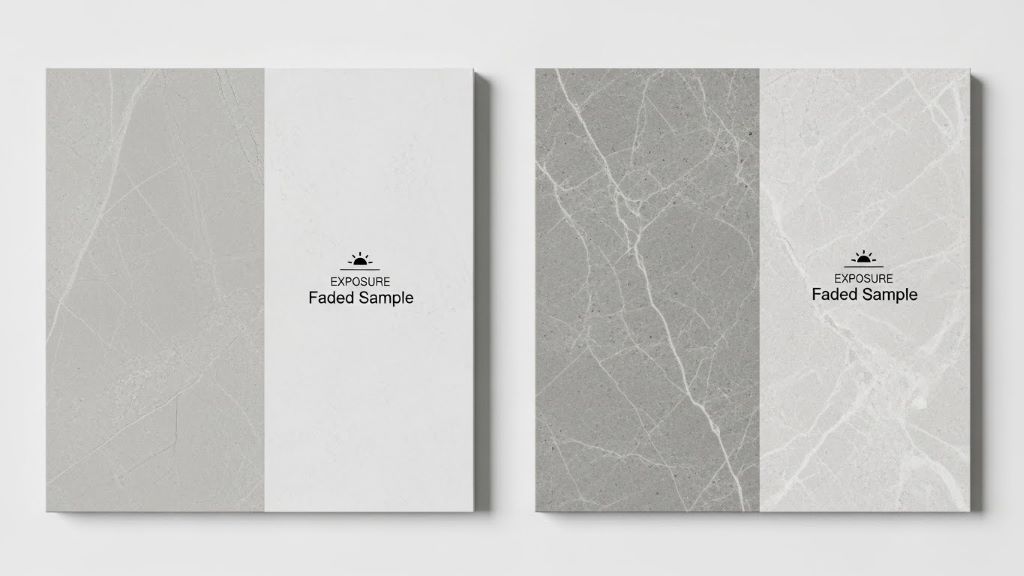
Both sintered stone and porcelain panels demonstrate excellent UV-fade resistance. Neither material contains organic compounds or resins that degrade under sunlight. Therefore, they significantly outperform materials like quartz, which can yellow or discolor with prolonged UV exposure. According to industry testing standards, both materials maintain their color integrity even after years of direct sunlight.
Sintered stone manufacturers often highlight their products’ complete UV stability. Since the material is 100% natural minerals with no bonding resins, there’s nothing for UV rays to break down. The pigments used in sintered stone are mineral-based and fully integrated throughout the slab’s thickness. This means even if the surface gets scratched, the color underneath remains identical.
Porcelain panels also excel in UV resistance, particularly through-body varieties. The high firing temperatures create a stable crystalline structure that resists discoloration. However, porcelain products with surface glazes may show slight variations over time if exposed to intense, constant UV radiation. Nevertheless, quality porcelain panels from reputable manufacturers typically carry warranties covering UV stability.
Real-world applications confirm these laboratory findings. Both materials are widely used for outdoor kitchens, pool surrounds, and building facades. According to Architectural Digest, porcelain and sintered surfaces have become increasingly popular for exterior applications precisely because of their weather resistance and color stability.
Performance in Outdoor Applications
Outdoor environments present the ultimate test for UV stability. Sintered stone performs exceptionally well in these settings. Its complete resistance to temperature fluctuations, combined with UV stability, makes it ideal for outdoor countertops and cladding. Rain, snow, and intense heat don’t affect its appearance or structural integrity.
Porcelain panels similarly thrive outdoors. Their frost resistance and low water absorption rates prevent cracking in freeze-thaw cycles. Furthermore, the material doesn’t harbor bacteria or absorb stains from outdoor cooking or entertaining. Many high-end outdoor kitchen projects now specify porcelain or sintered stone over traditional granite or concrete.
One consideration for outdoor installations involves thermal expansion. Both materials have low expansion rates, but proper installation techniques remain essential. Adequate spacing and flexible adhesives help accommodate any minimal movement. Additionally, both materials can become hot to the touch in direct sunlight, though they cool quickly once shaded.
Color Consistency Over Time
Long-term color consistency separates these premium materials from budget alternatives. Sintered stone’s mineral-based pigmentation ensures permanent color. The manufacturing process distributes color particles evenly throughout the entire slab thickness. Therefore, scratches or chips don’t reveal a different color underneath.
Porcelain’s color stability depends partly on whether it’s through-body or surface-glazed. Through-body porcelain maintains color throughout, similar to sintered stone. Surface-glazed options have a thin colored layer over a white or colored base. While quality glazes resist fading, they may eventually show wear in high-traffic areas.
Both materials resist chemical discoloration from cleaning products, pool chemicals, or acidic substances. This resistance extends their lifespan in commercial and residential applications. However, using pH-neutral cleaners helps maintain the surface’s original luster and prevents any potential dulling.
Cost and Value Considerations
Price often influences material selection. Sintered stone typically costs more than porcelain, though prices vary by brand and design. Premium sintered stone can range from $70 to $150 per square foot installed. Porcelain panels generally fall between $50 to $100 per square foot, making them slightly more budget-friendly.
The investment reflects manufacturing complexity and material properties. Sintered stone’s extreme processing conditions and 100% natural composition contribute to higher costs. Porcelain’s more established manufacturing processes and wider availability create competitive pricing. Nevertheless, both materials offer excellent long-term value through durability and minimal maintenance requirements.
Installation costs also factor into the total investment. Both materials require professional installation due to their weight and brittleness during handling. Specialized cutting tools and adhesives ensure proper mounting. Therefore, budgeting should include both material and skilled labor expenses.
Maintenance and Longevity
Maintenance requirements for both materials remain minimal. Neither requires sealing, unlike natural stone surfaces. Daily cleaning with mild soap and water keeps them looking new. Their non-porous surfaces prevent bacterial growth and eliminate the need for harsh chemical cleaners.
Sintered stone’s exceptional scratch resistance means it maintains its appearance even with heavy use. Knives and abrasive materials won’t damage the surface. Similarly, porcelain resists scratching, though it may be slightly more susceptible to chipping if heavy objects are dropped on it.
Both materials can last decades without significant wear. Their UV stability ensures outdoor installations won’t fade or discolor over time. This longevity makes them environmentally friendly choices, reducing the need for replacement and minimizing waste. According to The National Association of Home Builders, durable surface materials contribute significantly to sustainable building practices.
Aesthetic Versatility
Design flexibility influences many purchasing decisions. Sintered stone offers various finishes, from polished to textured surfaces. Manufacturers can create realistic marble, concrete, and metallic looks. The material works well for continuous surfaces, creating seamless transitions between countertops and backsplashes.
Porcelain panels provide even greater design variety due to advanced printing technologies. You can find porcelain that mimics virtually any natural material with stunning accuracy. Large-format panels reduce visible seams, creating clean, modern aesthetics. Additionally, porcelain comes in various thicknesses, allowing for different applications from wall cladding to heavy-duty countertops.
Both materials suit contemporary and traditional design styles. Their neutral appearance complements various color palettes and design themes. Furthermore, their thin profile compared to natural stone creates sleek, minimalist installations popular in modern architecture.
Environmental Impact
Sustainability considerations matter increasingly to consumers. Sintered stone’s composition of natural minerals and absence of resins makes it an eco-friendly choice. The manufacturing process, while energy-intensive, creates a product that lasts generations without replacement. Additionally, sintered stone is recyclable at the end of its lifecycle.
Porcelain panels also boast environmental credentials. Many manufacturers use recycled materials in their production processes. The clay and minerals used are abundant natural resources. Moreover, porcelain’s durability and low maintenance requirements reduce environmental impact over its lifespan.
Both materials contribute to LEED certification points for green building projects. Their heat resistance can improve energy efficiency by reflecting rather than absorbing heat in outdoor applications. Therefore, choosing either material supports sustainable building practices.
Making Your Decision
Selecting between sintered stone and porcelain panels depends on your specific needs. For outdoor applications with intense UV exposure, both materials perform excellently. Sintered stone offers slightly superior scratch resistance and heat tolerance. However, porcelain provides more design options and generally costs less.
Consider your budget, aesthetic preferences, and intended use. If you’re creating an outdoor kitchen in a sunny climate, either material will maintain its appearance for decades. For indoor applications where UV exposure is minimal, other factors like price and design may take priority.
Consulting with design professionals helps ensure the right choice for your project. They can assess your specific conditions and recommend the best material. Additionally, visiting showrooms to see samples in person provides valuable perspective on colors and textures.
Conclusion
Both sintered stone and porcelain panels offer exceptional UV-fade stability. Their mineral compositions and high-temperature manufacturing processes create surfaces that resist discoloration from sunlight. Homeowners can confidently use either material for outdoor kitchens, pool areas, and sun-filled interiors without worrying about fading.
The choice between them ultimately depends on budget, aesthetic preferences, and specific performance requirements. Sintered stone provides maximum durability and scratch resistance at a premium price. Porcelain offers outstanding performance with greater design variety and more accessible pricing. Regardless of your choice, both materials represent smart investments that will maintain their beauty for years to come.
Frequently Asked Questions
-
Will sintered stone or porcelain fade in direct sunlight?
No, both materials are highly resistant to UV-fading. Their mineral compositions and manufacturing processes create stable surfaces that maintain color even with constant sun exposure. Neither contains resins or organic materials that degrade under UV light.
-
Which is more expensive, sintered stone or porcelain?
Sintered stone typically costs more, ranging from $70-$150 per square foot installed, while porcelain panels generally cost between $50-$100 per square foot. Prices vary by brand, design, and thickness.
-
Can I use these materials for outdoor countertops?
Yes, both materials excel in outdoor applications. They resist temperature fluctuations, moisture, staining, and UV exposure. Their non-porous surfaces make them ideal for outdoor kitchens and entertaining areas.
-
Do sintered stone and porcelain require sealing?
No, neither material requires sealing. Their non-porous surfaces naturally resist staining and bacterial growth. Simple cleaning with mild soap and water is sufficient for maintenance.
-
Which material is more scratch-resistant?
Sintered stone generally offers superior scratch resistance due to its extreme hardness. However, quality porcelain panels also resist scratches effectively. Both materials significantly outperform natural stone and quartz in this regard.
Related Topics:
How to Effectively Raise Your Home’s Value with Smart Choices
Transform Your Living Space with Expert Light Fixture Installation