

Surfers know the pain of a broken board. One rough trip, one careless baggage handler, or one bad fall in the car park — and your investment is cracked. That is why finding the right bag matters more than most riders realize. The market is full of options, but not all of them are built to handle real-world wear and tear. This guide will help you sort through the noise and find a bag that truly protects your board for the long haul.
Why Your Surfboard Bag Matters More Than You Think
A surfboard is not cheap. Even an entry-level board can cost hundreds of dollars. Therefore, protecting it during travel and storage is simply common sense. A good bag shields your board from dings, UV rays, and temperature changes. It also makes carrying your board much easier, especially on long travel days.
However, many surfers buy bags based on price alone. They end up with thin, flimsy products that fall apart within a season. The smarter approach is to focus on build quality from the very start. When you do that, you spend less money in the long run and protect your board far better.
What Makes a Surfboard Bag “Heavy Duty”
Not every bag that claims to be tough actually is. Here are the key features that separate quality bags from cheap imitations.
Material Thickness and Outer Shell
The outer shell is your first line of defense. Look for bags made from high-density nylon or polyester with a denier rating of at least 600D. Higher denier means thicker threads and a stronger weave. Some premium bags use 1680D ballistic nylon, which is the same material found in hard-wearing luggage brands.
Additionally, the outer coating matters. A polyurethane or PVC coating adds water resistance and helps the bag hold its shape even when stuffed full. Without this, moisture seeps in and causes mildew on your board bag and potentially on the board itself.
Padding Quality and Coverage
Padding protects against impact. For daily use and car travel, 5mm to 10mm of foam padding is usually enough. However, for air travel, you need at least 10mm — ideally 15mm — of high-density foam on all sides. Pay close attention to the nose and tail sections. These areas take the most abuse during handling, so they need extra reinforcement.
Some bags use a single flat layer of foam throughout. Others use shaped foam that contours around the board’s rails and rocker. Contoured padding provides better protection because it leaves fewer gaps where impact can reach the board directly.
Stitching and Seam Construction
Strong stitching is often overlooked. Double or triple stitching along stress points — handles, zipper edges, and strap attachments — dramatically extends the life of a bag. Pull at the handles in the store if you can. A well-made bag will not shift or deform under pressure.
Reinforced seams also prevent water from entering through small gaps. Taped seams offer an added layer of waterproofing that is especially useful for travel in wet or humid conditions.
Zipper Quality
Zippers fail more often than any other part of a surfboard bag. Look for YKK zippers or similar industrial-grade options. They should glide smoothly, feel solid, and have large pulls that are easy to grip with wet hands. Rust-resistant metal zippers are better than plastic ones for bags used in salt air environments.
Choosing Between Bag Types
There are several styles of surfboard bags. Each serves a different purpose.
Day Bags
Day bags are lightweight covers designed for short trips. They offer basic UV protection and minor cushioning. They are not suitable for air travel or rough handling. However, they work well for protecting your board during daily beach sessions or quick car rides.
Travel Bags
Travel bags are the heavy hitters. They are built with thick padding, reinforced handles, and heavy-duty zippers. These are the durable surf bags you want when flying overseas or taking long road trips. They often hold multiple boards and include extra pockets for fins, wax, and leashes.
Coffin Bags
Coffin bags hold two to four boards at once. They are ideal for surfers who travel with multiple setups. The trade-off is weight — a loaded coffin bag can be quite heavy. Therefore, look for ones with padded wheels and comfortable shoulder straps to ease the burden.
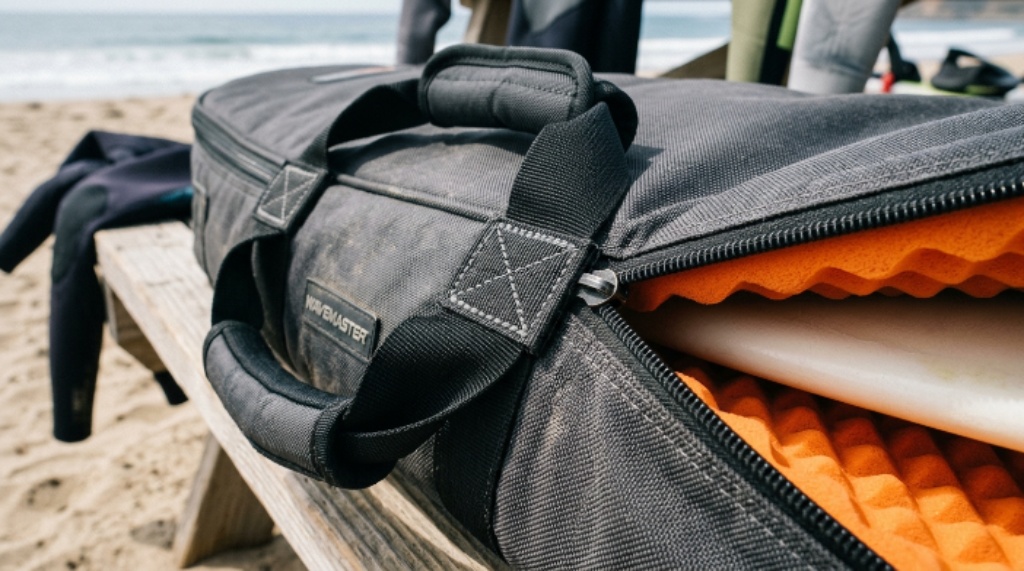
How to Spot Long-Lasting Impact-Resistant Covers
Impact-resistant covers are a step above standard bags. They are designed specifically to handle the kind of abuse that comes with air travel and rough terrain. Here is what to look for.
First, check whether the bag uses a hard shell or a reinforced soft shell. Hard-shell bags offer the best protection but are heavier and bulkier. Reinforced soft shells are lighter while still providing excellent cushioning against drops and compression. Many serious travelers prefer them for that reason.
Second, look for bags that feature high-density EVA foam. EVA — or ethylene-vinyl acetate — is a closed-cell foam that resists compression better than standard open-cell foam. It bounces back after impact rather than staying flattened, which means it keeps protecting your board throughout a long journey.
Third, check the base of the bag. Airport conveyor belts are rough on bags. A reinforced base with extra padding and abrasion-resistant fabric is essential. Some bags even include rubberized base panels that protect against scrapes and rough surfaces.
Key Features to Compare Before You Buy
When shopping, use this checklist to compare options side by side.
- Foam density (look for high-density or EVA foam, not generic foam)
- Outer fabric denier rating (600D minimum, 1680D for maximum durability)
- Zipper brand and style (YKK or equivalent, rust-resistant)
- Reinforcement at handles and strap points (double or triple stitching)
- Base protection (rubberized or extra-padded base panel)
- Number of compartments (separate fin pockets reduce internal damage)
- Wheel system if applicable (padded, lockable wheels save your back)
- Warranty offered by the manufacturer (longer warranty signals confidence in quality)
Tips for Making Your Surfboard Bag Last Even Longer
Buying a well-made bag is only part of the equation. How you care for it determines how long it lasts.
Rinse your bag with fresh water after each ocean trip. Salt causes fabric, foam, and zippers to degrade faster than almost anything else. Let the bag dry fully in the shade before storing it. Direct sunlight can fade and weaken the outer fabric over time.
Store the bag flat or hanging when not in use. Leaving it crumpled in a corner puts unnecessary stress on the seams and zippers. If you travel frequently, use a luggage lock through the zipper pulls to prevent theft and also to keep the zippers from accidentally opening during transit.
Apply a zipper lubricant every few months. Beeswax or a silicone-based lubricant keeps zippers running smoothly and helps prevent rust. This small step can extend the life of your zippers significantly.
Red Flags to Avoid When Shopping
Some bags look great online but fail quickly in real life. Watch out for these warning signs.
Bags with no stated foam thickness are often poorly padded. Bags from unknown brands with no customer reviews should be approached with caution. Extremely low prices almost always mean corners were cut on materials. Additionally, bags with plastic buckles instead of reinforced metal hardware tend to snap under pressure.
If a bag has no warranty or only a 30-day return policy, that is a sign the manufacturer does not trust its own product. Reputable brands stand behind their work with at least a one-year warranty, and sometimes more.
Conclusion
Finding a heavy duty surfboard bag that lasts comes down to knowing what to look for. Focus on outer fabric strength, foam density, zipper quality, and seam construction. Choose bag types that match your actual travel needs, and pay extra attention to base reinforcement if you fly often. Once you have a quality bag, care for it regularly to extend its lifespan. The right bag keeps your board safe, reduces repair costs, and makes traveling with your gear far less stressful. Invest in quality once, and it will serve you well for many seasons.
Frequently Asked Questions
What thickness of foam padding is best for air travel with a surfboard?
For air travel, aim for at least 10mm to 15mm of high-density foam padding throughout the bag, with extra cushioning at the nose and tail. This helps absorb the impact from baggage handling and conveyor belts.
Can I use a day bag for flying with my surfboard?
No. Day bags are too thin for air travel. They offer only basic UV and ding protection. For flying, you need a dedicated travel bag or coffin bag with thick foam and heavy-duty zippers.
How do I clean and maintain my surfboard bag?
Rinse it with fresh water after each ocean session to remove salt. Let it air dry fully in the shade. Lubricate zippers every few months with beeswax or silicone spray to keep them running smoothly and rust-free.
Are wheeled surfboard bags worth the extra cost?
Yes, especially for coffin bags carrying multiple boards. Wheeled bags reduce physical strain significantly during airport transfers and long walks. Look for lockable wheels made from durable rubber or hardened plastic.
What is the difference between EVA foam and standard foam in surfboard bags?
EVA foam is a closed-cell foam that resists compression better than open-cell foam. It springs back after being compressed, which means it continues to protect your board throughout a long journey. Standard foam tends to stay flattened after repeated impacts.
Related Topics:
How to Protect Feet While Surfing With the Right Water Shoes
How to Set Up a Home Golf Practice Mat for Daily Training


