
You step up to the green, fifty yards out, feeling confident. Then the shot comes up short, or worse, trickles over the back. Sound familiar? The short game is where scores get saved—or lost. In Colorado, the unique mountain air and high altitude change everything about how wedges behave. If you have been struggling to dial in those critical approach shots, you are not alone. This guide will help you understand exactly how to enhance your short game with the right wedges designed for Colorado conditions. Let’s break down the adjustments that will put you closer to the pin every time.
What Makes Wedge Play Different in Colorado’s High Altitude?
The Physics of Thinner Air
At Colorado’s typical elevation of 5,000 to 9,000 feet, the air is roughly 15 to 20 percent thinner than at sea level. This reduced air density means less drag on the golf ball. For wedge shots, this results in a significant gain in distance—anywhere from 5 to 10 percent more carry. A standard 100-yard wedge shot can easily fly 108 yards, leaving you long and in trouble if you don’t adjust.
Altitude and Spin Rates
Thinner air also reduces the spin rate on wedge shots. The ball stays in the air longer, but it spins less upon landing, which means less check and more roll. For Colorado courses, you need wedges that can generate aggressive spin to compensate. A high-quality wedge with sharp grooves becomes essential for stopping power on firm, fast greens.
Harder Ground Conditions
Colorado courses often feature bentgrass greens that are firm and fast. Combined with lower humidity, the turf is harder, so mishits and low-spin shots release significantly more. Understanding these conditions is the first step toward short game improvement Colorado wedges strategies that actually work.
Why Does Bounce Matter More in Colorado Than Elsewhere?
Bounce Defined Simply
Bounce is the angle between the leading edge and the lowest point of the sole. Higher bounce (10 to 14 degrees) helps the wedge glide through turf without digging. Lower bounce (4 to 8 degrees) is better for tight lies. In Colorado, the firm, dry ground often requires a different bounce selection depending on the course conditions.
When High Bounce Works
On Colorado courses with soft fairways or when playing out of thick rough (common at higher elevations where natural grasses thrive), high bounce prevents your wedge from digging too deep. It keeps the clubhead sliding through the turf, leading to more consistent contact. Use a 56-degree wedge with 12 degrees of bounce for bunkers and soft lies.
When Low Bounce Wins
On tightly mown fairways and hardpan (common in drier Colorado conditions), low bounce is your friend. A 60-degree wedge with 6 degrees of bounce allows you to pick the ball cleanly without the leading edge bouncing into the ball. This is critical for shots from 40 yards and in where precision matters most.
Practical Bounce Tips for Colorado Players
- Play a mid-bounce (8-10°) on your 50-degree gap wedge for versatility.
- Use a low-bounce (6°) lob wedge for tight lies around greens.
- Keep a high-bounce (12°) sand wedge specifically for bunkers and soft rough.
How Should You Adjust Wedge Loft Gapping for Colorado?
The Loft Gap Problem
Standard set wedges (Pitching Wedge at 44-46°) and Gap Wedge at 50-52° often leave too big a gap between your sand wedge and lob wedge. At altitude, a 4-degree gap can create a 15-yard distance disparity. For proper gapping, your wedges should be spaced 4 to 5 degrees apart, but with a slightly tighter gap in the scoring zone.
Recommended Colorado Wedge Setup
| Club | Loft | Bounce | Typical Distance (ft. above sea) |
|---|---|---|---|
| Pitching Wedge | 44° | 8° | 120 yards |
| Gap Wedge | 50° | 10° | 100 yards |
| Sand Wedge | 54° | 12° | 85 yards |
| Lob Wedge | 58° | 6° | 70 yards |
Why You Might Skip the 60-Degree Wedge
In Colorado, the 58-degree wedge often replaces the 60-degree wedge. The extra 2 degrees of loft are harder to control in thin air, and the lower trajectory of a 58-degree wedge helps maintain spin. Many Colorado pros carry a 58-degree wedge with lower bounce for firm course conditions.
What Groove Design Gives You the Best Spin at Altitude?
Sharp Grooves vs. Soft Grooves
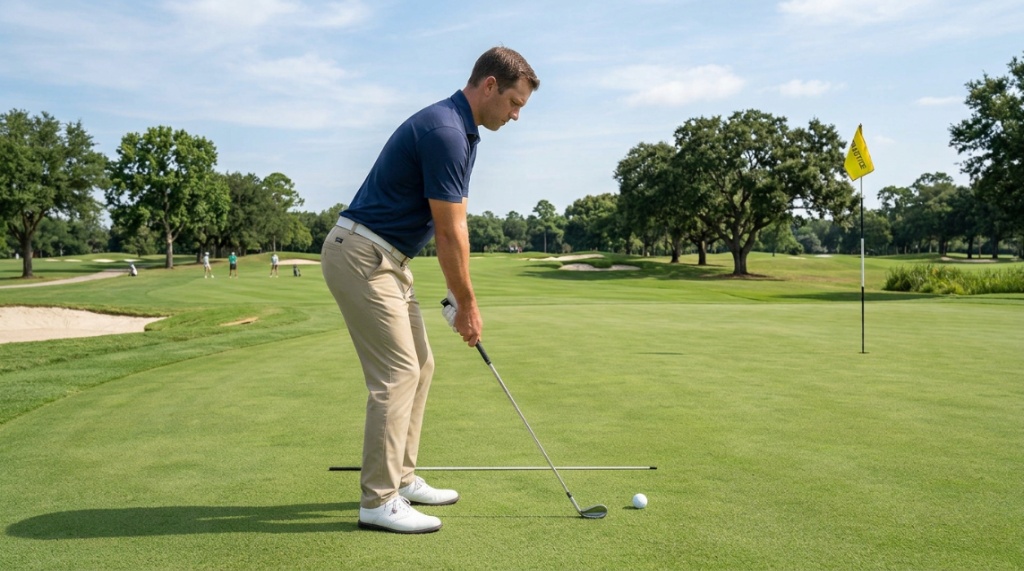
Sharp, milled grooves are non-negotiable for generating spin in Colorado. The shallower the groove, the less moisture and debris it can channel away from the clubface. Look for wedges with computer-milled grooves, which offer the highest precision. A wet ball on a firm green needs aggressive grooves to stop quickly.
Groove Wear and Performance
After 25 to 30 rounds in Colorado, wedge grooves can lose up to 15 percent of their spin capability due to the abrasive sandy soil. Check your grooves monthly. If they look worn down or the leading edge is shiny, it is time to replace your wedge. A fresh set of wedges every two seasons can shave 3 to 5 strokes off your short game.
Legal Grooves for Tournament Play
Ensure your wedges conform to USGA regulations concerning groove volume and spacing. Many modern wedges meet the 2010 groove rule, which limits sharpness for tournament use. However, recreational players in Colorado can benefit from wedges with more aggressive groove patterns that generate maximum spin,Improving your technique is only half the battle; managing the elements is the other. If you want to keep your hands dry and your grips slip-free during unexpected downpours, investing in a Windproof Golf Umbrella That Actually Lasts is just as critical as mastering your sand wedge setup.
Which Wedge Grind Suits Colorado’s Turf Conditions?
Understanding Wedge Grinds
Grind refers to material removed from the sole of the wedge to improve turf interaction. A full sole grind provides maximum forgiveness, while a heel-toe grind allows you to open the face more easily. For Colorado, a moderate grind with a slightly relieved heel works best for the variety of lies you encounter.
Best Grinds for Hardpan and Tight Lies
The C-grind or M-grind (depending on the brand) features relief on the heel, toe, and trailing edge. This allows you to lay the wedge open for flop shots without the leading edge bouncing. It is ideal for the tight, firm lies common around Colorado greens. Avoid a wide, full sole grind (like an S-grind) as it can cause the club to skid on hardpan.
Grind for Bunker Play
For the deep, soft sand found in some Colorado mountain courses, a wider sole with more bounce (like an S-grind or high-bounce D-grind) helps the wedge glide through the sand. Carry two wedges with different grinds to cover all situations: a low-bounce C-grind for tight lies and a high-bounce S-grind for bunkers.
How Can You Practice Short Game Effectively at High Altitude?
The Clock Drill
Set up a target at 30, 50, and 70 yards. Use your preferred wedge and hit three shots to each target. Record how far the ball flies versus how far it rolls. In Colorado, you might find that a 50-yard shot flies 53 yards instead, rolling out more. Adjust your backswing length accordingly. This drill builds muscle memory for altitude-adjusted distances.
Downhill and Uphill Lies
Colorado courses are notoriously hilly. Practice wedge shots from sidehill, downhill, and uphill lies at least once a week. On a downhill lie, the ball will fly lower and roll more; take one extra club or open the face slightly. On an uphill lie, the ball launches higher and lands softer; take one less club.
Altitude vs. Temperature Adjustments
Early morning rounds in Colorado (50°F) vs. afternoon (80°F) can change wedge distances by 3 to 5 yards. Cold air is denser, so your wedge shots will fly shorter in the morning. Always warm up on the range before your round to calibrate yardages for that specific day’s conditions.
Use a Launch Monitor
If you have access to a launch monitor like TrackMan or FlightScope, you can get exact altitude-adjusted numbers. Adjust the elevation setting to your course’s altitude (e.g., 6,000 feet) to see real-time spin, launch angle, and carry distance. This is the most precise way to dial in your wedge yardages.
Which Wedge Bounce Should You Choose for Sand Traps in Colorado?
Colorado Sand Characteristics
Sand conditions vary wildly across Colorado courses. Mountain resort courses often use fine, soft sand that is several inches deep. Municipal courses may have coarser, wetter sand. You need a versatile bounce to handle both. A sand wedge with 10 to 12 degrees of bounce works for most conditions, but you should test the sand on the course before deciding.
Deep Sand Requires High Bounce
In deep, fluffy sand, a high-bounce wedge (12 to 14 degrees) prevents the club from digging too deep. Open the clubface slightly and take a full, aggressive swing. The bounce will help the club slide under the ball and pop it out softly. Do not try to pick the ball cleanly; let the bounce work for you.
Hard Sand or Wet Sand
When sand is compacted or wet (common after rain at high altitude), a low-bounce wedge (6 to 8 degrees) allows you to nip the ball off the surface. A high-bounce wedge may bounce off the hard surface and hit the ball thin. If you only carry one sand wedge, a mid-bounce (10 degrees) is a safe compromise.
What Are the Best Wedge Techniques for Firm Colorado Greens?
The “Check and Release” Shot
On firm greens, a high-spin shot that lands and stops is ideal but difficult. Instead, aim for a shot that lands one third of the way to the hole and releases. Use a lower-lofted wedge (like your 50-degree gap wedge) with a slightly closed face. This produces a lower trajectory with more roll, making the distance predictable.
The Bump-and-Run
For shots 20 to 40 yards from the green, the bump-and-run is your most reliable weapon. Choose your 8-iron or pitching wedge, choke down, and take a putting stroke. The ball will fly low, land short of the green, and roll like a putt. This technique eliminates the risk of a high, spinning wedge shot that could bounce over the green.
Opening the Face for Soft Landings
When you absolutely must stop the ball quickly (e.g., over a bunker to a tight pin), open the clubface of your 58-degree lob wedge. This increases loft to about 62 degrees, adding spin and height. Execute a smooth, accelerating swing. Practice this shot at the range until you can land the ball within a 3-foot circle.
Can You Use the Same Wedge for 50, 75, and 100 Yards?
The Versatility of a Single Wedge
Yes, many Colorado golfers find they can cover multiple distances with one wedge using three-quarter and half swings. A 56-degree sand wedge, for example, can produce a 70-yard shot with a half swing, an 85-yard shot with a three-quarter swing, and a 100-yard shot with a full swing. This reduces the number of wedges you carry and simplifies decision-making.
Distance Control Through Swing Length
Practice three swing lengths with your sand wedge: 9 to 10 o’clock (half swing), 9 to 10:30 (three-quarter swing), and full swing. Measure the carry distance for each swing at your local Colorado range. Note the differences on your scorecard. Over time, you will develop reliable distance control without changing clubs.
Limitations of the One-Wedge Strategy
While versatile, using one wedge for all distances limits your ability to control trajectory and spin. A 70-yard shot with a sand wedge will launch lower and spin less than a 70-yard shot with a lob wedge. For most Colorado amateurs, carrying three wedges (gap, sand, lob) provides the best balance of simplicity and precision.
How Does Elevation Affect Wedge Shots from 30 to 80 Yards?
The 30-yard Shot
At 30 yards, the primary effect of altitude is reduced spin. Your ball may come in hot and release 5 to 8 feet past the hole. To compensate, use your 58-degree lob wedge and open the face slightly to increase spin. Aim for a landing spot 5 yards short of the pin. The ball will check slightly and roll toward the hole.
The 50-yard Shot
For a 50-yard shot, altitude adds about 3 to 5 yards of carry. If you normally hit a 52-degree gap wedge 50 yards at sea level, you will likely hit it 54 yards in Colorado. Choke down on the club half an inch and take a shorter backswing. This reduces the effective loft and keeps the ball flight under control.
The 80-yard Shot
At 80 yards, the effect of altitude is the most pronounced. The longer ball flight time allows more distance gain. Use a 50-degree gap wedge instead of a 52-degree wedge. The lower loft compensates for the extra distance, keeping your typical yardage consistent. If you normally hit a full 54-degree wedge 80 yards, switch to a 50-degree wedge at three-quarter power.
What Is the Best Wedge Set Configuration for Colorado Golfers?
Four-Wedge Setup
The most common setup for Colorado players is a four-wedge system: PW (44-46°), GW (50°), SW (54°), LW (58°). This setup provides full coverage from 70 to 120 yards with 4-degree gaps. It allows you to use the right club for every situation, from full swings to delicate chips.
Three-Wedge Setup
A three-wedge setup (PW, 52°, 58°) works well for players who prefer simplicity. The 52-degree wedge covers the gap from 80 to 100 yards, while the 58-degree wedge handles everything inside 70 yards. This setup requires more creativity with swing length but reduces the number of decisions on the course.
Custom Bounce for Each Wedge
Dial in your set: a 50-degree wedge with 10° bounce for full shots, a 54-degree wedge with 12° bounce for sand, and a 58-degree wedge with 6° bounce for tight lies and flop shots. This customized bounce approach maximizes performance for Colorado’s varied lies.
Frequently Asked Questions
What is the best wedge loft for a beginner in Colorado?
A 54-degree sand wedge is the most beginner-friendly option. It provides enough loft for high, soft shots while being versatile enough for chip shots and full swings. Starting with a single wedge allows you to master distance control before adding more clubs.
How often should I replace my wedges in Colorado?
Given the abrasive soil and frequent play on firm turf, replace your wedges every 75 to 100 rounds or once every two seasons. If you notice a loss of spin (ball rolls out too far), check your grooves. Worn grooves reduce stopping power significantly.
Does altitude affect wedge spin the same as driver spin?
Yes, but the effect is more pronounced with wedges because spin is crucial for stopping ability. Altitude reduces spin by about 10 percent, which can turn a check shot into a release shot. Using wedges with aggressive grooves helps mitigate this effect.
Should I use a softer golf ball for wedge play at altitude?
A softer golf ball (compression 70-80) generates more spin on wedge shots, which helps the ball stop on firm Colorado greens. However, softer balls may sacrifice some distance on longer clubs. Find a balance that works for your game, such as a three-piece urethane ball.
Can I use the same wedge for all bunker shots in Colorado?
Not ideally. For deep, soft sand, a high-bounce wedge (12-14°) is best. For hard or wet sand, a low-bounce wedge (6-8°) works better. If you can only carry one, choose a mid-bounce (10°) sand wedge and adjust your technique by opening or closing the face as needed.
How do I practice wedge shots without a launch monitor in Colorado?
Use the “flagstick test.” Hit wedge shots at the range and observe where the ball lands relative to the flag. Note whether it releases, checks, or stops. Compare your distances to sea-level expectations. Over time, you’ll develop a feel for the altitude adjustment.
What is the biggest mistake Colorado golfers make with wedges?
Overcompensating for altitude by swinging harder. A full swing often leads to mis-hits. Instead, slightly reduce the distance you expect to carry (e.g., aim for 95 yards when you normally hit 100 at sea level) and trust your normal swing. Smooth rhythm is key.
Take Control of Your Colorado Short Game Today
Mastering your short game in Colorado is about understanding one simple truth: adjust for altitude, not for effort. By choosing the right wedges with appropriate loft, bounce, and grind for Colorado’s firm conditions, you can turn your biggest weakness into your strongest asset. Start with a gapping check—make sure your wedges are spaced 4 to 5 degrees apart. Then, practice the clock drill and bump-and-run. Finally, invest in wedges with sharp grooves and the right bounce for your local courses. Apply these strategies on your next round and watch your scores drop. Your short game is ready for the mountains; now you just need to step up and play.