

Buying a home is one of the biggest choices you will ever make. A careful inspection protects that choice. For decades, inspectors judged roofs by climbing ladders. That method worked, but it was slow and risky. Today, small flying cameras are changing the process. Drones now capture clear views of roofs, chimneys, and gutters within minutes. As a result, inspections are safer, faster, and more detailed than ever before. In this article, through the lens of TheHumanizedInternet, I explain how drone technology is changing modern home inspection. I will also share my own experience with a drone inspection. By the end, you will know exactly what to expect and why this shift matters for your next property deal.
Why Home Inspectors Are Turning to Drones
Drones were once expensive toys for hobbyists. However, prices have dropped sharply over the past ten years. A reliable inspection drone now costs less than a single professional liability claim. Therefore, many inspection companies keep one or two units in their standard kits.
The rules have also improved. The Federal Aviation Administration (FAA) allows commercial drone flights under its Part 107 rule. Inspectors simply pass a knowledge test and register their aircraft. According to the FAA, nearly 800,000 drones are now registered in the United States. Property inspection is one of the fastest-growing commercial uses.
Training groups support this shift as well. For example, InterNACHI, the world’s largest home inspector association, offers drone certification courses to its members. Additionally, many regional chapters now teach drone safety during standard training events.
So what does all this mean for you? In short, drones have moved from novelty to normal tool. Inspectors who once skipped steep or damaged roofs can now document every surface. Moreover, the photos go straight into your written report. Buyers get fuller information, and inspectors face far less personal risk. That is a rare win-win in real estate.
Safer Inspections for Roofs and Hard-to-Reach Areas
Roof work is genuinely dangerous. According to OSHA, falls cause roughly one in three construction deaths. Roofers face this danger daily, and home inspectors share it. Older tiles can crack under a boot. Steep slopes turn small slips into serious injuries. Wet leaves, moss, and loose shingles make things worse.
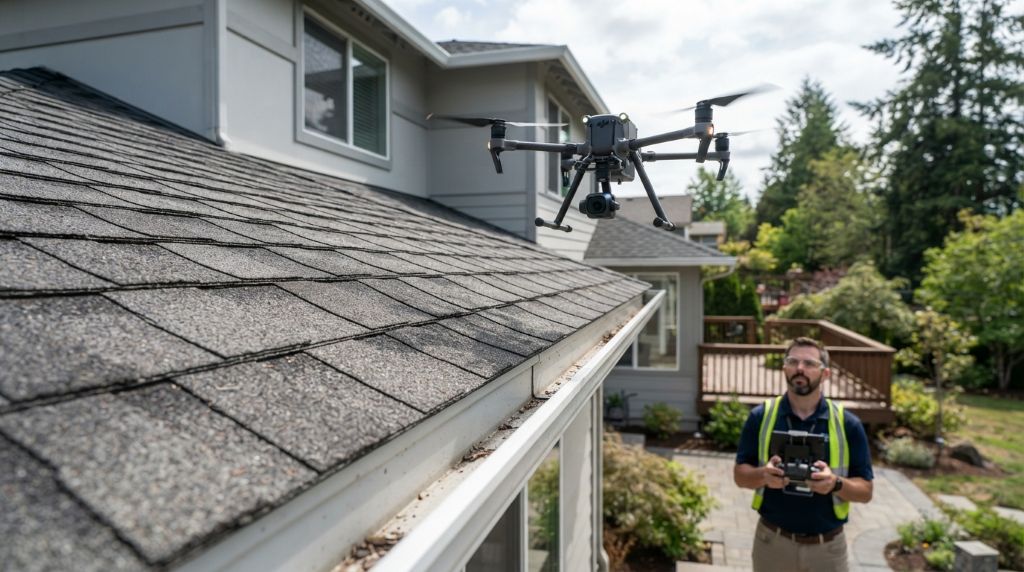
Drones remove most of that risk. The inspector stays safely on the ground while the aircraft climbs. It hovers over ridgelines, gutters, valleys, and skylights with ease. Therefore, fragile slate or clay tiles never take a human’s weight. Inspectors also avoid wasp nests, unstable chimneys, and rotten decking that could collapse.
Here is my own story. When I bought my first house two years ago, my inspector unzipped a gray case on the driveway. Inside sat a small quadcopter. My roof had a steep 45-degree pitch, and he admitted he would have photographed it from a wobbling ladder years ago. Instead, the drone rose, circled twice, and flagged a cracked vent boot I would never have spotted. That single photo saved me a repair bill and a future ceiling leak. It also convinced me this technology is far more than a gimmick.
Additionally, drones reach places ladders simply cannot. Tall third-story roofs, tight townhouse gaps, and delicate green roofs are easy targets from the air.
Faster Inspections and Sharper, Smarter Reports
Speed is the second major win. A manual roof inspection can take an hour or more. Ladders must be carried, set up, and moved repeatedly. A drone, however, can map an entire roof in 15 to 30 minutes. As a result, full inspections finish faster, and closing dates stay on schedule.
Image quality has improved just as quickly. Modern drones shoot 4K video and capture zoomed photos of shingles, flashing, and vents. Inspectors can enlarge a photo later and study fine details calmly. Nothing gets missed because someone rushed a risky climb.
Thermal cameras push this even further. Many inspection drones now carry infrared sensors. These sensors reveal heat patterns on walls and ceilings. Therefore, inspectors can spot missing insulation, trapped moisture, and air leaks without opening a wall. Sellers can also use these images to fix problems before listing the home.
A typical drone report often includes:
- Full photo coverage of every roof plane
- Close-ups of chimneys, skylights, vents, and gutters
- Thermal images that reveal moisture or heat loss
- Time-stamped files for insurance and repair records
Additionally, these images drop directly into digital reports. Buyers receive clear visual proof instead of vague written notes.
What Drones Mean for Buyers, Sellers, and Inspectors
Every party in a home sale gains something real. First, buyers get complete coverage. High roofs and third stories no longer get skipped or guessed at. Therefore, you see the true condition of the property before you sign anything.
Second, sellers gain a genuine advantage. Pre-listing drone scans reveal defects early. Sellers can repair issues before buyers or their agents ever notice them. This reduces surprise price cuts during negotiation.
Third, inspectors build safer, stronger businesses. Aerial photos lower their injury risk and raise the quality of their reports. After storms, drones also speed up insurance claims. Adjusters compare fresh drone images with past records, so claims settle faster and repairs start sooner.
However, drones still have clear limits. Keep these points in mind:
- Strong wind and rain ground most consumer drones
- Drones cannot see inside walls, attics, or crawl spaces
- Airports and some neighborhoods restrict low flights
- A photo never replaces an inspector’s trained judgment
Therefore, the best inspectors treat drones as one tool among many. They pair aerial views with careful hands-on checks inside the home. When both methods combine, nothing important goes unseen.
Conclusion: The Future of Home Inspection Is Already Here
Drone technology has quietly transformed home inspection. Roofs get checked more safely than ever, while reports arrive faster and include sharp visual proof. Thermal cameras can expose hidden problems long before they become disasters. Buyers, sellers, and inspectors all benefit from this shift, especially when evaluating properties alongside factors such as mortgage lenders, home inspections and reviews.
My advice is simple. When you hire a home inspector, ask whether they use drones. Then ask to see sample aerial photos from past reports. This one question tells you a lot about the detail you can expect.
Do home inspectors need a license to fly drones?
Yes. In the United States, commercial pilots must hold an FAA Part 107 certificate and register their aircraft.
Can a drone inspection replace a full home inspection?
No. Drones cover roofs and exteriors well, but inspectors must still check wiring, plumbing, and interiors in person.
Can drones detect problems inside my walls?
Not directly. However, thermal cameras can reveal signs of moisture, leaks, or missing insulation behind surfaces.
How long does a drone roof inspection take?
Most drone roof scans take 15 to 30 minutes, which is far faster than a manual climb.
Are drone inspections allowed everywhere?
Not always. Weather, local airspace rules, and airport zones can limit flights. Licensed pilots check these rules first.