

Learning to surf begins with mastering one fundamental skill that separates beginners from progressing surfers: the pop-up. This essential movement transforms you from lying prone on your board to standing upright, ready to ride the wave. While it may appear effortless when watching experienced surfers glide across the water, the pop-up requires proper technique, timing, and consistent practice to execute smoothly.
The pop-up serves as the foundation for all surfing maneuvers that follow. Therefore, understanding how to pop up on a surfboard correctly will accelerate your overall surfing progression and build confidence in the water. Many beginners struggle with this transition because they rush the movement or use improper form, leading to frustration and potentially dangerous situations in the surf.
Understanding the Pop-Up Fundamentals
Before attempting to pop up on a wave, surfers must understand the basic mechanics of this crucial movement. The pop-up consists of three main phases: the push-up, the foot placement, and the standing position. Each phase requires specific body positioning and timing to execute successfully.
During the initial phase, your hands should be positioned flat on the board, roughly where your chest naturally rests when paddling. Your fingers should point forward, and your palms should be firmly pressed against the deck. Additionally, your body should remain centered on the board throughout the entire movement to maintain balance and stability.
Step-by-Step Pop-Up Technique
The first step involves practicing the movement on land before entering the water. Start by lying face down on your surfboard with your chest positioned over the board’s center. Place your hands flat on the deck beside your chest, similar to a push-up position. However, keep your hands slightly wider than shoulder-width apart for better stability.
Next, push your upper body up using your arms while simultaneously bringing your back foot forward. The key is to avoid placing your knees on the board during this transition. Instead, bring your back foot to where your knee would naturally land, then quickly follow with your front foot. This creates a smooth, fluid motion that maintains your momentum.
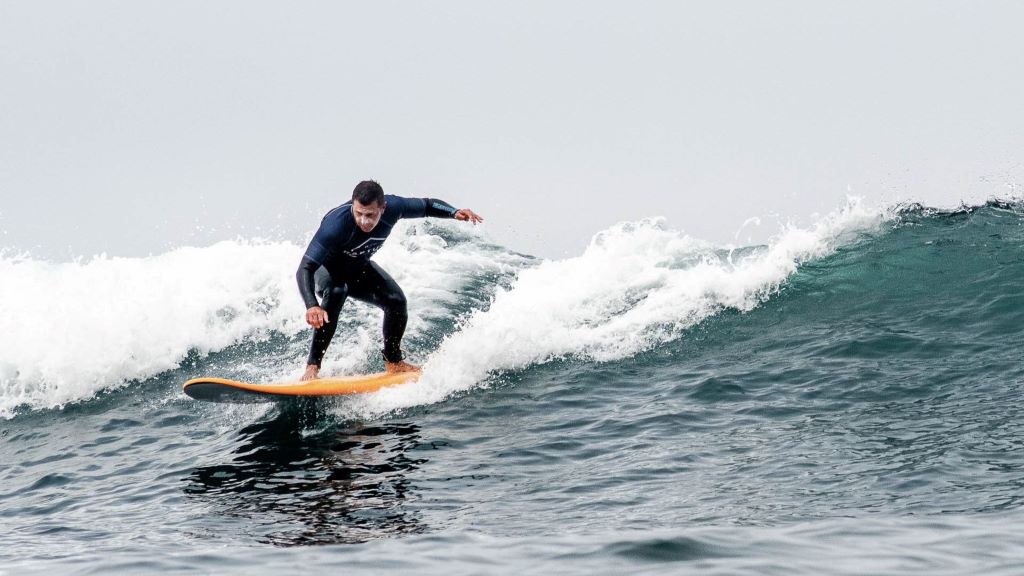
Furthermore, as you bring your feet forward, ensure your front foot lands between your hands while your back foot positions itself toward the tail of the board. Your stance should be sideways to the board’s direction, with your feet approximately shoulder-width apart. Keep your knees slightly bent and your arms outstretched for balance.
Common Pop-Up Mistakes to Avoid
Many beginners make critical errors that hinder their pop-up progress. One frequent mistake involves using the knees during the transition, which slows down the movement and often results in losing balance. Consequently, this knee-crawling technique becomes a difficult habit to break and limits your surfing advancement.
Another common error occurs when surfers place their hands too far forward or backward on the board. Improper hand placement affects your center of gravity and makes the pop-up significantly more challenging. Moreover, rushing the movement without proper form leads to inconsistent results and increases the likelihood of falling.
Additionally, many beginners fail to practice the pop-up on land before attempting it in the water. This oversight means they must learn the movement while dealing with the added complexity of waves, currents, and timing. Therefore, dedicated land practice sessions are essential for developing muscle memory and proper technique.
Building Strength and Flexibility
The pop-up demands specific physical attributes that surfers can develop through targeted exercises. Upper body strength is crucial for the initial push-up phase, while core stability helps maintain balance throughout the movement. However, flexibility in the hips and ankles is equally important for achieving proper foot placement.
Regular push-up variations, including wide-grip and diamond push-ups, will build the necessary arm and chest strength. Burpees are particularly beneficial because they closely mimic the pop-up movement pattern. Furthermore, yoga poses such as downward dog and warrior positions improve the flexibility needed for smooth transitions.
Practicing pop-ups on land should become part of your daily routine. Start with slow, controlled movements focusing on proper form rather than speed. As you become more comfortable with the technique, gradually increase the pace while maintaining accuracy. Resources and detailed guidance can be found at thesurfingvillage.com, which offers comprehensive tutorials for surfers of all levels.
Timing and Wave Selection
Understanding when to initiate your pop-up is just as important as knowing how to perform the movement. The timing depends on several factors, including wave size, board type, and your paddling speed. Generally, you should begin your pop-up as you feel the wave starting to lift and push your board forward.
Beginners should focus on catching waves in the white water rather than attempting to catch unbroken waves. White water provides a more forgiving environment for practicing pop-ups because the wave energy is more consistent and predictable. Consequently, this allows you to concentrate on your technique without worrying about timing the wave break.
Additionally, choosing the right waves for your skill level is crucial for successful pop-up practice. Look for waves that are knee to waist high with gentle, rolling breaks rather than steep, powerful waves that close out quickly. These conditions provide the ideal learning environment for developing your pop-up skills.
Progressing Your Pop-Up Skills
Once you’ve mastered the basic pop-up technique, focus on refining the movement for different surfing conditions. Practice popping up from various lying positions on the board to simulate real surfing scenarios. Sometimes you might be slightly off-center when a wave approaches, so adaptability is essential.
Work on increasing your pop-up speed while maintaining proper form. In real surfing situations, you often have limited time to get to your feet before the wave moves past you. Therefore, developing quick, efficient pop-ups will significantly improve your wave-catching success rate.
Moreover, practice transitioning directly into different surfing stances from your pop-up. Whether you surf with a regular or goofy stance, ensure your pop-up naturally leads into your preferred riding position without requiring additional adjustments once you’re standing.
Also Read:
Frequently Asked Questions
How long does it take to learn the pop-up?
Most beginners can learn the basic pop-up movement within a few practice sessions on land, but mastering it in the water typically takes several weeks of consistent practice. The timeline varies depending on individual fitness levels, flexibility, and how often you practice.
Should I practice pop-ups every day?
Yes, daily practice on land is highly recommended for beginners. Even 10-15 minutes of pop-up practice each day will significantly accelerate your progress and help develop the muscle memory needed for success in the water.
What’s the biggest mistake beginners make with pop-ups?
The most common mistake is using the knees during the transition instead of bringing the feet directly forward. This creates a slower, less stable movement that becomes difficult to correct once it becomes a habit.
Can I learn to pop up if I’m not very strong?
Absolutely. While upper body strength helps, proper technique is more important than raw strength. Focus on perfecting your form and gradually building strength through regular practice and targeted exercises.
How do I know when to start my pop-up on a wave?
Begin your pop-up as soon as you feel the wave lifting your board and providing forward momentum. This usually occurs when you’re paddling and suddenly feel the board accelerating with the wave’s energy.
Conclusion
Mastering the pop-up is an essential milestone in every surfer’s journey that requires dedication, proper technique, and consistent practice. By understanding the fundamental mechanics, avoiding common mistakes, and developing the necessary physical attributes, you’ll build a solid foundation for all future surfing endeavors. Remember that progress takes time, and each practice session brings you closer to executing smooth, confident pop-ups in various surfing conditions. Focus on quality over quantity in your practice sessions, and soon you’ll find yourself popping up effortlessly and enjoying longer, more successful rides on the waves.

