

You’re exhausted. You’ve tried the flimsy wire crate from the big-box store, and your dog has bent it into a pretzel knot for the third time this week. You come home to scratches on the door, dents in the metal, and a very proud Houdini wagging their tail in the hallway. The problem isn’t your dog’s intelligence—it’s the equipment. The good news? You don’t need to spend a fortune to secure your pup. Finding a budget heavy-duty dog crate that actually holds is about knowing which features matter most and where to look.
What Exactly Makes a Crate “Heavy Duty” Without the Hefty Price Tag?
A truly heavy-duty crate isn’t just about thicker wire; it’s about engineering. It requires reinforced seams, stronger gauge steel, and locking mechanisms that are impossible for clever paws to manipulate. You can achieve this on a budget by focusing on these critical components rather than brand names.
Gauge Steel Thickness and Weld Strength
The lower the gauge number, the thicker the steel. Standard crates use 21-gauge wire, which bends easily. Budget heavy-duty models typically start at 11-gauge for the frame and 14-gauge for the wire mesh. Check the welds: they should be flush and smooth, not just spot-welded, which causes breakage under stress.
Locking Mechanisms That Defeat Smart Paws
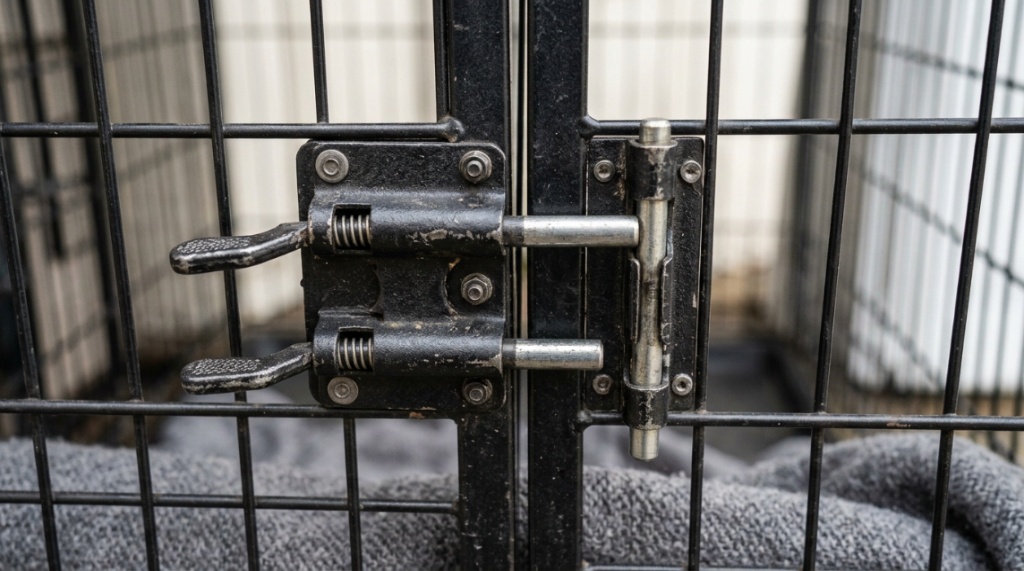
Escape artists are problem solvers. They learn to slide standard latches. Look for crates with double-locking door systems, padlock loops, or “anti-jump” top latches. If the crate you love has weak latches, you can purchase aftermarket replacement latches (like those used for gun cabinets) for under $15.
Folding vs. Riveted Construction
Folding crates are convenient for storage, but they have more moving parts that can fail. A fixed, riveted (not bolted) frame is often stronger. Rivets don’t loosen over time like screws do, ensuring the crate stays rigid when your dog slams against the door.
Why Did My Dog Escape from a “Guaranteed” Crate?
Most escapes happen due to human error or a mismatch between the dog’s pressure level and the crate’s actual safety rating. It’s rarely the dog’s fault; it’s the equipment’s resilience. Let’s break down the three main failure points.
Fire Escape: Door Latch Failure
The most common escape route is the door. If the door deflects even a quarter-inch, a determined dog can get a paw or nose in and pry it open. Test your crate by applying pressure to the door corners. If it flexes easily, it will fail.
Titanium Jaw Destruction: Wire Bending
Dogs with separation anxiety often focus on one spot, usually the corners. They bite and pull backward. If the wire is too thin, they’ll eventually snap a weld or bend a gap wide enough to slip through. This is a slow process, but a standard crate offers zero resistance.
The Roof Breakout: Weak Top Panels
Many crates have thin roofs because they aren’t meant to bear weight. A jumper will bounce on the top until it buckles. You need a crate where the roof is supported by the same gauge of metal as the sides, or one with reinforced crossbars.
How to Choose the Right Size to Prevent Future Escapes?
Buying too big is a mistake. A crate that is too spacious gives your dog room to run and build momentum to throw their weight against the door. The right size forces them to turn around comfortably but not leap.
Measuring Your Dog Correctly (Not Guessing)
Measure from the floor to the top of the head (while sitting) and from the nose to the base of the tail. Add 2-4 inches to the height and 4-6 inches to the length. This is the correct interior dimension. Never rely solely on the weight chart from a manufacturer.
Why “Grow Into It” Crates Are a Bad Idea
Puppies grow, yes. But if you buy a crate for a 100 lb dog when your puppy is 30 lbs, they will learn to escape it now. You’ll have to retrain them later. Rent a large crate or use a divider panel. Dividers are fine, but ensure the divider is welded to the frame, not just wedged in.
Which Materials Are Safest for a Chewer on a Budget?
Steel is the only option for plastic welders. However, not all steel is the same. Electrocoated (e-coated) or galvanized finishes are crucial to prevent rust when the crate inevitably gets wet from drool or a water bowl spill.
Powder-Coated vs. Galvanized
Powder coating looks nice but can chip off. When it chips, it leaves sharp edges and exposes bare metal to rust. Galvanized is more durable but looks less “pretty.” For a budget crate, choose galvanized for function over form.
Avoiding Plastic Pans That Shatter
The plastic tray at the bottom is a weakness. A determined chewer will shred it, find the screws underneath, and try to unscrew them. Replace the plastic pan immediately with a metal sheet pan (like a commercial baking tray) or a piece of 18-gauge sheet metal cut to size at a hardware store for $10.
Can I Stop My Dog from Attacking the Crate Bars?
Yes, but you must address the *cause* of the biting (usually stress) while also reducing the leverage they have. A crate cover works wonders. It removes visual stimuli that cause reactivity (people, other pets, passing cars).
Creating a “Cave” Environment
If you cover the crate, ensure airflow. Leave a gap at the front and back. This darkness signals sleep time, not playtime. It also prevents your dog from seeing you walk away, which is a major trigger for “bar biting.”
Metal Leash Wraps for Barrier Biting
Some trainers recommend spraying bitter apple spray. For truly severe cases, wrap the vertical bars with a thick rubber hose or pool noodle (secured with zip ties). This gives them something soft to bite that won’t break their teeth, and it blocks the visual gap they are trying to bite through.
When Should You Consider a Custom or Modified Budget Option?
If your dog has a very unusual body shape (like a long-bodied Dachshund or a tall Great Dane), standard dimensions might not fit. Look for crates that offer extension panels, but be careful—adding panels adds seams, which are weak points.
Using Zip Ties Strategically
Buy heavy-duty zip ties (the ones rated for 120+ lbs). Use them at every metal junction point of the crate. This gives the crate extra rigidity, preventing the door from flexing and the sides from bowing. This is a cheap, effective trick used by many rescue organizations.
Hardware Store Upgrade Kit
Visit a hardware store and pick up #8 machine screws, nylon lock nuts, and large washers. Remove all standard screws from the crate frame and replace them. Crimping the screws with pliers or using lock nuts ensures the crate cannot be unscrewed from the outside or inside.
Is a “Folding” Heavy-Duty Crate Worth It for the Price?
Usually, no. Folding mechanisms are complicated and costly to manufacture well. A welded, non-folding crate is much cheaper, has fewer parts, and is inherently stronger. The only exception is travel—if you need it for the car, you might sacrifice strength for portability, but that’s a separate discussion.
Comparing Fixed vs. Folding Models
Fixed crates often weigh 10-15 lbs more, but that weight is literal steel strength. Folding crates often have a hinge point at the bottom that allows slight movement. This movement acts like a lever, loosening the structure over time.
The 3-Panel vs. 4-Panel Design
Look for a crate with a “double door” option (one on the side, one on the front). This is useful, but never buy a crate where the entire front panel swings down as a ramp—that creates a huge stress point on the bottom hinge. Before putting your dog to bed, ensure they are also visible during evening walks by learning to keep your dog safe at night with a reflective harness.
How to Set Up the Crate to Discourage the Escape Attempt
Even the best crate won’t work if you introduce it wrong. Start slowly. Feed your dog all meals inside the crate for the first week. Toss a high-value treat (peanut butter-filled Kong) inside and close the door for 5 minutes while staying in the room.
Exercise First, Crate Second
A tired dog is less likely to panic. A 30-minute walk before crating can drastically reduce anxiety. This isn’t just about physical exhaustion; it’s about mental stimulation that helps them relax.
Understanding the Panic Point
The first 10 minutes after you leave are the most critical. If you can get your dog past that initial panic threshold, they usually settle down. Practice “fake departures”—put on your shoes, grab your keys, walk out the door, and come back in 2 minutes. Gradually increase the time.
What Is the Real Cost of a “Cheap” Crate That Fails?
If your dog escapes and destroys your house—chewed baseboards, scratched doors, or worse, runs out the front door—you’ve spent way more than the $150 difference between a flimsy crate and a solid one. The “budget” part should be about getting the best price on a quality item, not the lowest price on a dangerous one.
Calculating the True Cost
Consider this: The average damage from a dog escape is around $300 per incident (carpet, drywall, emergency vet visits). If you buy a 50-dollar crate that fails once, you’re already negative. Investing $120 in a solid crate is extremely cost-effective.
Safety Risks for the Dog
Broken teeth, cracked nails, and severe abrasions on the snout are common in escape attempts. A dog that escaped once might try again and hurt itself. Seek advice from a veterinary behaviorist if the issue persists, as it can become a pathological compulsion.
Comparing the Top 3 Budget-Proof Models
Let’s look at the specific construction differences that make some budget models far superior to others. When you search for the best options for your area, you want to see specific product names. For a curated list of reliable options in California.
| Crate Type | Gauge (Wire) | Lock Type | Escape Risk | Best For |
|---|---|---|---|---|
| Standard Wire (Big Box) | 21-gauge | Slide latch | High | Puppies under 40 lbs |
| Reinforced “Heavy Duty” (Chinese Imports) | 11-gauge wire / 15-gauge frame | Pull/lift handle | Medium | Medium chewers |
| Welded “Bulletproof” Style | 10-gauge wire / 10-gauge frame | Padlock loop & spring lock | Low | Severe escape artists |
| Agricultural (Goat/Kennel) Panels | 4-gauge (very thick) | Key clamp locks | Very Low | Dogs over 80 lbs |
Why Do Some Dogs Break Out Only When Left Alone (Separation Anxiety)?
This is the root cause for 90% of escape attempts. It’s not misbehavior; it’s a panic attack. The crate is a cage that prevents them from following you, so they attack the exit. If you solve the anxiety, you solve the escape. Start by reviewing the specifics of the budget heavy-duty dog crate options today, compare their safety features, and equip your dog’s den correctly.
Behavioral Training vs. Crating
You must address the panic at the source. Consult a certified professional dog trainer (CPDT-KA). They will set up a desensitization protocol. This usually involves counter-conditioning (associating your departure with something awesome, like a frozen Kong).
Medication and Supplements
For severe cases, ask your vet about anti-anxiety medication (like Trazodone or Clomicalm). It’s a temporary tool to lower the threshold enough to train them. Never punish them for escaping; it increases anxiety and makes the problem worse.
How to Check the Structural Integrity of a Used Crate
Buying used is a great way to save money. But a used crate might have hidden micro-fractures from a previous escape attempt. Before you buy, inspect all welds with a magnifying glass. Look for rust spots that could form sharp weak points.
The “Pressure Test” with PVC Pipe
Take a 2-foot piece of PVC pipe and use it as a lever to push against the corners of the crate. If the metal flexes or the weld pops, walk away. This simple test reveals weakness that you can’t see with the naked eye.
Replacing Old Hardware
Even if the metal is fine, replace the bolts. Hardware rusts and strips. You can buy a “socket head cap screw” kit online for $8 to replace the screws. This cheap upgrade will make a $60 used crate function like a $200 one.
Frequently Asked Questions
Will a plastic airline crate work for an escape artist?
No. Plastic crates (Vari-kennel style) are typically only secured with a single latch and metal screws. A determined dog will chew through the plastic corners or pop the screws out. These are for travel, not containment.
Can I use a wire crate and just zip-tie it closed?
Yes, strategically placing heavy-duty zip ties at all intersections dramatically increases strength. But you must still have a solid locking door. Zip ties prevent flexing; they do not replace the latch.
How long should I leave my dog in a crate?
Adult dogs can sleep through the night (8-10 hours) after training. However, for daytime crating, limit it to 4 hours at a time. Crate time should be the exception, not the daily default.
Is it okay to put a blanket inside the crate?
Yes, but avoid loose blankets if he’s a shredder. They can ingest material, causing a blockage. Use a “crate pad” that is designed for chewers (made of Kevlar or heavy ballistic nylon).
What is the safest way to clean a heavy-duty crate?
Use a solution of white vinegar and water (1:1). Avoid harsh bleach, as it can degrade the protective coating on the metal. Dry it thoroughly to prevent rust.
Are “silent” crates worth the high price?
No. Most “silent” dog crates are mislabeled. They are often cheap plastic and wood furniture pieces that are not chew-proof. You are paying for aesthetics, not security.
My dog breaks out of the top. What can I do?
If the top is wire, buy a section of 4×4 inch welded wire mesh (from the hardware store) and zip-tie it to the interior ceiling. This stiffens the roof and prevents escape.
Securing Your Escape Artist for Good
Remember that the goal is safety—both for your dog and your home. You have to choose a solution based on the dog you have today, not the dog you wish you had. A budget-heavy-duty option is a smart investment. Prioritize welded frames over folding ones, thick gauge over pretty colors, and functional latches over decorative ones.
Take the time to do the zip-tie reinforcement, replace the factory screws, and always, always measure your dog. A properly secured crate is a safe space, not a prison. And you’ll finally get peace of mind knowing your home stays intact.


