Outdoor projects demand tools that can withstand harsh conditions while delivering accurate measurements. Whether you’re building a deck, installing a fence, or planning a garden layout, having the right tape measure makes all the difference. This guide will walk you through everything you need to know about selecting a tape measure that performs reliably in outdoor environments.
Why Outdoor Projects Need Special Consideration
Working outside presents unique challenges that indoor projects don’t face. Rain can damage cheap tools quickly. Dust and dirt work their way into mechanisms. Temperature swings affect both materials and performance. Therefore, choosing a tape measure designed for outdoor use isn’t just a preference—it’s a necessity for anyone serious about their projects.
Professional contractors learned this lesson years ago. They invest in quality tools because replacements cost more than the initial purchase. Homeowners tackling DIY projects should apply the same logic. A weather resistant tape will serve you for years, while a basic model might fail after a few months of exposure.
Essential Features for Outdoor Tape Measures
Build Quality and Materials
The construction of your tape measure determines its longevity. Look for cases made from reinforced rubber or impact-resistant plastic. These materials absorb drops better than standard plastic. Metal components should be stainless steel or treated to prevent rust. Chrome plating works well for most climates, but coastal areas require extra protection against salt air.
The blade itself deserves careful attention. Nylon-coated blades resist moisture better than bare metal. Some manufacturers add protective layers that prevent scratches and wear. Additionally, the coating helps the blade slide smoothly even when dirty. This feature becomes invaluable when you’re measuring repeatedly throughout a project.
Standout and Reach
Standout refers to how far the blade extends before it bends and collapses. For outdoor work, greater standout means fewer trips around the workspace. A tape with 10-foot standout lets you measure across a room or along a fence line without assistance. However, balance this with your typical project needs. Extremely long standout often means a bulkier tool.
Most professional-grade options offer standout between 7 and 13 feet. This range handles most residential and light commercial projects. Consider what you measure most often. Deck builders benefit from maximum standout. Garden planners might prefer a more compact option.
Locking Mechanism Reliability
A dependable lock keeps measurements in place while you mark or cut. Outdoor conditions test locking mechanisms harshly. Dirt infiltration causes many locks to fail prematurely. Therefore, seek designs with protected lock buttons. Some models feature sliding switches instead of buttons, which keep debris out more effectively.
Test the lock before purchasing if possible. It should engage firmly with minimal pressure. Release should be equally smooth. A sticky lock indicates poor design or manufacturing. These problems worsen with use and exposure to elements.
Understanding Blade Length Options
Tape measures come in various lengths, typically ranging from 12 to 35 feet for general use. Your project scope determines the ideal length. Shorter tapes work well for detailed carpentry and smaller tasks. Longer versions suit large-scale projects like property surveys or foundation work.
Many professionals carry two tape measures. A 25-foot model handles most daily tasks. A 100-foot option serves for property lines and major layouts. This approach provides flexibility without excessive weight. Consider your most common measurements when deciding.
Moreover, longer tapes require sturdier construction to maintain accuracy. The blade must resist warping and stay straight during extension. Check specifications carefully. A flimsy 35-foot tape proves less useful than a robust 25-footer.
Accuracy Standards and Markings
Precision matters enormously in construction and landscaping. Even small errors compound across large projects. Look for tapes marked with accuracy ratings. Class I or Class II ratings indicate tested precision. These standards ensure measurements stay consistent over the tape’s length.
Marking clarity also affects accuracy. Large, easy-to-read numbers prevent misreading. Red markings at common intervals (16 and 24 inches) help with framing work. Fractional markings should be distinct and well-printed. Additionally, some tapes include metric measurements alongside imperial units, which proves helpful for certain projects.
The hook at the tape’s end deserves inspection too. It should move slightly to account for inside and outside measurements. This floating rivet design ensures accuracy in both applications. A fixed hook introduces consistent error that affects precision.
Weather Protection Features
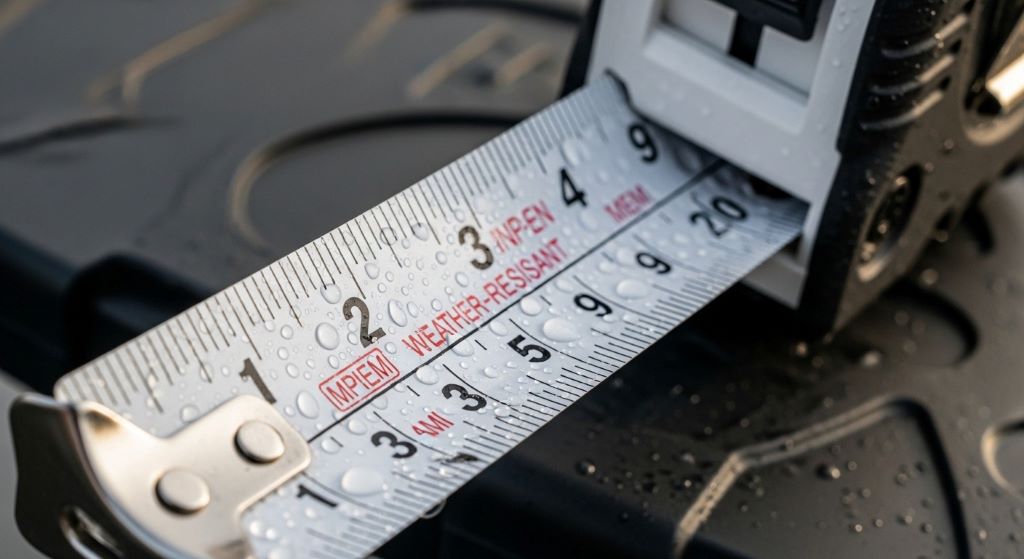
Outdoor tools face moisture, dust, temperature extremes, and UV exposure. A durable measuring tape incorporates protection against all these elements. Rubber gaskets around the case opening keep water and debris out. Sealed internal mechanisms prevent moisture from reaching critical components.
UV-resistant coatings protect the case and blade from sun damage. This matters especially in sunny climates where prolonged exposure causes brittleness. Without protection, plastic cases crack and blade coatings peel. Metal parts corrode faster when protective layers degrade.
Temperature tolerance varies by manufacturer. Quality tapes function reliably from below freezing to over 100 degrees Fahrenheit. Extreme conditions affect spring tension and blade flexibility. Check specifications if you work in particularly harsh climates.
Ergonomics and Comfort
Outdoor projects often involve repetitive measuring. Comfortable grip design reduces hand fatigue. Look for rubberized coatings that provide secure hold even with wet or gloved hands. The size should fit your hand naturally. Oversized cases suit people with larger hands, while compact models work better for smaller grips.
Belt clips allow convenient carrying between measurements. The clip should attach firmly without being difficult to remove. Spring-loaded clips work well but add potential failure points. Simple hook designs often prove more reliable long-term.
Weight becomes a factor during extended use. Heavier tapes feel more substantial but cause fatigue faster. Find a balance between sturdy construction and manageable weight. Testing different models helps identify your preference.
Special Features Worth Considering
Magnetic Hooks
Magnetic tips attach to metal surfaces, allowing single-person measurements on metal framing or roofing. This feature proves particularly useful for HVAC work, metal fabrication, and steel construction. However, the magnet adds weight and potential failure points. Evaluate whether you’ll use this feature enough to justify it.
Multiple Measurement Modes
Some advanced tapes calculate area and volume automatically. While not essential, these functions save time on material estimates. Digital displays show measurements clearly but require batteries. Consider whether electronic features suit your working style. Traditional mechanical tapes never need charging.
Fractional Reading Assistance
Certain models include fraction-to-decimal conversion charts on the case. This helps when working with plans that use different measurement formats. Similarly, some tapes mark common angles or rafter measurements. These additions benefit specific trades more than general users.
Maintenance for Longevity
Even the best weather resistant tape requires basic care. Wipe the blade clean after use in dusty or muddy conditions. Dirt acts like sandpaper inside the case, wearing mechanisms prematurely. A quick wipe takes seconds but extends life significantly.
Store tapes in a dry location when possible. While designed for outdoor use, constant moisture exposure still causes degradation. Additionally, avoid leaving tapes in vehicles where temperature extremes accelerate wear. Bring them inside when projects conclude.
Lubricate the blade occasionally with silicone spray. This keeps retraction smooth and prevents rust. Avoid oil-based lubricants that attract dirt. A light coating every few months maintains performance.
Budget Considerations
Quality tape measures range from fifteen to sixty dollars typically. Professional-grade options cost more but justify the investment through longevity. Budget models might last a season of heavy use. Premium choices often function for years.
However, expensive doesn’t always mean better for your needs. Identify must-have features versus nice-to-have additions. A mid-range tape with excellent weather protection often outperforms a premium model loaded with unused features.
Consider cost per use rather than upfront price. A thirty-dollar tape lasting five years costs far less than replacing a ten-dollar model annually. Factor in project delays caused by tool failure too. These hidden costs make quality tools economical.
Making Your Final Selection
Start by listing your typical projects and their requirements. Match tape features to those needs. Someone building raised garden beds needs different specifications than a person constructing a workshop.
Read reviews from users in similar climates and applications. Real-world performance often differs from marketing claims. Look for patterns in feedback. Consistent complaints about specific issues indicate genuine problems.
Purchase from retailers with good return policies when possible. This allows testing the tape on actual projects. A tool that feels perfect in the store might prove awkward during real use. Return privileges provide insurance against poor choices.
Conclusion
Selecting the right tape measure for outdoor projects involves balancing durability, accuracy, and functionality. A durable measuring tape with proper weather protection serves reliably for years, saving money and frustration. Consider your specific project needs, evaluate essential features, and invest appropriately for your usage level. The right choice makes measurements faster, more accurate, and significantly less stressful regardless of conditions.
Frequently Asked Questions
What makes a tape measure suitable for outdoor use?
Outdoor-suitable tape measures feature weather-resistant cases, rust-proof components, and sealed mechanisms that keep moisture and debris out. They typically include reinforced construction to withstand drops and rough handling common in outdoor environments.
How long should a quality outdoor tape measure last?
With proper maintenance, a professional-grade outdoor tape measure can last five to ten years of regular use. Factors affecting longevity include usage frequency, environmental conditions, and how well you maintain the tool between projects.
Are digital tape measures better for outdoor projects?
Digital tape measures offer convenience but require batteries and are often less durable than mechanical versions. For outdoor work, traditional mechanical tapes prove more reliable since they function in all conditions without power sources.
What blade length is most versatile for outdoor projects?
A 25-foot tape measure handles most residential outdoor projects effectively. It provides sufficient length for deck building, fencing, and landscaping while remaining compact enough for detailed work and easy carrying.
Can I repair a tape measure that’s been damaged by weather?
Minor issues like dirty blades or sticky locks can often be fixed with cleaning and lubrication. However, serious water damage, cracked cases, or bent blades usually require replacement since repairs cost nearly as much as new tools.
Related Topics:
Best Garden Tools Reviews in Houston – Shovels, Shears & More
Taming the Toolshed: Your Guide to Packing Garden Tools for a Move