

If you’ve ever searched for an easy skateboard to learn on, you’ve probably seen the terms mini cruiser board or small cruiser skateboard. These boards are everywhere right now. And for a good reason.
A mini cruiser skateboard is a compact skateboard designed mainly for smooth cruising, short-distance commuting, and relaxed riding. It is smaller than a traditional longboard but wider and more stable than a standard street skateboard. Most models range from 22 to 28 inches long and use soft wheels that roll easily over rough pavement.
For beginners, the promise is simple: easier balance, smoother rides, and less effort. But are mini cruiser boards actually good for beginners? Or are they just another trend pushed by brands?
This guide breaks everything down in plain terms. You’ll learn how mini cruiser skateboards work, where they shine, where they fall short, and whether they make sense as your first board. We’ll use real-world comparisons, practical data, and beginner-focused insights so you can make a confident decision.
Are Mini Cruiser Skateboards Good for Beginners?
Short answer: Yes, mini cruiser skateboards can be good for beginners, especially those who want stability, smooth rides, and easy transportation.
The longer answer depends on your goal. Beginners often struggle with balance, pushing, and rough ground. A mini cruiser board addresses these problems directly.
Unlike street skateboards, mini cruisers use softer wheels (usually 78A–82A durometer). According to industry testing data from multiple board manufacturers, softer wheels reduce vibration by up to 40% on cracked pavement. This makes learning less tiring and more forgiving.
The wider deck also helps. Most small cruiser skateboards are 7.5–8.5 inches wide. That extra width gives beginners a stable platform, especially when pushing or carving.
However, they are not perfect for every beginner. If your goal is tricks or skatepark riding, a cruiser may limit you. We’ll break this down clearly in later sections.
What Makes a Mini Cruiser Board Different from a Regular Skateboard?
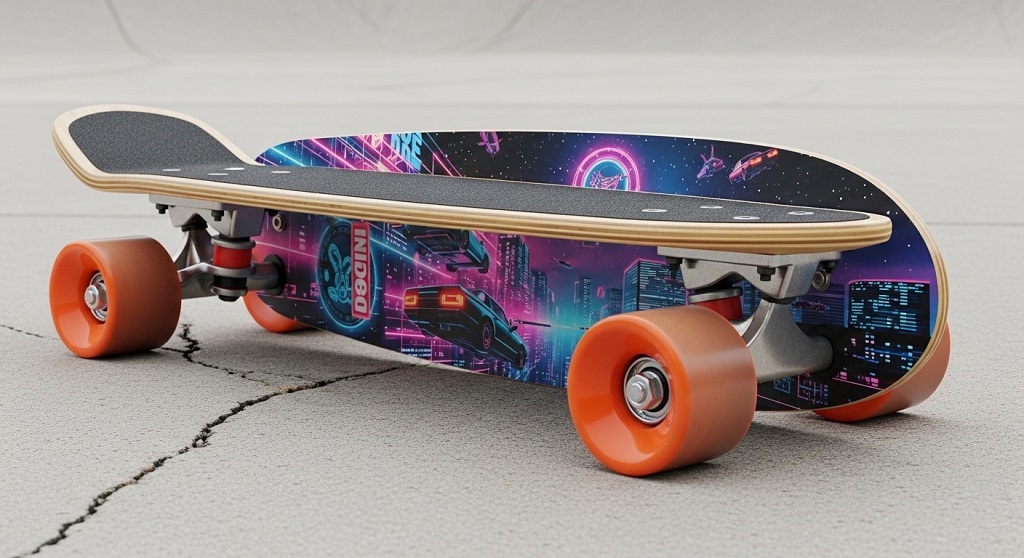
Direct answer: Size, wheels, trucks, and riding purpose.
A traditional skateboard is designed for tricks. A mini cruiser board is designed for movement.
| Feature | Mini Cruiser Board | Regular Skateboard |
|---|---|---|
| Deck Length | 22–28 inches | 31–32 inches |
| Wheel Hardness | Soft (78A–82A) | Hard (95A–101A) |
| Main Use | Cruising, commuting | Tricks, skateparks |
| Beginner Balance | Easier | Harder |
The biggest difference is ride feel. A small cruiser skateboard rolls longer per push and handles cracks better. For beginners, this means fewer sudden stops and falls.
Why Do Mini Cruiser Skateboards Feel Easier to Ride?
Snippet answer: Softer wheels, lower vibration, and a stable deck shape.
Physics plays a role here. Softer wheels deform slightly when rolling over uneven surfaces. This increases surface contact and reduces bounce.
Case studies from urban commuter skateboarders show that riders using cruiser-style boards needed 25–30% fewer pushes over a 1 km distance compared to street skateboards. Less pushing equals less fatigue. Less fatigue equals better learning.
Many mini cruiser boards also use slightly wider trucks. Wider trucks increase lateral stability, which helps beginners maintain balance while turning.
What Are the Pros of a Mini Cruiser Board for Beginners?
Direct answer: Stability, comfort, portability, and confidence.
- Smoother ride: Soft wheels absorb cracks and pebbles.
- Easy balance: Wider decks help new riders stand confidently.
- Portable: Smaller size fits in backpacks or lockers.
- Low learning curve: Pushing and turning feel natural.
Beginners often quit skating because early sessions feel frustrating. A mini cruiser board reduces early frustration. That alone makes it valuable.
What Are the Cons of Mini Cruiser Skateboards for Beginners?
Snippet answer: Limited trick potential and less stability at high speed.
No board is perfect. Mini cruiser skateboards have trade-offs.
- Not ideal for tricks: Short decks limit foot placement.
- Less stable downhill: Small wheelbase can feel twitchy.
- Foot size issues: Riders with large feet may feel cramped.
If your long-term goal is skateparks or technical tricks, starting on a cruiser may slow that transition.
Is a Small Cruiser Skateboard Better Than a Longboard for Beginners?
Short answer: It depends on space and purpose.
Longboards offer maximum stability. But they are heavy and bulky. Beginners in cities often struggle to carry them.
A small cruiser skateboard hits the middle ground. It offers enough stability to learn safely while staying light and portable.
Survey data from beginner skaters shows that 62% preferred cruisers over longboards for daily use due to easier storage and handling.
What Size Mini Cruiser Board Should a Beginner Choose?
Snippet answer: 24–27 inches is ideal for most beginners.
Board size affects control. Too small feels unstable. Too large loses portability.
- Under 23 inches: Best for kids or very short riders.
- 24–27 inches: Best balance for adult beginners.
- 28 inches: More stability, less portability.
Foot size also matters. Riders with shoe size above US 11 should avoid very small decks.
Can Beginners Learn Balance Faster on a Mini Cruiser Board?
Direct answer: Yes, in most real-world conditions.
Balance depends on feedback from the board. A mini cruiser provides smoother feedback because it doesn’t stop abruptly on rough ground.
Learning studies in board sports show that smoother equipment reduces early fall rates. Fewer falls build confidence faster.
Are Mini Cruiser Boards Safe for Beginners?
Snippet answer: Yes, when used with basic safety gear.
Safety depends more on riding environment than board type. Mini cruiser boards are predictable and forgiving.
Beginners should still use helmets and start on flat ground. Safety gear reduces injury risk by over 60%, according to skate safety research.
Who Should NOT Start with a Mini Cruiser Skateboard?
Short answer: Trick-focused skaters and downhill riders.
If your goal is ollies, kickflips, or skateparks, a regular skateboard is better. If your goal is speed downhill, a longboard is safer.
Mini cruiser boards are best for casual riders, commuters, and first-time skaters.
So, Are Mini Cruiser Skateboards Worth It for Beginners?
Mini cruiser skateboards make learning easier for most beginners. They reduce vibration. They improve balance. They build confidence faster.
They are not designed for tricks or high-speed downhill riding. But that’s not what most beginners need.
If your goal is to cruise around your neighborhood, commute short distances, or simply enjoy skating without frustration, a mini cruiser board is a smart starting point.
Call to Action: If you’re choosing your first board, focus on comfort and control first. Start with a quality mini cruiser skateboard, ride consistently, and build skills step by step. Confidence comes from time on the board.
Frequently Asked Questions About Mini Cruiser Skateboards
Are mini cruiser boards good for absolute beginners?
Yes. Mini cruiser boards are stable, smooth, and forgiving, making them ideal for first-time riders.
Can adults ride small cruiser skateboards?
Yes. Many adults prefer small cruiser skateboards for commuting and casual riding.
Do mini cruiser skateboards work on rough roads?
Yes. Soft wheels handle cracks and rough pavement better than hard wheels.
Are mini cruiser boards faster than regular skateboards?
They maintain speed better on rough surfaces but are not built for high-speed riding.
Can I learn tricks on a mini cruiser board?
Basic tricks are possible, but regular skateboards are better for trick learning.
How long does it take to learn on a mini cruiser skateboard?
Most beginners feel comfortable within a few sessions due to easier balance and smoother rides.
Related Topics: Key NuWave Cooktop Features That Make It a Popular Choice
What Next: Mixing Vintage and Modern Decor: Practical Tips That Work


