
Winter waves offer some of the best surfing conditions of the year. However, cold water temperatures can quickly turn an epic session into a painful experience if you lack proper protection. Your feet are particularly vulnerable to the cold, making the right footwear essential for comfortable winter surfing.
Choosing the appropriate cold water surf shoes requires understanding various factors. These include thickness, material quality, fit, sole design, and durability. This guide will help you make an informed decision so you can enjoy those winter swells without numb toes.
Understanding the Importance of Proper Footwear
Cold water affects your body in multiple ways. When your feet get cold, blood vessels constrict to preserve core body temperature. This reduces circulation to your extremities, causing numbness and decreased flexibility. Moreover, prolonged exposure can lead to conditions like chilblains or, in extreme cases, frostbite.
Proper footwear maintains warmth while allowing you to feel your board. The right pair creates a barrier against frigid water while maintaining flexibility for performance. Additionally, quality shoes protect your feet from sharp rocks, coral, and sea urchins that might lurk beneath the surface.
Neoprene Thickness Matters
The thickness of your surf shoes directly impacts warmth and flexibility. Neoprene comes in various thicknesses, typically ranging from 3mm to 7mm for cold water conditions.
Thicker neoprene provides better insulation but reduces board feel and flexibility. A 5mm thickness works well for most winter conditions, offering a good balance between warmth and performance. However, if you surf in extremely cold waters, you might need 7mm options.
Thinner 3mm versions suit milder winter conditions or transitional seasons. They offer excellent board feel but sacrifice some warmth. Therefore, consider your local water temperatures when selecting thickness.
Material Quality and Construction
Not all neoprene is created equal. High-quality thermal surf booties use premium neoprene that remains flexible in cold temperatures. Cheaper materials can become stiff, crack, or lose insulating properties quickly.
Look for sealed and glued seams rather than stitched construction. Glued and blind-stitched seams prevent water from seeping through, keeping your feet warmer. Furthermore, some manufacturers use liquid seam tape for additional waterproofing.
Internal lining enhances warmth significantly. Many quality boots feature plush thermal linings that trap heat while wicking moisture away from your skin. This combination keeps your feet comfortable throughout extended sessions.
Getting the Right Fit
Fit is crucial for both comfort and performance. Boots that are too loose allow water to flush in and out, defeating their insulating purpose. Conversely, boots that are too tight restrict circulation, ironically making your feet colder.
Your surf shoes should fit snugly without pinching or creating pressure points. You should be able to wiggle your toes slightly, but the boot should not slide around your foot. Additionally, ensure the ankle area seals properly to prevent water entry.
Try boots on with the wetsuit you plan to wear. Some surfers prefer to tuck their wetsuit legs inside the boots, while others pull them over. Your preference affects sizing, so test both methods before purchasing.
Sole Design and Traction
The sole impacts your performance significantly. Different sole patterns serve different purposes, from walking on slippery rocks to maintaining board contact.
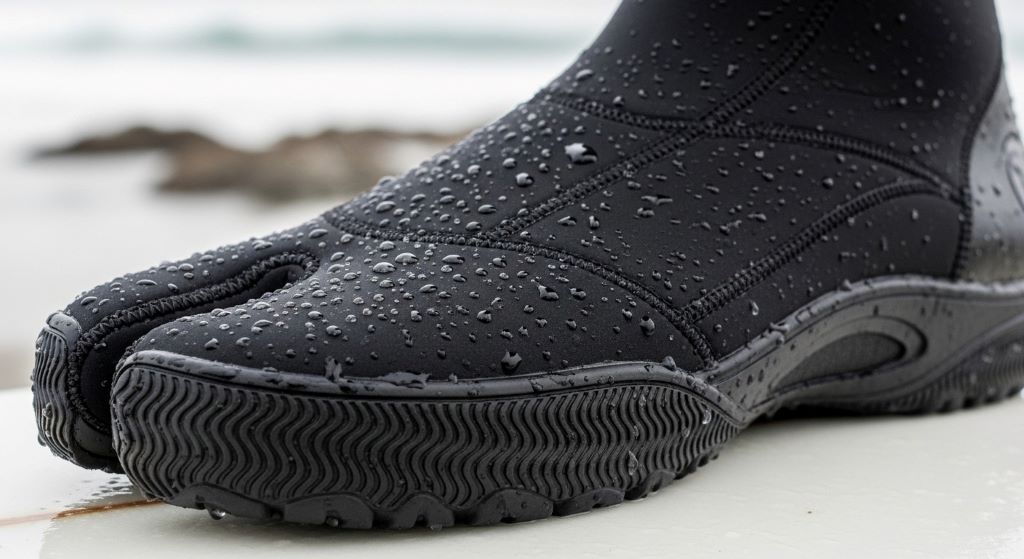
Split-toe designs mimic the natural foot shape and improve board feel. They allow better grip on your board and more natural foot positioning. However, round-toe designs offer slightly more warmth and easier entry.
Tread patterns should provide excellent grip without being so aggressive that they stick to your board. Look for patterns that shed water quickly and maintain traction on wet surfaces. Furthermore, consider whether you need to walk across rocky beaches or slippery boat decks.
Round Toe versus Split Toe
This choice often comes down to personal preference and performance needs. Split-toe boots separate your big toe from the others, similar to Japanese tabi socks. This design enhances board feel and allows more precise foot positioning.
Round-toe boots keep all toes together, providing slightly better warmth retention. They are easier to put on and take off, which matters when you are cold and tired after a session. Additionally, they tend to be more durable in high-wear areas.
Many experienced surfers prefer split-toe designs for their enhanced performance. Nevertheless, beginners might find round-toe options more practical and comfortable initially.
Entry System Considerations
How you get your boots on and off affects convenience and waterproofing. Common entry systems include ankle straps, zippers, and pull-on designs.
Ankle straps with Velcro closures offer adjustable fit and good water sealing. They allow you to tighten the boot around your ankle, preventing water from flushing through. However, Velcro can wear out over time and may catch on your wetsuit.
Zippered entries make putting boots on easier, especially when your hands are cold. Look for boots with protective flaps over zippers to prevent water intrusion. Meanwhile, pull-on styles offer the best water sealing but can be challenging to put on when wet.
Assessing Durability
Winter surfing gear takes a beating from cold water, UV exposure, and rough handling. Quality construction ensures your investment lasts multiple seasons.
Reinforced toe and heel areas prevent premature wear in high-stress zones. Some manufacturers add extra layers of neoprene or rubber in these areas. Furthermore, quality glue and stitching prevent delamination, where layers separate over time.
Check customer reviews for information about real-world durability. Products that perform well in testing environments sometimes fail under actual surfing conditions. Therefore, learning from other surfers’ experiences helps you avoid disappointments.
Warmth Technologies and Features
Modern insulated surf footwear incorporates various technologies to maximize warmth. Understanding these features helps you choose boots that match your needs.
Some boots include hollow fiber insulation layers that trap warm air. Others use metallic linings that reflect body heat back toward your feet. Additionally, certain brands offer battery-heated options for extremely cold conditions.
Drainage holes might seem counterintuitive, but strategically placed vents allow water to escape without letting cold water rush in. This prevents water from pooling inside your boots, which would conduct heat away from your feet.
Budget versus Quality
Price ranges for surf boots vary dramatically. While expensive does not always mean better, extremely cheap boots often disappoint.
Entry-level boots typically use thinner, lower-grade neoprene with basic construction. They work for occasional winter sessions but may not last a full season of regular use. Mid-range options offer better materials and construction at reasonable prices.
Premium boots justify their cost through superior materials, advanced features, and exceptional durability. If you surf regularly throughout winter, investing in quality boots pays off through better performance and longer lifespan. However, occasional surfers might find mid-range options perfectly adequate.
Care and Maintenance
Proper care extends the life of your boots significantly. Rinse them thoroughly with fresh water after each session to remove salt, sand, and organic matter. Salt crystallizes as it dries, which can damage neoprene and seams.
Dry your boots inside out in a shaded, well-ventilated area. Never leave them in direct sunlight or use artificial heat sources, as these degrade neoprene. Additionally, avoid folding or creasing boots during storage, as this can create permanent weak points.
Store boots flat or hanging in a cool, dry place. Some surfers use boot forms to maintain shape during storage. Furthermore, periodic application of wetsuit shampoo keeps neoprene supple and extends its lifespan.
Matching Boots to Conditions
Different winter surfing environments require different footwear approaches. Rocky beaches demand thick-soled boots with excellent traction. Sandy beaches allow thinner soles that prioritize board feel.
Water temperature is the primary consideration. Waters below 50°F typically require 5mm to 7mm thickness. Between 50°F and 60°F, 3mm to 5mm works well. Additionally, consider air temperature and wind chill, which affect how quickly you get cold.
Session length also matters. Short dawn patrol sessions might not require the warmest boots, while all-day adventures demand maximum insulation. Therefore, some surfers own multiple pairs for different conditions.
Common Mistakes to Avoid
Many surfers make preventable errors when selecting boots. Buying boots that are too large is a frequent mistake. Remember that neoprene stretches slightly with use, so boots that feel perfect in the store might become loose later.
Neglecting to try boots with your wetsuit leads to sizing problems. The combination affects fit significantly, so always test them together. Moreover, failing to consider the break-in period causes disappointment. New boots often feel stiff initially but soften after a few sessions.
Choosing boots based solely on price rather than features creates problems. The cheapest option rarely provides adequate warmth or durability for regular winter surfing. Instead, focus on finding the best value for your specific needs.
Environmental Considerations
The surf industry increasingly focuses on sustainability. Some manufacturers now produce boots using limestone-based neoprene rather than petroleum-based materials. Additionally, certain brands use recycled materials and water-based glues.
While eco-friendly options sometimes cost more initially, they reduce environmental impact. Furthermore, choosing durable boots that last multiple seasons is inherently more sustainable than replacing cheap boots annually.
Consider end-of-life disposal options. Some manufacturers offer recycling programs for old wetsuits and boots. These initiatives keep neoprene out of landfills and support circular economy principles.
Testing Before Committing
Whenever possible, try boots before purchasing. Many surf shops allow you to walk around the store to assess fit and comfort. This hands-on approach prevents costly mistakes.
Some retailers offer return policies that let you test boots in actual surf conditions. Take advantage of these opportunities, but follow return guidelines carefully. Additionally, talking with local surfers provides valuable insights about which boots perform well in your specific conditions.
Online reviews help, but remember that individual experiences vary. What works perfectly for one surfer might not suit another. Therefore, use reviews as guidance rather than absolute truth.
When to Replace Your Boots
Even quality boots eventually wear out. Knowing when to replace them ensures you maintain adequate protection and performance.
Visible signs of wear include tears, separated seams, or compressed neoprene that has lost its springiness. If water flushes through freely or your feet consistently get cold, the boots have likely reached the end of their useful life. Additionally, sole wear that reduces traction indicates replacement time.
Most boots last one to three seasons depending on usage frequency and care quality. Regular winter surfers might need annual replacement, while occasional users can extend boot life considerably. Nevertheless, safety and comfort should always take priority over extending boot life.
Conclusion
Selecting the right cold water surf shoes transforms winter surfing from an endurance test into an enjoyable experience. Focus on finding boots that balance warmth, flexibility, and durability for your specific conditions. Consider factors like neoprene thickness, construction quality, fit, and sole design carefully.
Remember that thermal surf booties are an investment in your comfort and safety. Quality insulated surf footwear allows you to surf longer, perform better, and enjoy winter swells fully. Take time to research options, try different styles, and choose boots that match your needs rather than simply grabbing the cheapest or most popular option.
With proper care and maintenance, good boots will serve you well through multiple winters. Stay warm out there and enjoy those uncrowded winter waves.
Frequently Asked Questions
How tight should surf boots fit?
Surf boots should fit snugly without causing discomfort or restricting blood flow. You should be able to wiggle your toes slightly, but the boot should not slide around your foot or ankle. A proper fit prevents water from flushing in while maintaining circulation.
Can I use the same boots for all water temperatures?
While you can technically use thick boots in warmer water, this reduces board feel and performance. Ideally, have different thickness options for varying conditions. However, a good 5mm boot works reasonably well across a wide temperature range if you only want one pair.
How do I prevent my boots from smelling?
Rinse boots thoroughly with fresh water after each use and dry them completely between sessions. Turn them inside out to ensure proper drying. Using wetsuit shampoo occasionally and storing them in a well-ventilated area prevents odor buildup.
Are split-toe boots better than round-toe?
Neither style is objectively better; it depends on personal preference. Split-toe boots offer better board feel and more natural foot positioning, while round-toe boots provide slightly more warmth and easier entry. Try both styles if possible to determine your preference.
How long do surf boots typically last?
With proper care, quality surf boots last one to three seasons depending on usage frequency. Surfers who use boots multiple times weekly might need annual replacement, while occasional users can extend boot life significantly. Replace boots when they show visible wear, lose insulation, or allow excessive water entry.
Related Topics:
Avoiding Crowds at Known Surf Regions
10 Common Beginner Mistakes in Surf Photography (And How to Avoid Them Like a Pro)