

Improving your golf game doesn’t require constant trips to the driving range. With the right setup at home, you can practice your swing every day, build muscle memory, and refine your technique on your own schedule. Creating an effective practice space in your home requires careful planning and the right equipment.
Many golfers struggle to find time for consistent practice. Work schedules, weather conditions, and driving range fees all present obstacles to regular training. However, a well-designed home practice area eliminates these barriers and allows you to work on your game whenever you have a few spare minutes.
This comprehensive guide will walk you through everything you need to know about setting up a productive practice area. You’ll learn how to choose the right equipment, optimize your space, and create training routines that actually improve your performance on the course. By the end, you’ll have a clear roadmap for building a practice setup that fits your goals and budget.
Finding the Perfect Space in Your Home
The first step in creating your practice area involves identifying the right location. Your ideal space depends on several factors, including ceiling height, floor type, available square footage, and proximity to valuable items that could suffer damage from errant shots.
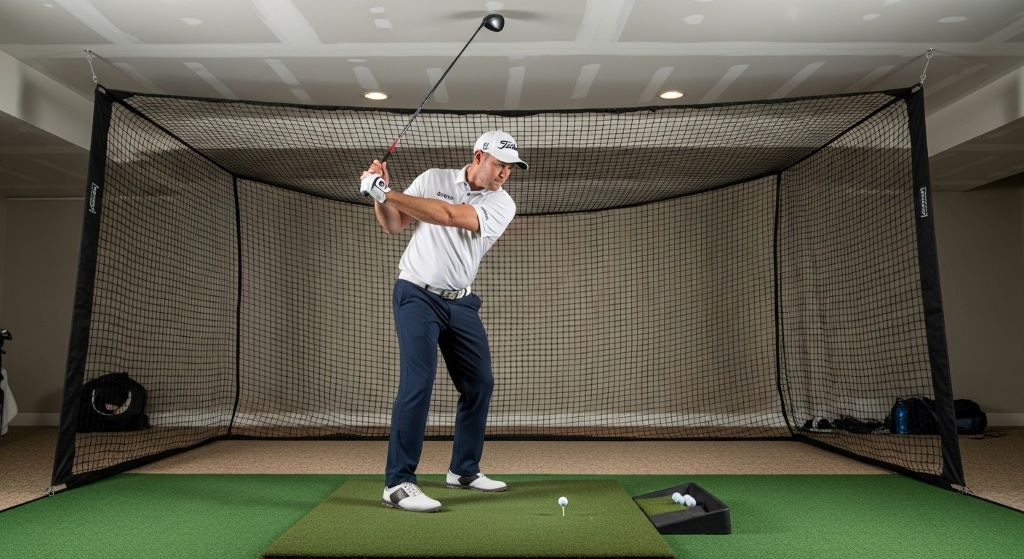
Indoor spaces work well for focused technique work and short game practice. Basements often provide the most practical option with adequate ceiling height and minimal disruption to the household. Spare bedrooms or home offices can also work if you have enough clearance for your swing.
Garages offer excellent versatility, allowing you to practice with both irons and drivers. Most garages have sufficient ceiling height for a full swing, and the concrete floor provides a stable foundation for your equipment. Additionally, garage doors can open to create an indoor-outdoor hybrid space during pleasant weather.
Outdoor areas like patios, decks, or yard spaces give you unlimited ceiling clearance and room to practice your full swing without restrictions. However, weather becomes a limiting factor, and you’ll need to consider equipment storage and protection from the elements.
Measure your chosen space carefully before purchasing equipment. You need enough room to swing comfortably without hitting walls, ceilings, or furniture. Allow at least eight feet of ceiling height for a full swing and ensure you have adequate space on both sides of your hitting area.
Choosing the Right Indoor Golf Training Mat
Selecting an appropriate indoor golf training mat forms the foundation of your practice setup. These mats vary significantly in quality, features, and price, so understanding your options helps you make an informed decision.
Basic mats provide a simple hitting surface at an affordable price point. They work well for beginners or golfers primarily focused on chipping and putting practice. However, they often lack realistic feedback and may not hold up well under daily use with full swings.
Premium mats feature multiple turf textures that simulate different lies you’ll encounter on the course. They include fairway surfaces, rough areas, and sometimes even sand textures. This variety lets you practice from various conditions, making your training more comprehensive and realistic.
Feedback mats incorporate special features that help you analyze your swing. Some include alignment guides, impact markers, or textured areas that provide instant feedback on your club path and contact point. These educational elements accelerate your improvement by making errors obvious.
Durability should be a primary consideration regardless of price point. Look for mats with thick, high-quality synthetic turf that won’t wear down quickly. Reinforced backing prevents the mat from sliding or bunching up during use. Check reviews specifically mentioning long-term performance with regular practice sessions.
Size matters more than many golfers initially realize. Larger mats give you more flexibility in stance positioning and allow you to practice from different lies. However, they also require more storage space and cost more. Balance your space constraints with your practice needs when selecting dimensions.
Essential Accessories for Complete Practice
An indoor golf training mat alone provides limited training value. Complementary accessories transform your basic setup into a comprehensive practice station that addresses multiple aspects of your game.
Practice nets catch your shots and allow you to hit real balls with full power. They range from simple pop-up designs to permanent installations with robust frames and durable netting. Choose a net large enough to catch mishit shots, as everyone occasionally makes contact errors even in practice.
Golf balls specifically designed for practice offer different benefits than regular balls. Foam balls eliminate the need for a net and allow indoor practice in smaller spaces. Limited-flight balls provide realistic feel and flight characteristics while traveling shorter distances. Regular balls work best if you have adequate space and a proper net.
Alignment sticks help you develop consistent setup positions and swing paths. Place them on the ground to check foot alignment, ball position, and target line. Use them during every practice session to build proper habits that transfer to the course.
Impact spray or tape reveals exactly where the ball contacts your clubface. This feedback is invaluable for improving strike quality. Center contact produces better distance and accuracy, and seeing your actual impact pattern helps you make necessary adjustments.
Mirrors allow you to check your posture, alignment, and swing positions without recording video. A full-length mirror positioned to the side of your hitting area lets you monitor your swing plane and body positions throughout the motion.
Setting Up Proper Lighting and Visibility
Adequate lighting often gets overlooked in home practice setups, yet it dramatically affects practice quality and safety. Poor visibility makes it difficult to see the ball clearly, monitor your club path, and maintain proper focus during training.
Overhead lighting should be bright and evenly distributed across your practice area. Avoid creating shadows that fall across your hitting zone, as these can distort your perception of the ball and your swing. LED fixtures provide excellent brightness while consuming less energy than traditional bulbs.
Directional lighting can highlight specific areas of your setup. Position lights to illuminate your mat clearly so you can see the ball against the turf texture. If using alignment aids or training tools, ensure they’re well-lit and easily visible.
Natural light works wonderfully when available but creates consistency issues. Practicing at different times of day means adapting to changing light conditions, which can affect your perception and performance. Supplement natural light with artificial sources to maintain consistent visibility.
Glare presents a common problem, especially with shiny golf balls or reflective surfaces nearby. Position lights to minimize glare on the ball and your equipment. Matte-finish practice balls can reduce glare issues if you struggle with this problem.
Consider your neighbors and household members when setting up lighting, particularly in garages or outdoor spaces. Bright lights visible through windows or directed toward neighboring properties may cause complaints. Use directional fixtures and close doors or blinds when appropriate.
Flooring Protection and Stability
The surface beneath your practice mat affects both performance and home maintenance. Different floor types require different protection strategies to prevent damage and ensure stable, safe practice conditions.
Concrete floors in garages and basements generally need minimal protection. However, the hard surface can be tough on your joints during extended practice sessions. Consider placing a rubber underlayment beneath your mat to add cushioning and reduce fatigue.
Hardwood floors require careful protection from impacts, scuffs, and potential moisture from shoes or equipment. Use thick protective mats or plywood sheets beneath your practice area. This barrier prevents divots from full swings from damaging the wood and makes cleanup easier.
Carpet provides natural cushioning but can cause stability issues. Practice mats may slide on carpet during your swing, creating inconsistent footing and potential safety hazards. Use rug grips or non-slip pads to keep your mat firmly in place.
Outdoor surfaces like concrete patios or wooden decks handle golf mats well, though weather exposure requires additional consideration. Ensure your mat drains properly if rain reaches it, and store it in dry conditions when not in use to prevent mold or deterioration.
Leveling your practice area ensures consistent ball contact and realistic feedback. Even small slopes or uneven surfaces affect how the ball sits and how your swing feels. Use leveling tools to check your space and make adjustments if needed.
Creating Effective Practice Routines
Having excellent equipment means nothing without structured practice routines. Effective golf swing practice requires deliberate training that addresses specific aspects of your game rather than simply hitting balls mindlessly.
Start each session with a warm-up routine. Make slow, smooth swings without a ball to loosen your muscles and rehearse proper mechanics. Gradually increase your swing speed over five to ten minutes. This preparation prevents injury and helps you enter focused practice mode.
Focus on quality over quantity during training. Twenty purposeful swings with specific goals produce better results than a hundred thoughtless repetitions. Choose one or two aspects of your swing to work on during each session rather than trying to fix everything at once.
Break your practice into segments that address different skills. Spend time on alignment and setup, work on specific swing positions, practice impact drills, and finish with rhythm and timing exercises. This varied approach prevents boredom and addresses multiple performance factors.
Record your practice sessions periodically. Video analysis reveals details you can’t feel during your swing. Compare your positions to professional examples or your own previous recordings to track improvement over time.
Set specific, measurable goals for each practice session. Instead of vaguely trying to “get better,” aim to achieve consistent contact with seven out of ten swings or maintain a specific swing thought for fifteen consecutive repetitions. Concrete goals create accountability and make progress visible.
Integrating Technology for Enhanced Training
Modern technology offers powerful tools that can dramatically accelerate your improvement when integrated into your home practice setup. These devices provide objective data and feedback that traditional practice methods cannot match.
Launch monitors measure critical ball flight data including clubhead speed, ball speed, launch angle, and spin rate. While professional-grade units cost thousands of dollars, affordable consumer models now provide valuable feedback for home practice. This data helps you understand exactly what your swing produces.
Swing analyzers attach to your club and record detailed information about your swing path, tempo, and face angle at impact. Smartphone apps display this information in easy-to-understand formats and often suggest specific drills to address your weaknesses.
Pressure mat systems reveal your weight distribution and shift during the swing. Proper weight transfer is crucial for power and consistency, yet it’s difficult to feel accurately without objective measurement. These systems make an abstract concept concrete and trainable.
Virtual golf simulators combine practice with entertainment, allowing you to play famous courses from your home. While expensive, they provide the most comprehensive training experience by combining ball flight data, swing analysis, and realistic gameplay that maintains engagement.
Balance boards and swing trainers add variety to your practice while developing specific physical skills. These tools build strength, flexibility, and coordination that directly transfer to better golf performance.
Managing Noise and Household Harmony
One often-overlooked challenge of home golf practice involves managing noise and maintaining good relationships with family members or neighbors. The sound of club impacts, balls hitting nets, and equipment movement can become disruptive.
Impact noise varies significantly based on your mat quality and the floor beneath it. Higher-quality mats with good padding absorb more sound than thin, basic models. Adding rubber underlayment beneath your mat further reduces noise transmission through floors and walls.
Ball strikes against nets create distinctive sounds that can carry through walls. Position your net against exterior walls when possible to minimize disturbance to other rooms. Some nets feature quieter designs with multiple layers that dampen sound.
Schedule your practice sessions during appropriate times. Early morning or late evening practice may disturb sleeping family members or neighbors. Communicate with household members to identify mutually agreeable practice times.
Foam balls eliminate most noise concerns and allow practice in shared spaces or apartments where regular balls would be problematic. While they don’t provide identical feedback to real balls, they’re excellent for working on swing mechanics and tempo.
Consider noise-reducing modifications if sound remains problematic. Acoustic panels, weatherstripping on doors, or even simple blankets hung on walls can significantly reduce noise transmission. These solutions may seem excessive but preserve domestic harmony while allowing regular practice.
Maintaining Your Equipment for Longevity
Proper maintenance extends the life of your practice equipment and ensures consistent performance over time. Regular care prevents premature wear and saves money in the long run.
Clean your mat regularly to remove dirt, grass, and debris that accumulates from shoes and clubs. Vacuum or brush the surface weekly if you practice daily. Deep clean monthly using mild soap and water, then allow complete drying before storing or using again.
Rotate your hitting area to distribute wear evenly across the mat surface. Most golfers naturally hit from the same spot every time, creating worn patches. Moving your position slightly with each session extends mat life significantly.
Inspect your net regularly for tears, loose stitching, or frame damage. Small issues become major problems if ignored. Repair minor damage immediately with patches or reinforcement to prevent complete failure during use.
Store equipment properly when not in use, especially if practicing outdoors or in unconditioned spaces. Moisture, extreme temperatures, and UV exposure degrade materials over time. Keep mats rolled or folded in dry areas and protect nets from weather when possible.
Replace worn components promptly rather than continuing to practice with degraded equipment. A mat with compressed turf or a net with tears provides poor feedback and may develop safety issues. Quality equipment should last years with proper care, but nothing lasts forever.
Tracking Progress and Staying Motivated
Consistent practice requires motivation, and tracking your improvement provides powerful encouragement to maintain your routine. Objective measurements of progress keep you engaged even when on-course results lag behind your practice improvements.
Keep a practice journal documenting your sessions. Note the date, duration, focus areas, and observations about your swing or ball flight. This record helps you identify patterns, remember successful changes, and see long-term progress that day-to-day practice might obscure.
Test yourself regularly with standardized challenges. Create a series of shots or positions and score yourself on consistency or quality. Repeat these tests monthly to measure improvement objectively. Seeing measurable progress motivates continued effort.
Set both short-term and long-term goals for your practice. Short-term goals might involve mastering a specific drill or achieving consistent contact. Long-term goals could include reducing your handicap by a certain number of strokes or gaining specific yardages with particular clubs.
Share your progress with others who understand your commitment. Join online golf communities, practice with friends who have similar setups, or work with an instructor who can review your practice videos and provide guidance.
Celebrate milestones and improvements, no matter how small. Golf improvement happens gradually, and acknowledging progress keeps you motivated during plateaus. Treat yourself to new equipment, a round at a special course, or simply take pride in your dedication.
Budgeting for Your Setup
Creating a home practice area involves financial investment, but options exist for every budget. Understanding cost ranges and prioritizing essential items helps you build an effective setup without overspending.
Minimal setups can be created for under two hundred dollars. A basic mat, foam balls, and simple alignment tools provide enough to work on fundamental swing mechanics. This approach works well for beginners or those testing whether home practice suits their lifestyle.
Mid-range setups costing five hundred to one thousand dollars offer significantly better quality and features. Invest in a durable mat with realistic turf, a quality practice net, limited-flight balls, and essential training aids. This range provides excellent value for committed golfers who practice regularly.
Premium installations exceeding several thousand dollars include high-end mats, professional-grade nets or enclosures, launch monitors, and comprehensive training technology. These setups rival commercial facilities and suit serious golfers who practice daily or professionals teaching from home.
Phase your purchases over time rather than buying everything at once. Start with essential items and add accessories as your needs become clear. This approach spreads costs and prevents purchasing equipment you ultimately don’t use.
Consider used equipment markets for certain items. Mats, nets, and training aids often appear in excellent condition on secondhand markets at substantial discounts. Avoid used electronics unless you can verify their functionality before purchase.
Conclusion
Setting up a home golf practice area transforms your ability to improve consistently. An indoor golf training mat combined with thoughtful space planning, appropriate accessories, and structured practice routines creates an environment where real improvement happens. The convenience of practicing at home eliminates common barriers to consistent training and accelerates your development.
Success requires more than just purchasing equipment. Choose the right space based on your home’s layout and available clearance. Select a quality mat that provides realistic feedback and stands up to regular use. Add essential accessories that address multiple aspects of your game, and create structured practice routines rather than simply hitting balls mindlessly.
Integrate technology when budget allows, as modern training aids provide objective feedback that accelerates improvement. Manage practical concerns like noise, household harmony, and equipment maintenance to ensure your practice area remains sustainable long-term. Track your progress through journaling and regular testing to stay motivated and document improvement.
Whether you invest in a minimal setup or a premium installation, the key is consistent, purposeful practice. Your golf swing practice will only improve your on-course performance if you commit to regular training with specific goals. With your home practice area ready, you have no excuses. The opportunity to work on your game exists right in your own space, waiting for you to take advantage of it every single day.
Frequently Asked Questions
How much space do I need for an effective home golf practice area?
The minimum space depends on what aspects of your game you want to practice. For short game work and swing mechanics with limited backswing, you can work effectively in a space as small as eight feet wide by ten feet deep with seven-foot ceilings. For full swings, you need at least ten feet of width, fifteen feet of depth, and nine to ten feet of ceiling height. Garages typically provide adequate space for most practice needs.
Can I practice with real golf balls indoors, or should I use foam balls?
Real golf balls require a proper practice net rated for full-speed impacts and adequate space behind the net for safety. If you have these elements, real balls provide the most realistic feedback. However, foam balls offer a safer alternative for smaller spaces, eliminate noise concerns, and still allow you to work effectively on swing mechanics, tempo, and contact quality. Many golfers use both depending on what they’re practicing.
How often should I practice at home to see real improvement?
Quality matters more than quantity. Three to four focused practice sessions of twenty to thirty minutes per week will produce noticeable improvement if you practice with specific goals and proper technique. Daily ten-minute sessions can be equally effective for building muscle memory and maintaining consistency. The key is deliberate practice with clear objectives rather than mindlessly hitting balls for hours.
What’s the most important piece of equipment to invest in first?
Start with a quality mat that provides realistic turf interaction and durable construction. Your mat forms the foundation of your practice area and directly affects how accurately you can practice. A good mat will last for years and provides value even if you add nothing else initially. You can practice swing mechanics, alignment, and setup with just a mat and your clubs before adding nets, balls, or training aids.
Will practicing at home actually improve my on-course performance?
Home practice improves on-course performance when done correctly. Focus on fundamentals like alignment, setup, and swing mechanics that translate directly to the course. However, home practice cannot completely replace playing actual rounds, as course management, reading greens, and handling pressure require on-course experience. The ideal approach combines home practice for technical improvement with regular course play to develop complete golf skills.
Related Topics:
Golf Club Reviews 2025: Is It Time to Upgrade Your Bag?
Avoiding Crowds at Known Surf Regions


