

Understanding mathematical concepts like square roots and cube roots can feel overwhelming for students and parents alike. Many families turn to educational resources like Study Watches to help track their child’s academic progress and understand when specific topics are introduced in the curriculum.
Square roots and cube roots are fundamental mathematical concepts that build upon each other throughout a student’s educational journey. However, the timing of when these concepts are taught varies significantly across different grade levels and educational systems.
The question “when do you learn square root” is commonly asked by parents who want to prepare their children for upcoming mathematical challenges. Understanding the progression of these concepts helps families support their student’s learning effectively.
The Educational Timeline for Square Roots
Square roots typically enter the curriculum during middle school years, usually around sixth or seventh grade. Most educational systems introduce this concept when students are between 11 and 13 years old. At this stage, students have already mastered basic multiplication and division, providing the necessary foundation for understanding inverse operations.
Teachers often begin with perfect squares, helping students recognize patterns in numbers like 1, 4, 9, 16, and 25. This approach makes the concept more accessible and less intimidating for young learners.
The introduction of square roots coincides with students’ growing ability to think abstractly. By middle school, children can grasp the relationship between multiplication and its inverse operation more effectively than younger students.
When Cube Roots Enter the Picture
Cube roots typically appear later in the mathematical timeline, usually during eighth grade or early high school years. This timing makes sense because cube roots require a more sophisticated understanding of three-dimensional thinking and advanced algebraic concepts.
Students generally encounter cube roots around ages 13 to 15, after they’ve become comfortable with square roots and basic algebraic operations. The delay in introducing cube roots allows teachers to build upon previously learned concepts systematically.
Unlike square roots, which have more practical applications in everyday geometry, cube roots often feel more abstract to students. Therefore, teachers need to ensure students have a solid mathematical foundation before tackling this concept.
Grade-Level Breakdown of Root Concepts
Elementary Years (Grades K-5)
During elementary school, students focus on building number sense and mastering basic operations. While they don’t learn about roots directly, they develop crucial skills that will support future learning.
Teachers emphasize multiplication tables, which become essential for recognizing perfect squares later. Students also work with geometric shapes, unknowingly preparing for future discussions about area and volume calculations.
Middle School Introduction (Grades 6-8)
Sixth grade often marks the first formal introduction to square roots. Students learn to identify perfect squares and understand the basic concept of finding a number that, when multiplied by itself, equals the given value.
Seventh grade typically expands on square root concepts, introducing the radical symbol and more complex problems. Students might begin working with non-perfect squares and approximation techniques.
Eighth grade frequently introduces cube roots, though some schools may wait until ninth grade. At this level, students explore the relationship between cubes and cube roots while connecting these concepts to volume calculations.
High School Development (Grades 9-12)
High school mathematics courses delve deeper into root concepts, exploring fourth roots, nth roots, and radical expressions. Students learn to manipulate complex radical equations and apply these skills to advanced problem-solving scenarios.
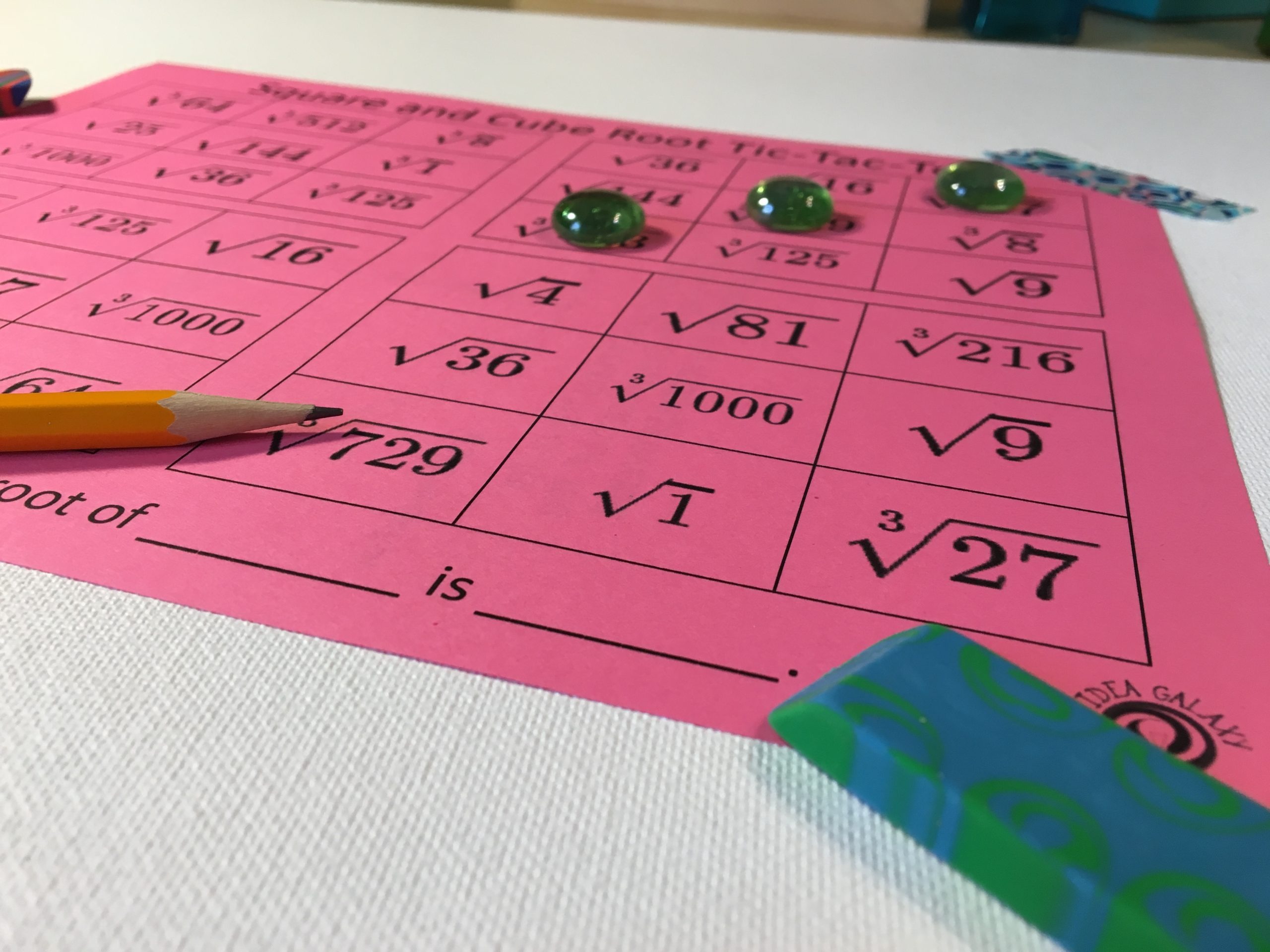
Teaching Strategies for Different Root Types
Making Square Roots Accessible
Successful teachers use visual aids and hands-on activities to introduce square roots. Creating physical squares with tiles or graph paper helps students visualize the concept concretely before moving to abstract representations.
Many educators start with perfect squares, allowing students to build confidence before tackling more challenging problems. This scaffolded approach reduces anxiety and promotes deeper understanding.
Real-world applications, such as finding the side length of a square garden given its area, help students see the practical value of learning square roots.
Introducing Cube Roots Effectively
Cube roots require different teaching strategies because the three-dimensional aspect can be challenging to visualize. Teachers often use building blocks or other manipulatives to demonstrate cube concepts physically.
Starting with perfect cubes like 1, 8, 27, and 64 helps students recognize patterns and build familiarity with the concept. This foundation makes it easier to understand more complex cube root problems later.
Connecting cube roots to volume calculations provides practical context that helps students understand why this mathematical concept matters in real-world situations.
Common Challenges and Solutions
Student Difficulties with Square Roots
Many students struggle with the concept that square roots can have decimal answers. Teachers address this by gradually introducing irrational numbers and approximation techniques.
Calculator dependence is another common issue. Effective educators balance technology use with mental math skills, ensuring students understand the underlying concepts rather than just memorizing button sequences.
Cube Root Complications
The three-dimensional nature of cube roots often confuses students who are still developing spatial reasoning skills. Teachers combat this challenge by using plenty of visual aids and encouraging students to draw diagrams.
Students frequently confuse cube roots with square roots, especially when working with radical notation. Clear labeling and consistent practice help differentiate these concepts effectively.
Supporting Learning at Home
Parents can support their children’s understanding of roots by encouraging exploration of patterns in numbers. Simple activities like finding perfect squares in everyday objects or discussing the dimensions of boxes can reinforce classroom learning.
Creating connections between mathematical concepts and real-world applications helps students see the relevance of what they’re learning. This approach increases engagement and improves retention of important mathematical ideas.
Regular practice with age-appropriate problems builds confidence and fluency. However, parents should avoid pushing concepts before their children are developmentally ready, as this can create math anxiety.
The Importance of Sequential Learning
Mathematical concepts build upon each other in carefully planned sequences. Understanding when students typically learn square roots versus cube roots helps parents and educators provide appropriate support at each stage.
Rushing through mathematical concepts or skipping foundational skills often creates gaps that become problematic later. Respecting the natural progression of mathematical learning leads to better long-term outcomes.
Different students may be ready for these concepts at slightly different times, and that’s perfectly normal. Individualized instruction and flexible pacing help ensure all students can master these important mathematical tools.
Conclusion
Square roots and cube roots represent important milestones in mathematical education, typically introduced during middle school and early high school years respectively. Square roots usually appear around sixth or seventh grade, while cube roots follow in eighth or ninth grade. This timing allows students to build necessary foundational skills before tackling more complex concepts.
Understanding when these topics are typically taught helps families prepare and support their children’s mathematical journey. Remember that individual students may be ready at different times, and that’s completely normal. The key is ensuring solid foundational skills before moving to more advanced concepts.
By recognizing the natural progression of mathematical learning and supporting students appropriately at each stage, we can help them develop confidence and competence in working with roots and other important mathematical concepts.
Frequently Asked Questions
Q: At what grade do most students first learn about square roots? A: Most students are introduced to square roots in sixth or seventh grade, typically between ages 11-13, after they have mastered basic multiplication and division skills.
Q: Why are cube roots taught after square roots? A: Cube roots require more advanced spatial reasoning and algebraic thinking skills. Teaching square roots first allows students to understand the concept of inverse operations before tackling the more complex three-dimensional aspects of cube roots.
Q: Can elementary students understand square root concepts? A: While elementary students aren’t typically taught formal square root notation, they can understand the basic concept through activities involving perfect squares and geometric shapes, which builds foundation for later learning.
Q: What should I do if my child is struggling with square roots? A: Focus on strengthening multiplication skills and perfect squares first. Use visual aids, real-world examples, and consider seeking additional support from teachers or tutors if needed.
Q: Are there practical applications for learning cube roots? A: Yes, cube roots are useful in calculating volumes, understanding three-dimensional relationships in engineering and architecture, and solving various scientific problems involving cubic relationships.
Read more:
Houston Tutors Share Best Study Techniques That Work