

Golf courses across America are embracing sustainability practices. However, few facilities have committed to environmental stewardship as deeply as certain California destinations. According to Golf Player Hub, conscious golfers increasingly seek venues that balance exceptional play with ecological responsibility. This shift reflects growing awareness about water conservation and habitat preservation.
Leading the Way in Sustainable Golf
The rustic canyon golf course stands out as a model for environmentally conscious course management. Located in Moorpark, California, this facility demonstrates how championship-level golf can coexist with nature. The course sits on land that once served as farmland, and designers intentionally preserved the natural landscape during construction.
Additionally, the management team has implemented numerous green initiatives since opening. These practices reduce environmental impact while maintaining playing conditions that satisfy discerning golfers. Therefore, the venue attracts players who value both quality golf and ecological responsibility.
Water Conservation Strategies
Water usage represents one of golf’s biggest environmental challenges. Traditional courses consume millions of gallons annually. However, modern maintenance approaches significantly reduce this burden.
The course employs smart irrigation technology that monitors soil moisture levels. Sensors placed throughout the property detect when watering is actually needed. Consequently, staff avoid unnecessary irrigation that wastes precious resources. This system reduces water consumption by approximately 30 percent compared to conventional methods.
Furthermore, the facility uses recycled water for irrigation purposes. This approach minimizes demand on municipal drinking water supplies. The Environmental Protection Agency reports that water-efficient landscaping can reduce outdoor water use by 20 to 50 percent.
Native grasses cover much of the property beyond playing areas. These plants require minimal watering once established. Moreover, they provide natural habitat for local wildlife species.
Chemical-Free Maintenance Practices
Traditional golf course maintenance relies heavily on pesticides and fertilizers. These chemicals can contaminate groundwater and harm beneficial insects. Therefore, progressive courses seek alternative solutions.
The maintenance team uses organic fertilizers derived from natural sources. These products feed turf gradually without chemical runoff. Additionally, beneficial insects control pest populations naturally. Ladybugs and predatory wasps reduce the need for pesticide applications.
Integrated pest management guides the approach to turf health. Staff monitor conditions closely and intervene only when necessary. This method maintains excellent playing surfaces while minimizing chemical usage.
Habitat Preservation and Wildlife Protection
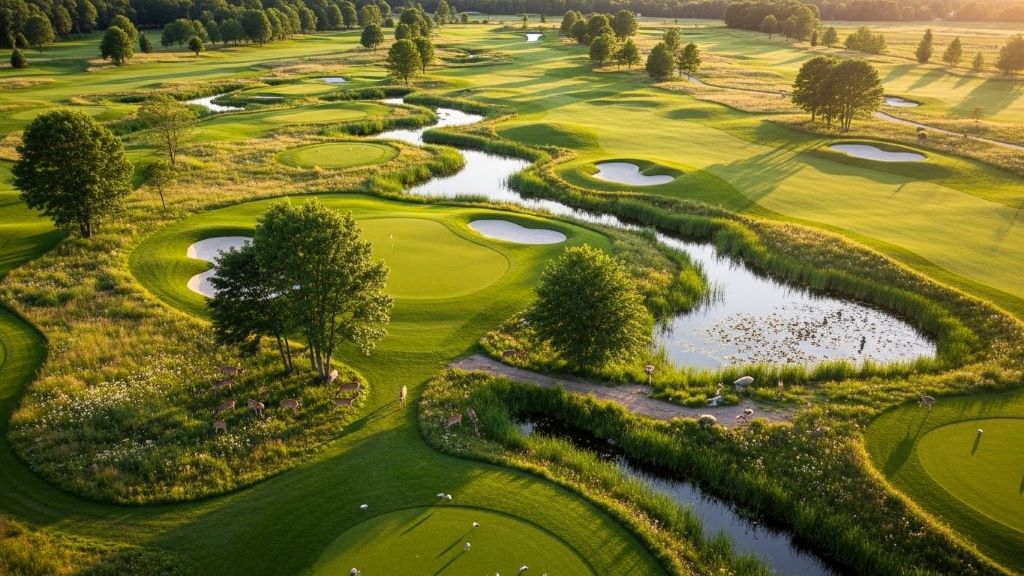
Golf courses can serve as wildlife corridors in developed areas. Thoughtful design preserves natural habitats while creating playable golf holes. The property features several protected areas where native species thrive.
Oak trees and native shrubs border many fairways. These plants provide food and shelter for birds, rabbits, and other animals. Moreover, the course avoids disturbing nesting areas during sensitive breeding seasons.
Wetland areas on the property filter rainwater naturally. These zones improve water quality while supporting amphibian populations. The National Audubon Society recognizes that properly managed golf courses can benefit bird conservation efforts.
Energy Efficiency Initiatives
Course operations extend beyond turf management. Buildings and equipment also impact environmental footprints. Therefore, comprehensive sustainability requires attention to energy consumption.
The maintenance facility uses solar panels to generate electricity. This renewable energy source powers equipment storage areas and workshops. Additionally, the clubhouse features energy-efficient lighting and climate control systems.
Electric and hybrid vehicles have replaced some gas-powered maintenance equipment. These machines produce fewer emissions while performing necessary tasks. Battery-powered mowers now handle certain areas previously serviced by fuel-burning equipment.
Waste Reduction and Recycling Programs
Solid waste management completes the environmental strategy. The facility diverts significant materials from landfills through recycling and composting.
Grass clippings and leaves become nutrient-rich compost. This organic matter returns to the course as natural fertilizer. The process creates a closed loop that reduces both waste and purchasing needs.
Recycling bins throughout the property encourage golfers to dispose of materials properly. Staff separate recyclable items and coordinate pickup with local services. Furthermore, the pro shop stocks products with minimal packaging to reduce waste generation.
Educational Outreach and Community Engagement
Environmental leadership extends beyond property boundaries. The course hosts educational programs that share sustainable practices with other facilities and community members.
Local schools visit to learn about ecology and conservation. Students observe native plants and wildlife while discovering how golf courses can support biodiversity. These programs inspire the next generation of environmental stewards.
Additionally, the management team shares best practices with other golf facilities. Industry conferences feature presentations about successful sustainability initiatives. This knowledge transfer helps improve environmental performance across the golf industry.
Economic Benefits of Green Maintenance
Sustainable practices deliver financial advantages alongside environmental benefits. Water conservation reduces utility bills significantly. Lower chemical usage decreases purchasing and application costs.
Moreover, environmentally conscious facilities attract growing numbers of eco-minded golfers. These players willingly support courses that align with their values. Therefore, green initiatives can enhance both reputation and revenue.
Equipment efficiency also contributes to cost savings. Solar power reduces electricity expenses. Well-maintained hybrid vehicles require less fuel and maintenance than traditional options.
Future Sustainability Goals
Environmental commitment requires ongoing improvement. The facility continues evaluating new technologies and methods that could enhance sustainability.
Expansion of native plant areas remains a priority. Additional naturalized zones will further reduce irrigation needs while expanding wildlife habitat. The maintenance team also explores drought-resistant turf varieties that maintain playability with less water.
Furthermore, staff training emphasizes environmental awareness. Team members learn to identify opportunities for improvement in daily operations. This culture of continuous advancement ensures progress toward ambitious sustainability targets.
Conclusion
Environmental stewardship and exceptional golf are not mutually exclusive. Through water conservation, chemical reduction, habitat preservation, and energy efficiency, modern courses demonstrate responsible land management. These practices protect natural resources while providing outstanding playing experiences. Additionally, they offer economic benefits that support long-term viability. As more facilities adopt similar approaches, the golf industry moves toward a more sustainable future. Players who choose environmentally conscious venues contribute to positive change while enjoying the game they love.
Frequently Asked Questions
What makes a golf course environmentally friendly?
Eco-friendly courses use water-efficient irrigation, minimize chemical applications, preserve natural habitats, and implement renewable energy sources. They also employ native plants and smart maintenance practices that reduce environmental impact.
How much water does a typical golf course use?
Traditional courses can use between 100,000 to 1,000,000 gallons of water daily, depending on climate and size. However, modern efficient courses reduce consumption significantly through smart technology and drought-resistant landscaping.
Are organic fertilizers effective for golf course maintenance?
Yes, organic fertilizers provide sustained nutrition to turf while improving soil health. They release nutrients gradually, reducing runoff and supporting beneficial microorganisms that enhance grass resilience.
Do wildlife habitats affect golf course playability?
Properly designed natural areas enhance the golfing experience without compromising playability. They frame holes attractively while supporting biodiversity and reducing maintenance requirements.
Can sustainable practices reduce golf course operating costs?
Absolutely. Water conservation, reduced chemical usage, and energy efficiency lower utility and supply expenses. Additionally, eco-friendly courses often attract more environmentally conscious players.
Related Topics:
Golf Club Reviews 2025: Is It Time to Upgrade Your Bag?


