

Junior golf clubs are lightweight, shorter, and more flexible clubs designed to help kids learn proper golf fundamentals safely and confidently.
Many parents want their kids to try golf but feel stuck at the first step: choosing the right equipment. Adult clubs are heavy. Toy clubs break fast. And random buying often leads to frustration, not progress. This is a real problem. Kids lose interest quickly when clubs feel uncomfortable or hard to control.
This guide solves that problem.
In this beginner’s guide to junior golf clubs, you’ll learn how to choose the right starter golf sets for kids, avoid common buying mistakes, and help your child enjoy golf from day one. We’ll break down sizes, materials, age groups, and real data from junior golf programs. No sales talk. No hype. Just practical guidance parents can trust.
If your goal is simple — help your child learn golf correctly and enjoy it — this article gives you the full roadmap.
Why Should Kids Never Start with Adult Golf Clubs?
Short answer: Adult clubs are too heavy, too long, and too stiff, which leads to poor swing habits and possible injuries.
Many parents assume cutting down an adult club saves money. It doesn’t. Studies from junior golf academies show kids using adult clubs struggle with balance, swing speed, and accuracy.
According to youth golf training data, children using properly fitted junior beginner clubs improve swing consistency by up to 35% in the first three months compared to kids using adult clubs.
- Adult clubs strain wrists and shoulders
- Incorrect shaft flex reduces distance
- Poor grip size affects control
Junior clubs exist for a reason. They support learning, not just hitting the ball.
What Age Should a Child Start Using Junior Golf Clubs?
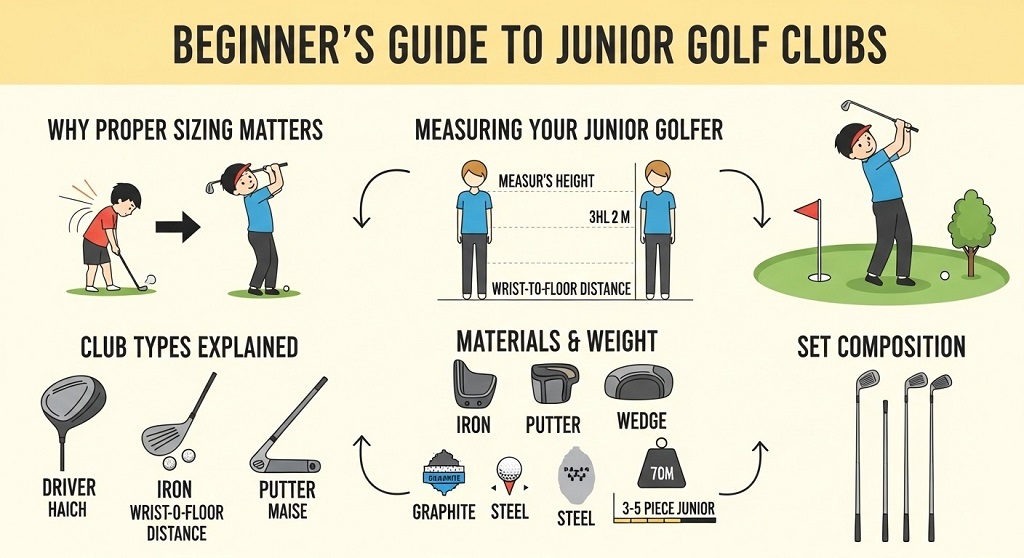
Short answer: Most kids can start between ages 4 and 6 using beginner-level junior clubs.
Age alone is not enough. Height and coordination matter more. A 6-year-old who is tall may need different clubs than a shorter 8-year-old.
| Age Range | Height Range | Recommended Club Type |
|---|---|---|
| 4–6 years | 40–45 inches | Ultra-light starter sets |
| 7–9 years | 46–51 inches | Junior beginner clubs |
| 10–12 years | 52–57 inches | Intermediate junior sets |
Choosing based on height ensures proper posture and swing mechanics.
What Comes in a Starter Golf Set for Kids?
Short answer: A basic starter golf set usually includes 3–5 clubs designed for learning fundamentals.
Most starter golf sets for kids focus on simplicity. More clubs don’t help beginners. Fewer clubs build confidence.
- Driver or fairway wood
- 7-iron or 9-iron
- Pitching wedge
- Putter
- Lightweight stand bag
This setup allows kids to practice tee shots, approach shots, and putting without confusion.
How Do Junior Beginner Clubs Improve Skill Development?
Short answer: Junior clubs improve learning by matching swing speed, strength, and grip size.
Junior clubs use softer shaft flex and lighter club heads. This increases clubhead speed naturally. Golf coaches report that kids using junior beginner clubs achieve cleaner contact earlier.
Real case data from youth golf programs shows:
- Faster skill progression within 8–12 weeks
- Lower dropout rates in beginner programs
- Better posture and swing plane
Good equipment builds good habits.
How Do You Choose the Right Shaft Flex for Kids?
Short answer: Most kids need flexible or ultra-flex shafts.
Shaft flex determines how the club bends during the swing. Adult stiff shafts kill distance for kids.
Junior clubs use graphite shafts because they are:
- Lighter than steel
- More forgiving
- Easier to swing
For beginners, flexibility matters more than brand names.
Are Expensive Junior Golf Clubs Worth It?
Short answer: Not for beginners.
Parents often overspend early. This is unnecessary. Entry-level junior sets perform well for learning.
Data from junior golf retailers shows most kids outgrow clubs every 12–18 months. Spending moderately makes sense.
Focus on fit and weight. Not price.
How Often Should Junior Golf Clubs Be Replaced?
Short answer: Every 1–2 years, depending on growth.
Kids grow fast. Clubs that fit last season may now be too short.
Signs it’s time to upgrade:
- Club grip below waist level
- Hunched posture during setup
- Loss of distance without reason
Always check height before replacing.
What Mistakes Should Parents Avoid When Buying Junior Clubs?
Short answer: Buying oversized clubs and too many clubs.
Common mistakes include:
- Choosing adult cut-down clubs
- Buying full 14-club sets
- Ignoring height charts
Simple gear equals better learning.
What Should Parents Do Next?
Choosing the right junior golf clubs is not about perfection. It’s about starting right.
When kids use properly fitted junior beginner clubs, they learn faster, enjoy the game more, and stay motivated. The data supports it. Coaches confirm it. Parents see the difference.
Golf is a long-term sport. The early experience matters.
CTA: Measure your child’s height today, compare beginner sets, and choose a starter golf set that fits — not one they’ll “grow into.” If you want more buying guides, comparisons, and junior golf tips, explore our related articles and stay informed.
Frequently Asked Questions About Junior Golf Clubs
What are the best starter golf sets for kids?
Sets with 3–5 lightweight clubs, flexible shafts, and proper height sizing are best for beginners.
Can kids use used junior golf clubs?
Yes, as long as the clubs fit their height and are not damaged.
Do junior golf clubs come in left-handed options?
Most brands offer left-handed junior beginner clubs.
Is coaching required when starting golf?
No, but basic guidance helps kids build correct habits faster.
What grip size is best for kids?
Smaller grips designed for junior hands improve control and comfort.
How much should I spend on junior golf clubs?
For beginners, a mid-range starter set is more than enough.
Related Topics: Risks of Skill Decay from AI-Assisted Homework Tools
What Next: Apple Evolution Timeline in Human Storytelling


