
New mothers often face unexpected challenges during breastfeeding. Many experience nagging back pain that turns precious bonding time into discomfort. However, simple support tools make a big difference. An ergonomic nursing pillow lifts your baby to the right height and encourages better alignment. Research shows the impact clearly. One study found that 84% of breastfeeding mothers feel back pain at least monthly. Another reports low back pain affects over 20% of lactating women. These numbers highlight a common issue, yet proper support reduces strain effectively.
Why Breastfeeding Often Leads to Back Pain
Breastfeeding demands long periods of holding your baby. Without support, mothers slump forward or twist awkwardly. This posture strains muscles and joints.
Moreover, postpartum bodies already recover from pregnancy changes. Hormones loosen ligaments, and core strength weakens temporarily. Adding repetitive holding worsens the problem.
For instance, many mothers report pain in the lower back, neck, and shoulders. Studies confirm musculoskeletal pain hits over 70% of new mothers in some groups. Pain ranges from mild aches to sharp discomfort that limits daily activities.
Additionally, poor positioning affects milk flow and latch. Babies struggle when not aligned well, leading mothers to hunch more. This cycle increases pain over time.
Therefore, addressing posture early prevents long-term issues. Good habits support recovery and make feeding enjoyable.
The Importance of Proper Breastfeeding Posture
Good posture keeps your spine neutral. It distributes weight evenly and reduces muscle tension.
First, sit or lie with full back support. Your shoulders stay relaxed, and arms avoid holding all the baby’s weight.
Next, bring your baby to breast level. This avoids bending forward, which compresses spinal discs.
Furthermore, align baby’s body tummy-to-tummy with yours. Ears, shoulders, and hips form a straight line. This promotes deep latch and efficient feeding.
Consequently, proper posture eases pain and improves milk transfer. Babies feed faster and fuss less.
In addition, comfortable positions encourage longer breastfeeding durations. Mothers who feel good continue nursing with confidence.
How a Nursing Pillow Supports Better Posture
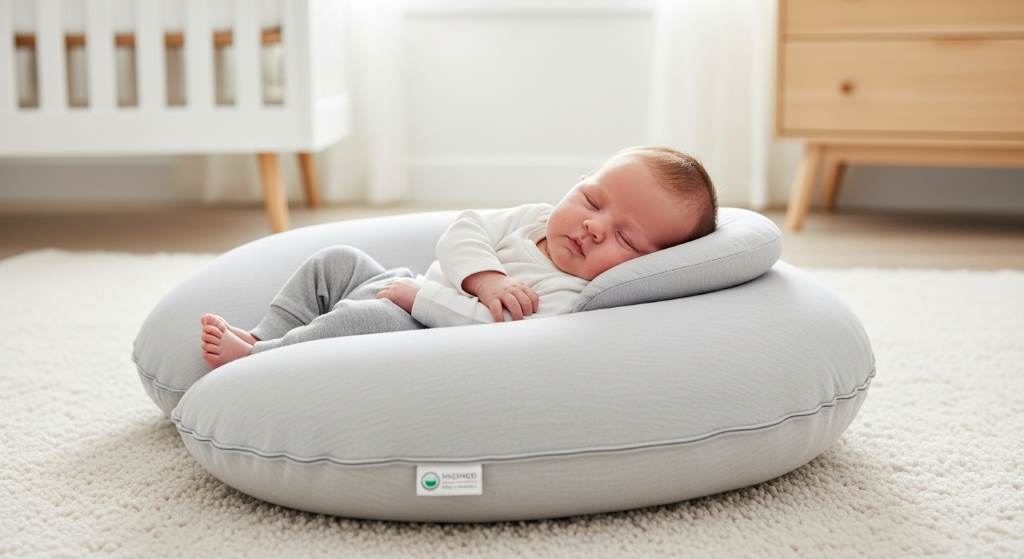
A nursing pillow wraps around your waist and provides a firm platform. It elevates your baby perfectly.
As a result, you avoid leaning over. Your back stays upright, and shoulders drop naturally.
Moreover, the pillow supports your arms fully. Muscles rest instead of tiring quickly.
Studies show pillows reduce discomfort significantly. One trial proved they lower maternal pain during sessions.
Additionally, contoured designs follow your body’s curves. They maintain natural spinal alignment.
Therefore, daily use trains better habits. Over weeks, posture improves even without the pillow.
Key Benefits of Using a Nursing Pillow for Back Pain Relief
Nursing pillows offer multiple advantages. They directly target common pain points.
- Reduces spinal strain: Elevation prevents forward hunching and protects lower back discs.
- Supports arms and shoulders: Weight distributes evenly, easing upper body tension.
- Improves latch quality: Better positioning helps baby attach deeply, shortening feed times.
- Encourages relaxed posture: Firm support reminds you to sit tall naturally.
- Versatile for positions: Works in cradle, football, or side-lying holds.
Furthermore, mothers report less neck pain. One study linked pillow use to lower discomfort scores.
In addition, pillows aid digestion for babies. Slight elevation reduces reflux after feeds.
Overall, these benefits create calmer, more efficient nursing sessions.
Common Breastfeeding Positions and How a Pillow Helps
Different positions suit various needs. A pillow enhances each one.
Cradle Hold
You hold baby across your lap. The pillow raises baby to breast height. Your back stays straight, and arms relax.
Football Hold
Ideal after C-sections. Tuck baby under your arm like a football. The pillow provides side support and prevents slouching.
Side-Lying Position
Lie on your side with baby facing you. Place the pillow under your head and between knees. This aligns hips and relieves back pressure.
Laid-Back Position
Recline slightly with baby on your chest. Use the pillow behind your back for extra support.
Each position becomes pain-free with proper elevation. Experiment to find your favorite.
Choosing the Right Nursing Pillow
Select a pillow that fits your body and needs. Consider these factors.
First, look for firm support. Soft pillows sink too much and lose effectiveness.
Next, choose adjustable or contoured shapes. They adapt to different positions.
Additionally, check size. It should wrap comfortably without feeling bulky.
Moreover, breathable covers help in warm weather. Removable ones simplify cleaning.
Finally, try before buying if possible. Comfort varies personally.
Related:
How to Choose the Best HelloBaby 6″ IPS Baby Monitor: Complete Review
Is the Momcozy Baby Carrier Worth It? A Detailed Hands-On Review
Additional Tips to Reduce Back Pain While Breastfeeding
Pillows help greatly, but combine them with other habits.
- Warm up muscles before feeds with gentle stretches.
- Strengthen core gently with postpartum exercises.
- Alternate sides regularly to balance strain.
- Use a footstool to level hips.
- Stay hydrated and eat nutrient-rich foods for recovery.
Furthermore, take breaks between feeds. Walk around and roll shoulders.
In addition, practice deep breathing. It relaxes tight muscles.
These small steps add up quickly.
Real-Life Examples from Mothers
Sarah, a first-time mom, struggled with sharp lower back pain. After starting a nursing pillow, her discomfort dropped noticeably within days. She fed longer without aches.
Similarly, Maria recovered from a C-section. The football hold with pillow support let her nurse comfortably upright.
Many mothers share these stories online. Consistent support changes daily experiences.
Long-Term Advantages for Postpartum Recovery
Good posture aids overall healing. It strengthens muscles gradually.
Moreover, reduced pain improves mood and energy. Mothers bond better with babies.
Additionally, proper habits prevent chronic issues later.
Therefore, investing time in posture pays off lifelong.
Conclusion
A nursing pillow transforms breastfeeding by supporting posture and easing back pain. It elevates your baby, relaxes your body, and promotes better alignment. Research proves reduced discomfort, while mothers experience real relief.
Start with good support today. Try different positions, add simple habits, and notice the difference. Your body deserves comfort during this special time. Choose a supportive pillow and enjoy pain-free feeding moments.
FAQs
Does a nursing pillow really prevent back pain?
Yes, it helps significantly. Studies show pillows reduce discomfort by elevating baby and supporting arms. Many mothers report less strain.
Can I breastfeed comfortably without a pillow?
Some manage, but most find pillows essential. They prevent hunching and distribute weight better.
What position works best for back pain?
Side-lying or laid-back often relieves pressure most. Add a pillow for full support.
How soon after birth should I use a nursing pillow?
Start right away if comfortable. It supports healing bodies from day one.
Are all nursing pillows the same for posture?
No, firm and contoured ones work best. They maintain alignment effectively.
References
- https://pmc.ncbi.nlm.nih.gov/articles/PMC7463134/
- https://pubmed.ncbi.nlm.nih.gov/39210354/
- https://www.sciencedirect.com/science/article/pii/S0003687023000674
- https://pmc.ncbi.nlm.nih.gov/articles/PMC11360292/