
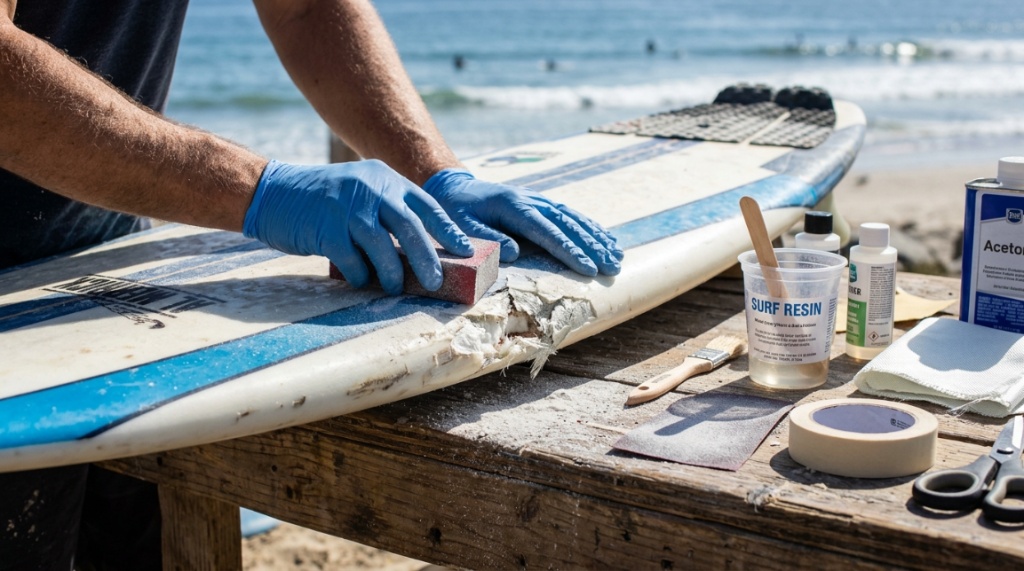
You’ve just finished a perfect session at Pipeline or Waikiki, and as you’re rinsing off your board, you spot it—a fresh ding. In Hawaii, the warm water and reef hazards make surfboard damage almost inevitable. The problem is, leaving that ding unrepaired means water seeps into the foam core, leading to delamination and a board that turns soggy and heavy. Whether you’re a visitor trying to save your rental deposit or a local wanting to get back in the water before the next swell, knowing how to fix surfboard dings Hawaii style is an essential skill. This guide covers fast, reliable repair methods using local materials and techniques that hold up in tropical conditions.
Why Hawaii’s Climate Makes Ding Repair Urgent
Hawaii’s warm, humid environment accelerates the damage caused by an open ding. Unlike cooler climates where a small crack might sit for weeks, the tropical heat and constant UV exposure cause the EPS or polyurethane foam to absorb water rapidly. Once moisture gets inside, the board gains weight, the stringer can warp, and the glass job starts to separate. In severe cases, a simple ding can turn into a snapped board within days.
Another factor is the water temperature. Warm water has lower viscosity than cold water, meaning it penetrates cracks and fissures more easily. This is why a ding that looks “minor” on the beach can become a major structural issue after just one more session. Acting fast isn’t just about aesthetics—it’s about preserving the board’s flex, buoyancy, and lifespan.
The Difference Between a Ding and a Crack
Before you start mixing resin, you need to assess the damage. A ding is a puncture or impact mark that breaks through the fiberglass and exposes the foam. A crack is a hairline fracture in the glass that may not expose the core yet. In Hawaii, pressure dings—where the glass is pushed in but not broken—are also common from board-to-board contact in crowded lineups. Each type requires a slightly different approach, but the urgency remains the same.
Essential Tools and Materials for Quick Repairs
To fix surfboard dings Hawaii fast, you need the right supplies. The good news is that most hardware stores and surf shops across the islands carry everything you need. The key is to use materials that cure quickly in humid conditions and remain flexible after drying.
- Sandpaper: 80-grit for roughing, 120-grit for shaping, and 220-grit for final sanding.
- Fiberglass cloth: 4-ounce or 6-ounce cloth for structural repairs; 4-ounce is best for small dings.
- Polyester or Epoxy Resin: Polyester cures faster but is brittle; epoxy is stronger and more waterproof but takes longer to set.
- Hardener/Catalyst: Use the correct ratio—too much hardener causes cracking, too little leaves the resin sticky.
- Mixing cups and stir sticks: Disposable is best for quick cleanup.
- Razor blade or box cutter: For trimming excess cloth and cleaning damaged edges.
- Acetone: For cleaning the area and removing wax residue.
- Masking tape: To protect surrounding areas and create a clean repair boundary.
- Gloves and respirator: Resin fumes are toxic, especially in enclosed spaces.
If you’re looking for a pre-assembled kit that includes all of these items, many surfers find that investing in a quality kit saves time and ensures you have the right materials on hand. For a detailed comparison of the best options available locally, check out this guide to fix surfboard dings Hawaii with the right tools from the start.
Step-by-Step: Fast Ding Repair in Under 30 Minutes
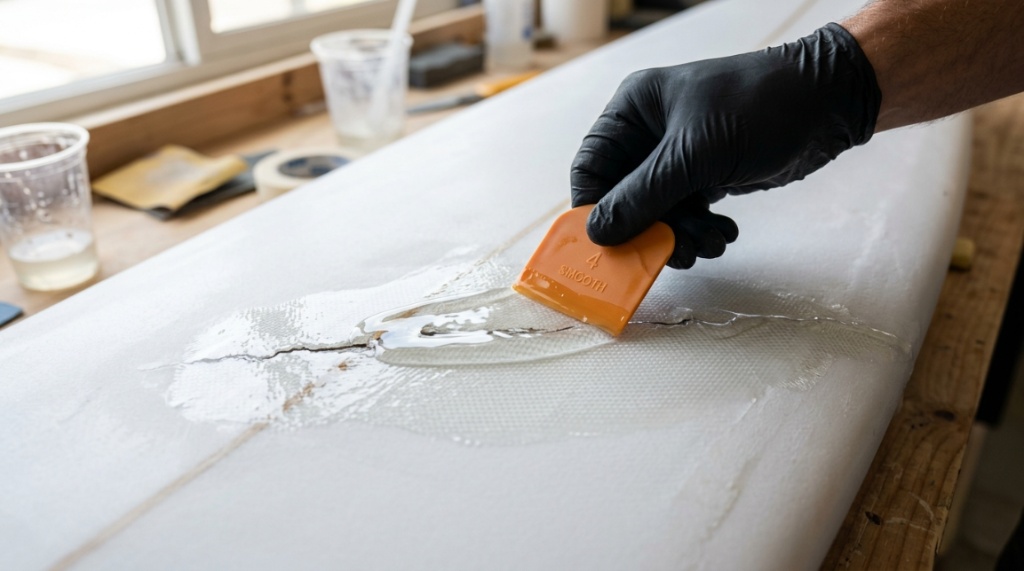
Time is of the essence, especially if you want to catch the evening glass-off. Here’s a streamlined process that works for most standard dings on polyurethane boards. This method prioritizes speed without sacrificing the integrity of the repair.
Step 1: Dry the Ding Completely
This is the most critical step. If the foam is wet, any resin you apply will not bond properly, and the water will eventually cause the repair to fail. Use a hair dryer or leave the board in the sun for 15–20 minutes. In Hawaii’s heat, this is usually quick. You’ll know the foam is dry when it feels warm and looks slightly lighter in color.
Step 2: Prep the Surface
Use a razor blade to cut away any loose fiberglass around the ding. You want a clean, solid edge for the new resin to grip. Then, sand the area around the ding with 80-grit sandpaper to rough up the surface. This creates a mechanical bond. Wipe away dust with acetone on a clean rag.
Step 3: Mix and Apply Resin
Mix your resin according to the manufacturer’s instructions. For a fast repair, use a resin with a quick catalyst. Apply a thin layer of resin to the exposed foam to seal it. Then, cut a piece of fiberglass cloth slightly larger than the ding and lay it over the wet resin. Apply more resin over the cloth, using a squeegee or old credit card to remove air bubbles and saturate the cloth completely.
Step 4: Let It Cure and Sand
In Hawaii’s warm climate, resin cures faster than in cooler regions. Wait 20–30 minutes for the resin to become tacky, then apply a second coat if needed to fill the weave of the cloth. Once fully hard (usually 1–2 hours), sand the area smooth with 120-grit, then 220-grit. The goal is a flush, smooth surface that won’t catch your hand.
Epoxy vs. Polyester Resin: Which Is Better for Hawaii?
Choosing the right resin is a common point of confusion. Both types work, but they have distinct trade-offs that matter in a tropical environment.
| Feature | Polyester Resin | Epoxy Resin |
|---|---|---|
| Cure Time | Fast (15–30 mins) | Slower (30–60+ mins) |
| Water Resistance | Good, but can absorb moisture over time | Excellent, highly waterproof |
| Durability | Brittle, prone to cracking on impact | Flexible, stronger, more impact-resistant |
| Best For | Quick fixes on PU boards | EPS (epoxy) boards and long-term repairs |
| UV Resistance | Poor; yellows and degrades in sun | Better; holds up well in UV |
For a fast fix in Hawaii, polyester resin is tempting because it cures quickly. However, if you’re repairing an epoxy board, you must use epoxy resin—polyester will melt EPS foam. If you have time, epoxy is the superior choice for durability and water resistance, especially given the intense UV exposure in Hawaii.
Common Mistakes That Ruin Ding Repairs
Even experienced surfers make errors when rushing a repair. Avoiding these pitfalls will save you from having to redo the job in a week.
Mistake 1: Skipping the Drying Step
Applying resin over wet foam is the number one cause of repair failure. The trapped moisture creates steam when the resin cures, causing bubbles and weak spots. Always dry thoroughly, even if it means waiting an extra 15 minutes.
Mistake 2: Using Too Much Hardener
It’s tempting to add extra hardener to speed up the cure, but this makes the resin brittle and prone to cracking. Follow the ratio on the bottle. In Hawaii’s heat, you don’t need to rush the chemical reaction—it’s already accelerated by the ambient temperature,
Protecting your board during travel is just as important as fixing unexpected damage before your next session. Find Heavy Duty Surfboard Bags That Last Longer to keep your gear safe on every trip.
Mistake 3: Sanding Too Early
If you sand before the resin is fully cured, you’ll gum up the sandpaper and create a rough, uneven surface. Wait until the resin is completely hard—it should feel like glass, not rubber. Test a corner with your fingernail; if it leaves a mark, wait longer.
When to Call a Professional vs. DIY
While most dings are DIY-friendly, some situations require professional attention. Knowing the difference can save you money and prevent further damage.
DIY is fine for:
- Small dings under 1 inch in diameter
- Pressure dings with no exposed foam
- Rail dings that haven’t cracked the stringer
Call a pro for:
- Dings that have penetrated the stringer
- Large cracks spanning more than 6 inches
- Snapped boards or severe structural damage
- Repairs on high-performance boards where weight and flex are critical
In Hawaii, professional repair shops are plentiful, especially on Oahu’s North Shore. If you’re unsure about your ability to fix a structural issue, paying for a professional repair is cheaper than buying a new board.
Preventing Future Dings in Hawaii’s Lineups
Prevention is always better than repair. Hawaii’s crowded breaks and shallow reefs create a high-risk environment for board damage. Here are a few practical tips to minimize your chances of needing a repair.
- Use a board bag: A padded board bag protects against dings during transit and storage.
- Wax properly: Good traction reduces the chance of slipping and kicking your board.
- Avoid board-to-board contact: In crowded lineups, keep your board close and be aware of your surroundings.
- Rinse after every session: Saltwater and sand accelerate wear on the glass job.
- Inspect regularly: Catching a small crack before it becomes a waterlogged mess is the easiest way to avoid major repairs.
Frequently Asked Questions
Can I surf on a dinged board?
You can surf on a minor ding for a session or two, but it’s risky. Water will enter the core, causing weight gain and potential delamination. If the ding is on the bottom and small, you might get away with it, but you should repair it as soon as possible.
How long does surfboard resin take to dry in Hawaii?
In Hawaii’s warm climate, polyester resin typically cures in 20–30 minutes, while epoxy resin can take 45–60 minutes. Full hardness may take up to 24 hours, but the board is usually surfable after 2–4 hours depending on the resin type.
What’s the difference between a ding and a pressure dent?
A ding is a break in the fiberglass that exposes the foam core. A pressure dent is a depression in the glass where the foam underneath is compressed but not exposed. Pressure dents don’t require immediate repair but can weaken the board over time.
Can I use epoxy resin on a polyester board?
Yes, you can use epoxy resin on a polyester board, but it’s not recommended for quick fixes. Epoxy is more flexible and waterproof, but it doesn’t bond as well to polyester glass. For best results, match the resin type to the board’s original construction.
Is it cheaper to repair or replace a surfboard in Hawaii?
Repairing is almost always cheaper. A DIY repair costs $10–$30 in materials. A professional repair costs $50–$100. Replacing a board costs $500–$1,000+. Unless the board is severely damaged, repair is the economical choice.
Conclusion
Fixing a surfboard ding in Hawaii doesn’t have to ruin your day or your wallet. With the right materials, a little patience, and the steps outlined above, you can have your board back in the water within a few hours. The key is to act fast, dry the ding thoroughly, and use quality resin that matches your board’s construction. Whether you choose a quick polyester fix or a more durable epoxy repair, the effort you put in now will extend the life of your board and keep you surfing the Hawaiian waves without interruption. Remember to assess the damage honestly—if it’s beyond your skill level, a professional repair is a worthwhile investment.


