
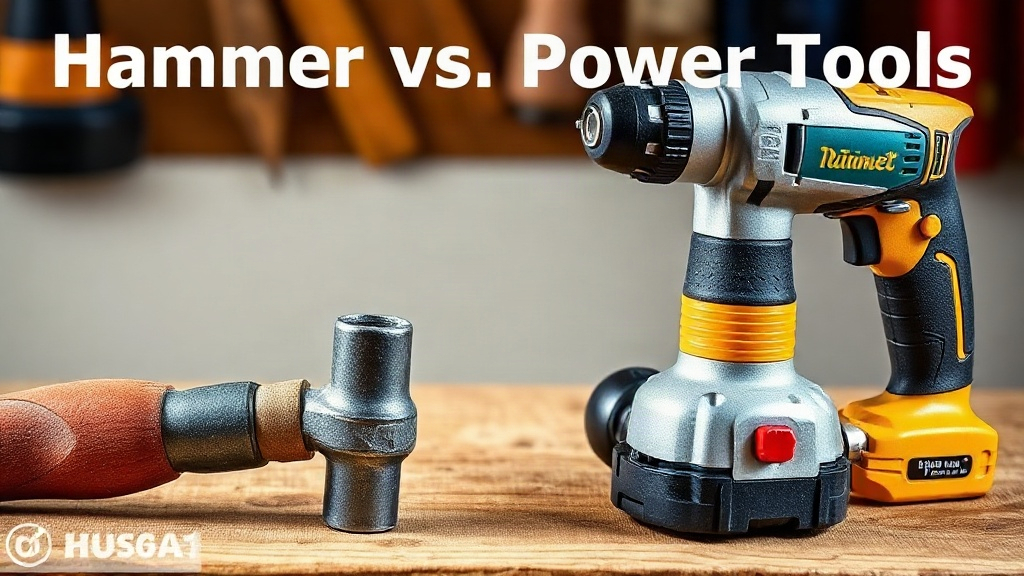
Every Saturday carpenter faces the same drawer of choices, and the hammer vs power tools question usually arrives the moment a project stalls. You have a loose deck board, a shelf to hang, and a budget that punishes wasted purchases. Good practical DIY tool guides start with the job itself, not the tool catalog. This article walks through which tasks reward a hammer, which reward a drill or nailer, and how to split your spending so nothing sits unused in the garage.
Quick answer: Match the tool to the joint, not to your enthusiasm. Use a hammer for hand-driven fastening, demolition, and short jobs where setup costs more than the work. Bring in power tools for repeated fastening, drilling, and cutting where speed and consistency pay off. Buy the hand tool first and add power only when a real project demands it.
What is hammer vs power tools?
The comparison is not really hammer versus all machines. It is hand-powered impact versus motorized torque, speed, and repeatability. A hammer converts a swinging arm into a short, sharp force that drives a nail or persuades a joint apart. Power tools convert electricity or battery charge into rotation, reciprocation, or rapid strikes.
That difference shapes everything about how each tool behaves on a weekend project. A hammer needs no charger, no bit changes, and no manual. A drill-driver needs a charged battery and the right bit, but it sets screws in seconds. A framing nailer needs a compressor or fuel cell and a supply of collated nails. Each trade-off is practical, not philosophical.
The main tool categories worth comparing
Most weekend carpentry falls into a few predictable jobs. Knowing which category a job belongs to settles the tool choice fast.
- Hand fastening: hammers, mallets, and hand drivers for nails, stakes, and small assemblies.
- Powered fastening: drills, impact drivers, and nailers for screws and bulk nailing.
- Cutting: hand saws for a single trim cut, circular or miter saws for repeated accurate cuts.
- Demolition and prying: a claw hammer or pry bar for small tear-outs, recip saws for larger ones.
Where each tool genuinely wins
A 16 oz claw hammer still wins on picture hooks, small brads, and tapping joints together during a dry fit. It also wins on cleanup, since pulling a bent nail takes seconds. Power wins whenever the count climbs: forty deck screws by hand is an afternoon, while a drill-driver finishes in minutes. Nailers win on volume too, but they add setup and cost that rarely pays off for a dozen nails.
A tool’s true cost includes charging, loading, and adjusting it. For five fasteners, setup often outweighs the work itself.
Takeaway: classify the job by volume and material first, then pick the tool that fits.
Why hammer vs power tools matters
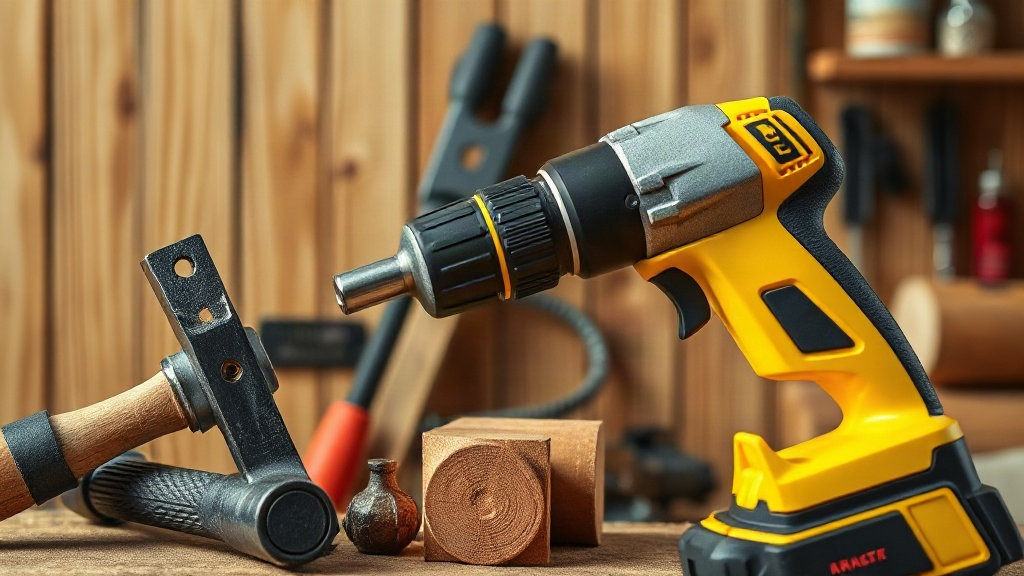
Getting this choice wrong wastes money in two directions. Buy a nailer for one bookshelf and it sits idle. Skip the drill and you drive screws by hand until your wrist complains. Weekend time is short, so every tool should earn its shelf space within a project or two.
Safety changes with the choice as well. Hand tools fail slowly and predictably, while a spinning bit or a mis-set nailer demands respect from the first use. Cost spreads differently too. A decent hammer costs a fraction of a battery platform, yet that platform unlocks drilling, driving, and cutting across many jobs.
Time, money, and finish quality
Consider a simple example: building a small garden bench. Cutting the lumber by hand saw is possible but slow, and square cuts are hard to hold. A circular saw handles the cuts in minutes with a straight edge as a guide. Fastening with screws rewards a drill-driver because you can control depth and remove mistakes cleanly. Nails from a hammer hold well but are harder to undo. Finish quality follows the same logic: powered drivers give consistent depth, while hand nailing gives subtle control on soft trim.
Where the two tools overlap
Some tasks accept either tool. Hanging a gate, assembling a planter box, or tacking up temporary bracing all work with hand tools, just more slowly. That overlap matters because it lets you start with what you own. A hobbyist can complete many first projects with a hammer, a handsaw, a square, and a screwdriver. Power tools then become upgrades tied to specific frustrations rather than purchases made on impulse.
Takeaway: treat power tools as upgrades for repeated work, and treat the hammer as the baseline you never outgrow.
Best practices
A sensible order of operations saves both money and shelf space. Start by listing the fasteners and cuts a project needs. Then ask how many repetitions each involves. That simple count usually decides between hand and power without guesswork.
- Buy the hand tool first. A 16 oz claw hammer, a tape measure, a square, and a hand saw cover a surprising amount of weekend work.
- Add one cordless drill-driver early. It handles drilling, driving, and light mixing, which makes it the most versatile first power purchase.
- Add cutting power when accuracy matters. A circular saw with a straight-edge guide covers most sheet goods and lumber.
- Rent or borrow specialized tools. Nailers, miter saws, and rotary hammers rarely justify ownership for a single weekend.
Matching the hammer to the job
Weight and handle material change how a hammer behaves. A 16 oz smooth-face claw hammer suits general carpentry and trim work. A heavier framing hammer drives large nails with fewer swings but tires the arm faster. Steel handles transmit more shock, while wood and fiberglass absorb some of it. For finish work, a smaller hammer with a smooth face prevents dents in softwood.
Using power tools safely and effectively
Battery platform consistency matters more than brand loyalty. Once you pick a system, stay with it so batteries and chargers interchange. Practice on scrap before cutting visible lumber, and let the tool reach full speed before contact. Clamp workpieces rather than holding them by hand, and keep cords and battery packs clear of the cut line.
For high-volume nailing, a powered nailer changes the rhythm of a project. If you are considering one, this guide explains how an air-powered nail gun works and what it requires in terms of compressor and hose setup.
Takeaway: build outward from hand tools, adding power only where repetition or accuracy justifies it.
Common mistakes to avoid
The most frequent error is buying a specialized power tool before finishing a project that proves you need it. Nailers, biscuit joiners, and rotary hammers are wonderful when used weekly and expensive clutter when used once. A close second is underestimating hand tools: a cheap hammer with a loose head damages surfaces and your patience.
Other traps appear in the details. Using a drill as a hammer damages the chuck and the bit. Driving screws without pilot holes splits softwood near the ends. Swinging a framing hammer at finish nails dents trim. Mixing battery platforms multiplies charger clutter. Ignoring eye protection around any fastening work is the mistake with the highest cost of all.
Powered nailers can drive a fastener through a finger in an instant. Read the manual, keep hands clear of the firing line, and never bypass a safety contact.
Overbuying versus underbuying
Overbuying is the louder mistake because the receipts are bigger. Underbuying hides in wasted weekends: hand-driving a deck’s worth of screws or forcing a handsaw through a long rip cut. The balance point is roughly this: if a task will recur on three or more projects, buy the power tool. If it appears once, borrow, rent, or use the hand method.
Storage and maintenance blind spots
Tools left in damp garages rust, and batteries stored at full discharge lose capacity. Wipe metal surfaces with a light oil after humid weekends. Store batteries at room temperature and recharge them before long breaks. A hammer with a cracked handle belongs in the bin, not the toolbox.
Takeaway: avoid buying for imagined projects, and protect the tools you already own.
FAQ
Is a hammer enough for a beginner’s first project?
For most small builds, yes. A hammer, handsaw, square, and screwdriver complete planters, simple shelves, and basic repairs. Add a drill-driver when screws or repeated holes enter the plan.
Do I really need a nailer for weekend carpentry?
Usually not. A hammer handles a dozen nails fine. Nailers earn their cost on fencing, decking, trim runs, and framing where hundreds of fasteners are involved.
How much should I spend on a first drill-driver?
Buy a mid-range model from a battery system you can expand. Entry-level drills often lack torque control, which matters for driving screws without stripping heads.
Can power tools replace a hammer entirely?
No. Demolition, tapping joints together, pulling nails, and setting small fasteners remain hammer work. Power tools complement the hammer rather than retire it.
Which is faster for hanging trim?
A nailer is faster across a room, but a hammer with finishing nails gives more control on a few short pieces. Choose by linear feet, not by pride.
Conclusion
The hammer vs power tools decision comes down to repetition, material, and setup time. Keep a good claw hammer as your baseline, add a cordless drill-driver early, and bring in cutting and nailing power only when projects demand volume or accuracy. That order protects your budget and keeps every purchase working. Pick your next weekend project, list its fasteners and cuts, and let that list decide what joins your toolbox.